No products in the cart.
February 3

Are you giving your all in your training and following your plan, but the results you're hoping for aren't happening? This is frustrating, but you are not alone. The reason is often that most training plans are designed for men and are unique female physiology completely ignore. It's time to understand: You should train differently because your body - shaped by hormonal cycles and specific biomechanics - reacts completely differently to stress and benefits from it.
Have you ever wondered why a workout program that works wonders for your male workout partner just doesn't work for you? The answer is as simple as it is crucial: your body is not a smaller man's body. For decades, sports science has focused almost exclusively on male subjects. The result is huge "Gender Data Gap".
This gap leads to general training recommendations that simply overlook the peculiarities of female physiology. Your hormonal fluctuations, your muscle structure and your energy metabolism follow their own rules. A rigid program that ignores these works against your body instead of with it.
Your training success depends directly on how well you understand your body's signals and adapt your training accordingly. It's not about training less intensively or less often - quite the opposite. It's about, smarter to train.
Training that takes these points into account not only leads to better results, but also increases your well-being and protects you from injuries. In fact, in Switzerland you benefit significantly more from regular exercise. A study showed that women already reduce their risk of death 140 minutes of moderate exercise per week reduce by 24% can. Men need almost twice as long! This is just one of the exciting findings in gender medicine.
Comprehensive knowledge of your body is the basis for effective training. It allows you to achieve your fitness goals without feeling burned out or overwhelmed.
Um die wichtigsten Unterschiede auf einen Blick zu erfassen, habe ich diese Tabelle zusammengestellt. Sie zeigt, warum ein "One-size-fits-all"-Ansatz im Training einfach nicht funktionieren kann.
This table summarizes the most important physiological differences and their specific effects on training for women and men.
| aspect | Special features for women | Special features for men |
|---|---|---|
| Hormones | Cyclic fluctuations in estrogen and progesterone affect energy, strength and regeneration. | Relatively stable testosterone levels that continuously support muscle building. |
| metabolism | Use fat more efficiently as a source of energy, especially during longer endurance exercise. | Relying more heavily on carbohydrates (glycogen) as the primary source of energy. |
| Musculature | Higher percentage of Type I muscle fibers (more fatigue resistant), which is beneficial for endurance and higher volume. | Higher proportion of type II muscle fibers (fast-strength), which helps with explosive power output. |
| Biomechanics | Wider pelvis (Q angle) increases risk of knee injuries; requires focus on hip and core stability. | Lower Q angle results in more direct power transfer and lower risk of knee injury. |
| regeneration | Can often recover more quickly from training sessions and can therefore tolerate higher training frequencies. | Tend to require longer recovery times between high-intensity sessions. |
These differences are not disadvantages, but simply that – differences. The key is to recognize the unique advantages of your physiology and use them to your advantage. In order to holistically understand why you should train differently, it is essential Understanding women's health and to correctly interpret your body’s signals. This guide is your first step to redefining your training and finally seeing the results you want.
Don't think of your menstrual cycle as an annoying problem, but rather as your very own personal training compass. It's like a built-in guide that tells you exactly when your body is ready for top performance and when it calls for regeneration and gentler sessions. Your female physiology and understanding their cycles is the key to making your training more effective, safer and simply more enjoyable.
The idea of adapting your training to the cycle isn't rocket science. It's a completely logical step to finally work in harmony with your body instead of against it. Instead of torturing yourself through low-energy days or letting phases of huge strength potential go unused, you can learn to ride these hormonal waves for yourself. This way you get the most out of your progress and at the same time reduce the risk of overuse and injury.
This infographic shows you which life phases of female physiology influence our training - starting with the menstrual cycle.
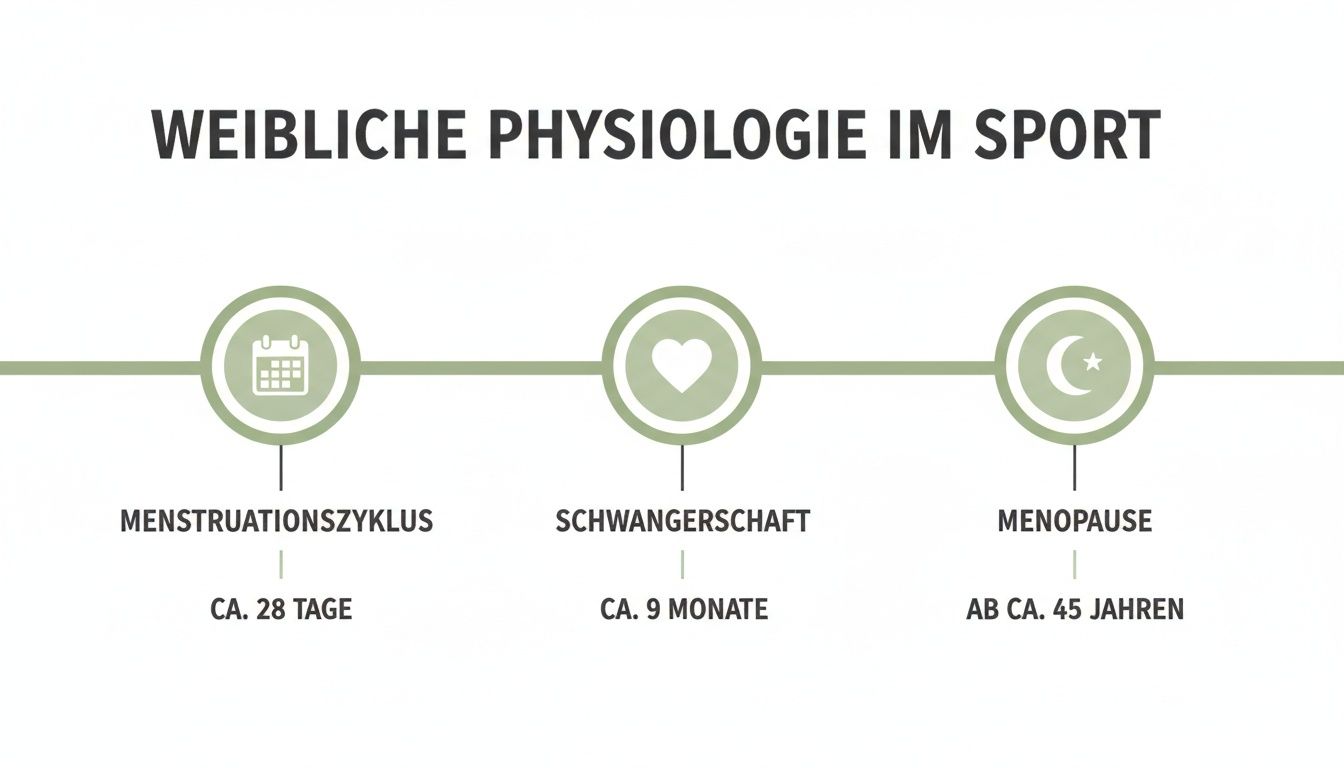
You can clearly see here that the cycle is the starting point for lifelong, adapted training, which then simply develops further in phases such as pregnancy and menopause.
Your cycle is roughly divided into two halves, which create completely different hormonal conditions for your training. If you know these phases, you can plan your workouts properly strategically.
These hormonal fluctuations are exactly the reason why on some days you can easily lift weights and on others a relaxed yoga session is the only right choice.
Your cycle is not a flaw in the system, but a damn intelligent rhythm. Using it means recognizing your female physiology as a superpower and designing your training to match it.
The first half of the cycle is your absolute golden window for intensive training sessions and new personal records. Your body is fully programmed for performance and muscle building.
What is ideal now:
By the way, this is not just a feeling, but scientifically proven. According to the Swiss Federal University of Sport and Exercise (EHSM), a higher frequency of strength training in the first half of the cycle can increase muscle mass and strength by up to 20 percent increase more effectively. In the luteal phase, however, performance often drops 5-10 percent, which requires smart adjustment of intensity.
In the second half of the cycle the focus clearly shifts. Your body is less tolerant of stress and your energy level is lower. This is the perfect time to tone down and focus on clean technique, mobility and recovery.
What's good for you now:
When you start applying these simple principles, you'll quickly notice what it feels like to be working with your body instead of constantly against it. You can find a deeper understanding of this in our guide on the topic Cycle syncing and how you can adapt your training to the cycle.
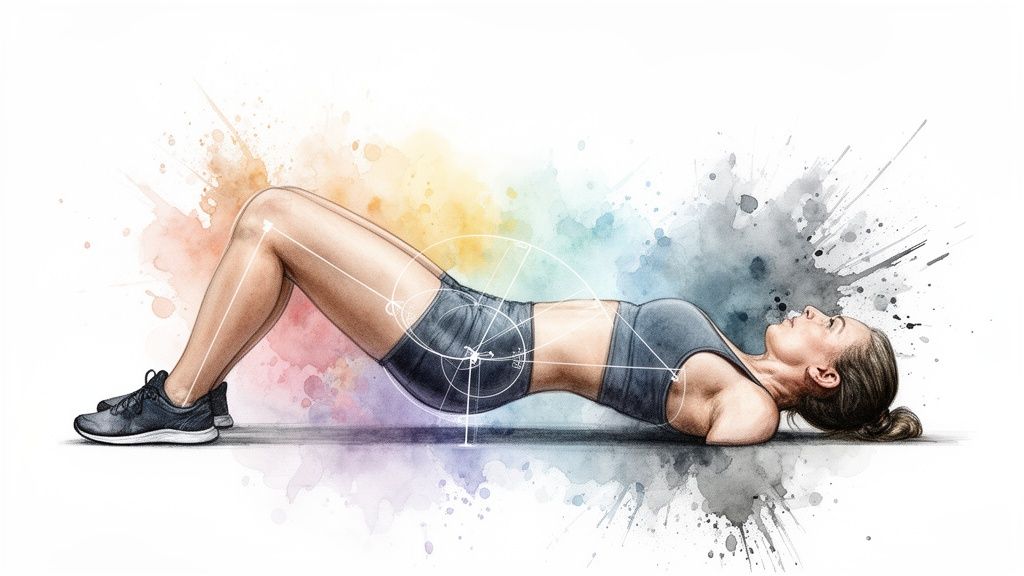
Did you know that your female body shape has very special strengths, but also a few anatomical peculiarities? Understanding your anatomy and biomechanics is the key to not only training harder, but more importantly, smarter and safer. The female physiology The rules of the game are simply different than those of men – and you should know them.
It's absolutely not about being afraid of movement. Quite the opposite: knowledge is your most powerful tool in the gym. If you understand how your body ticks and moves, you can avoid injuries and build an indestructible foundation for any sporting challenge.
A crucial difference lies in the so-called Q angle (quadriceps angle). Don't worry, it's easy to explain: This angle describes the line that runs from your hip to your knee. Because women naturally have wider pelvises, this angle is often larger for us.
Imagine a line from the front of the pelvic bone down to the kneecap and a second line from the kneecap to the shinbone. The Q angle is exactly in between. A larger angle means that every movement – running, jumping, squatting – places greater forces on your kneecap.
Unfortunately, this can slightly increase the risk of knee problems, especially in the anterior cruciate ligament. But don't see this as fate, but rather as valuable insider information for your training planning.
Your wider pelvis is a masterpiece of nature, perfect for giving birth. In training, this just means that you have to give your hips and core a little more love to optimally relieve the strain on your knees.
The next big player is your connective tissue. Female hormones, especially estrogen, naturally make ligaments and tendons more elastic and flexible. On the one hand, this flexibility is a huge advantage in many sports. On the other hand, it also makes us more susceptible to overstretching or unstable joints.
These hormonal influences are anything but static. They dance to the rhythm of your cycle. Your connective tissue can be even looser, especially around ovulation, when estrogen levels reach their absolute peak. That's exactly why you should pay close attention to clean technique and controlled movements in this phase.
The combination of the larger Q-angle and the more flexible bands due to hormones is the main reason why women 2 to 8 times higher risk of cruciate ligament injuries as reported by Mobilesport.ch. The more flexible fabric promotes cracks, with up to 70 percent These injuries in female athletes happen without any outside influence. If you want to delve deeper into the matter, you can find it on their comprehensive site on female anatomy and physiology even more exciting backgrounds.
Now you know the potential “weak points” – and here comes the good news: you have complete control over strengthening them and drastically reducing your risk of injury. Your strongest allies in this mission are your glutes and your core.
A strong hip stabilizes your pelvis and prevents your knees from tipping inwards under strain (the dreaded knock-knees position). A strong core acts like an inner corset: it protects your spine and ensures that power flows efficiently from top to bottom.
These exercises should become your best friends:
Integrate these exercises into your training plan and build a rock-solid foundation. Not only will you protect your joints, but you will also become stronger and more efficient in all other sports. Training cleverly means celebrating the uniqueness of your body and supporting it specifically.
Der Mythos, dass du durch Krafttraining "bullig" wirst, hält sich leider immer noch hartnäckig. Aber ganz ehrlich: Es ist Zeit, mit diesen alten Vorurteilen aufzuräumen. Die Wissenschaft hat das längst widerlegt. Your female physiology is the key to a toned, strong and efficient body - not to uncontrolled mass.
The crucial difference between the sexes lies in the testosterone level. Men have significantly more of it, which enables them to build muscle faster and more massively. Women only produce a fraction of this anabolic hormone.
That's exactly why you don't have to worry about excessive muscle mass. Strength training will actually give you defined, toned muscles that will shape your figure and sustainably improve your health.
Think of every extra pound of muscle mass as a small power plant in your body. Muscles are metabolically active, meaning they are constantly using energy - even when you're not doing anything. The more muscle mass you have, the higher your Basal metabolic rate, i.e. the amount of calories your body burns at absolute rest.
In practical terms, this means: More muscles burn more calories around the clock. Yes, even while you are lying on the couch or sleeping.
Your muscles are like an engine. The larger and more powerful this engine is, the more fuel (calories) it consumes, even when idling. Strength training is the most effective tuning for this engine.
This increased basal metabolic rate makes your body a much more efficient fat burning machine. It is often more sustainable to rev up your metabolism by building muscle than to burn calories for hours on the cross trainer.
Did you know that women and men often use energy differently? While men tend to rely on their quick carbohydrate stores (glycogen) during intense exercise, the female body is a true master of this Fat burning.
During longer endurance sessions at moderate intensity, your body can tap into fat reserves extremely efficiently as an energy source. This is a huge advantage because fat provides energy for a much longer period of time than limited glycogen stores.
But that doesn't mean you should only do endurance sports now. Quite the opposite: the clever combination of both is your key to success.
Smart training planning takes advantage of your body’s natural strengths. By integrating both, you benefit from the boosted metabolism through muscle building and from improved fat burning during endurance training.
Here are a few simple tips for your training week:
In all of this, never forget the crucial role of regeneration and nutrition. Muscles do not grow during training, but in the breaks afterwards. Getting enough sleep and a high-protein diet are essential to giving your muscles the building blocks they need to repair and grow. If you want to delve deeper into the topic, read ours Beginner's guide to proteinto understand the basics.
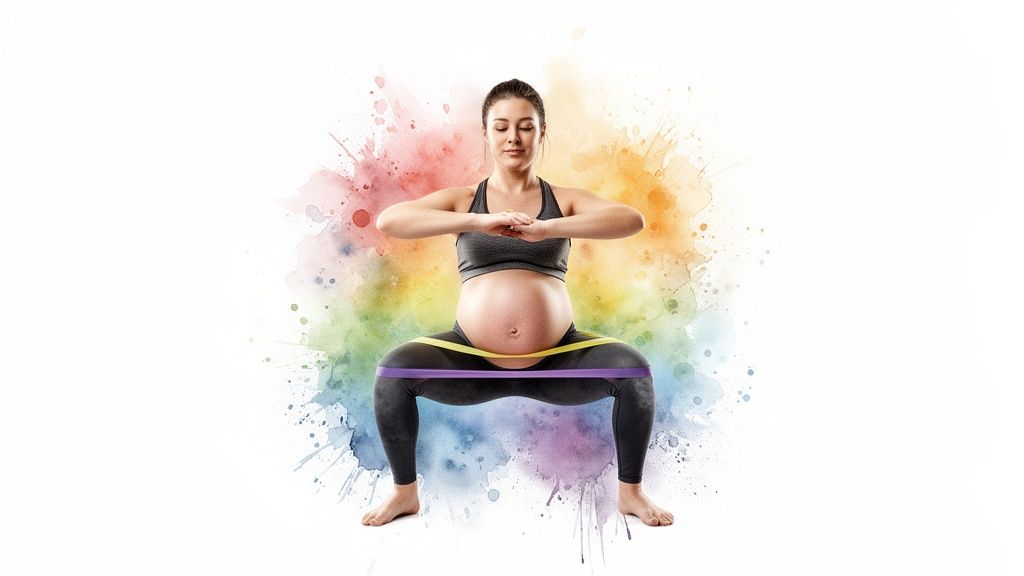
Pregnancy and the period after birth are absolute exceptional conditions in which your body changes fundamentally. Your training takes on a completely new role here: it's no longer about pushing your limits, but about supporting and strengthening you. Your body is doing great things during this time, and your fitness routine should reflect that.
It's crucial to understand the unique demands of these phases and cleverly tailor your training accordingly. In this way, you not only protect yourself and your baby, but also lay the foundation for a healthy recovery and your well-being in the long term.
Exercise is not only permitted during pregnancy, but - as long as there is nothing medically contrary to it - it is even expressly recommended. Regular, tailored training can alleviate typical complaints such as back pain, improve your mood and optimally prepare you for the rigors of childbirth.
Your female physiology is now undergoing massive hormonal and structural changes. The hormone relaxin loosens your connective tissue and ligaments to make room for your growing child. At the same time, your body's center of gravity shifts, which presents completely new challenges to your balance and posture.
You should pay particular attention to this now:
Two areas of your body deserve special attention during pregnancy and afterwards: your pelvic floor and your core muscles. They form the supporting foundation of your body and have to bear an enormous load.
A strong and at the same time elastic pelvic floor is worth its weight in gold during childbirth and prevents incontinence later on. Your deep core muscles, especially the transversus abdominis, act like a natural corset. It stabilizes your spine and supports your growing belly.
Think of your pelvic floor and core as the ultimate pregnancy support team. Targeted training of these muscles is like investing in an easier birth and a faster, healthier recovery.
Examples of supportive exercises:
After giving birth, your body needs one thing above all else: time. Regression is a process that requires patience and a gentle, gradual approach. Only start training again once you have received the green light from your doctor or midwife.
The initial focus is clearly on healing and reactivating the deep muscles. Start with gentle pelvic floor exercises and consciously feel into your deep abdominal muscles. Only when this base is stable again can you increase the intensity slowly and in a controlled manner.
Many women also experience hormonal changes after giving birth that can be reminiscent of perimenopause. Find out more about how you can strengthen your base through targeted training even in such phases Strength training during perimenopause Protection through muscles. Be gentle with yourself and celebrate every little progress on the way back to your strength - after all, your body has performed a miracle.
Okay, now you have the tools to take your training to a whole new level. It's about all the knowledge about the female physiology to take it and pour it into a plan that really suits you and your everyday life. Your body is constantly sending you signals - the key to success is finally understanding them and responding to them.
This path means no longer seeing exercise as a chore, but as your most powerful tool for greater well-being. Instead of stubbornly clinging to a plan that completely drains you on some days, you learn to manage your energy cleverly and based on cycles. The goal? A sustainable routine that strengthens you without burning you out.
The first step is actually the most important: start paying close attention to your body and your cycle. You don't need any complicated tools or expensive gadgets. A simple note app on your cell phone or a classic calendar are completely sufficient. Just write down how you feel, what your energy level is and how your workout went that day.
After just a few weeks you will see clear patterns. You suddenly see when your absolute power phases are and when your body simply needs more rest and gentler movement. With this knowledge you can plan your week super easily and flexibly.
This is what your cycle-based approach could look like:
Your body is not a clockwork mechanism that works the same way every day. A holistic approach to training means accepting these natural fluctuations and using them as your personal superpower.
You definitely don't have to walk this path alone. An environment that understands and supports you is worth its weight in gold. Look for coaches who really know female physiology and can give you individual advice. They help you put theory into practice and continually adapt your plan.
A community of like-minded people can also make a huge difference. Exchanging ideas with other women who have similar experiences is incredibly motivating and gives you the feeling of being truly understood. With us in Motherhood Club or in our courses you will find exactly this support.
Always remember: Every good training plan requires phases of stress and relief. By learning to live exactly this rhythm in your training, you will finally work with Together with your body - and not against it. This is exactly the core of training that will make you strong, healthy and satisfied in the long term.
Here we clear up the typical questions that keep coming up in everyday training. These practical answers should give you more clarity and security so that you can tailor your training perfectly to your body and avoid classic mistakes.
This depends entirely on your goals, your current cycle phase and your ability to regenerate. Have a solid basis two to three strength training sessions proven per week. This way you give your muscles the stimulus they need to grow, but also give your body enough time to recover.
Much more important than a fixed number is the regularity and how you adapt your training. In the follicular phase, when you're bursting with energy, three intense sessions might feel just right. In the luteal phase, however, two moderate workouts, supplemented by a relaxing yoga session, are often the wiser choice.
If your clear goal is to build muscle, the answer is: cardio is best after strength training or plan it on a separate day. Why? It's simple: you want to save your full power for the heavy weights and not disrupt your body's important muscle building signals through previous endurance exercise.
A short warm-up of 5-10 minutes on the bike or treadmill is of course always a great idea to get your circulation going. However, you should consciously separate longer cardio units from strength training - this way each form of training gets the attention it deserves.
This is probably the most persistent myth of all, and the answer is a very clear one: no. Due to your naturally much lower testosterone levels compared to men, it is virtually impossible to build excessive amounts of muscle naturally.
What you get instead is exactly what most women want:
So you build strong, functional and lean muscles that not only make your body look great, but also support it in everyday life.
Strength training is your best tool for shaping your body and revving your metabolism. It makes you strong and defined – not bulky.
The absolute basis is sufficient protein intake. Protein provides the building blocks your muscles desperately need for repair and growth after exercise. Aim at about 1.6 to 2.0 grams of protein per kilogram of body weight per day, ideally spread cleverly over several meals. For example, you could drink a protein shake after training, eat chicken breast for lunch, and choose cottage cheese as a snack in the evening.
Just as important: eat enough! Your hormonal system reacts extremely sensitively to excessive calorie deficits. Get a balanced mix of complex carbohydrates for energy and healthy fats, which are essential for your hormone production. The right timing can also make a difference: a protein-rich meal or a shake shortly after your workout can optimally trigger regeneration.
Are you ready to design your training so that it really suits you and your body? At Templeshape GmbH you will find the courses, coaches and community that will support you in making your health a habit - in harmony with your physiology. Discover our offers now and find your course!
tags
Women train differently, women's fitness, hormones and sport, female physiology, cycle-based training