No products in the cart.
February 1
Strength training during perimenopause: your protective shield of muscles
0 comments

February 1
0 comments
Strength training during perimenopause is your personal protective shield against the unpleasant companions of falling estrogen levels. It is actually the most effective way to combat age-related muscle and bone loss. At the same time, it keeps your metabolism going and helps you get the weight gain that is typical in this phase of life under control. In short: Strong muscles are your best protection for more stability, energy and joy of life.
Do you sometimes feel as if your body is suddenly playing by completely new rules? Energy fluctuates, sleep is restless and the general feeling of the body changes - these are typical symptoms of perimenopause. For many women, this intense phase of change begins around the age of 40.
The main reason for this change is a slowly declining estrogen level. Imagine this hormone like a hard-working manager who has controlled countless processes in your body. When their presence diminishes, there are noticeable consequences. It is precisely at this point that targeted strength training becomes your most important ally and your muscles become an irreplaceable protective shield.
Your body slowly switches to a kind of energy saving mode. As estrogen declines, your metabolism becomes more sluggish, meaning you burn fewer calories at rest than you used to. This is one of the main reasons why many women gain weight during perimenopause, especially around their stomachs - often without having made any major changes to their eating habits.
At the same time, a gradual loss of muscle and bone mass begins if you don't take active countermeasures. Every year you lose about 1-2% of your muscle mass, which further slows down the metabolism. At the same time, the density of your bones decreases. In the long term, this significantly increases the risk of osteoporosis and bone fractures.
Of course, these physical changes can also affect your mood and emotional balance. But the good news is: You are not helpless in these processes.
Strength training is much more than just lifting weights. It is the most effective strategy to stop bone loss, control unwanted weight gain, and regain your emotional balance.
Targeted strength training sends your body powerful signals that directly counteract the hormonal breakdown processes. Every single training stimulus challenges your body not only to maintain valuable muscle mass, but also to rebuild it.
More muscles mean a higher basal metabolic rate. They're like your personal power plant, burning calories 24/7, even when you're sitting on the sofa.
In addition, training puts mechanical pressure on your bones. This stimulus is essential to activate the bone-building cells (the osteoblasts) and keep your bones strong and resilient. In this way you invest directly in your strength, stability and joy of life for the years to come.
Perimenopause is when your body starts producing hormones estrogen to shut down gradually. Imagine estrogen as a tireless manager who has been working in the background to ensure that countless processes run smoothly. It was responsible for keeping your bones strong, revving your metabolism, and protecting your valuable muscle mass.
If this manager is in the office less and less often, important processes come to a standstill. Without their instructions, your bones will slowly begin to lose density. At the same time, your muscle mass shrinks, which in turn lowers your basal metabolic rate - so you burn noticeably fewer calories when resting than you did a few years ago.
This process triggers a chain reaction that catches many women completely unprepared. Suddenly you gain weight even though you haven't changed your eating habits at all. This is because your body uses less energy and stores excess calories as fat more quickly, especially on the stomach. You can also find out more about this in our article about the challenges of weight gain during menopause.
These changes are much more than just a question of aesthetics. They have profound health effects. The combination of muscle loss (Sarcopenia) and bone loss (osteoporosis) significantly increases your risk of falls and fractures as you age.
Aber du bist diesem Wandel nicht hilflos ausgeliefert. Krafttraining ist die wirksamste and direkteste Antwort, die du deinem Körper geben kannst. Jeder Trainingsreiz ist ein klares Signal: "Stopp den Abbau! Baue neue, starke Substanz auf!"
The following graphic shows you how your muscles become a central protective shield against the typical challenges of perimenopause.
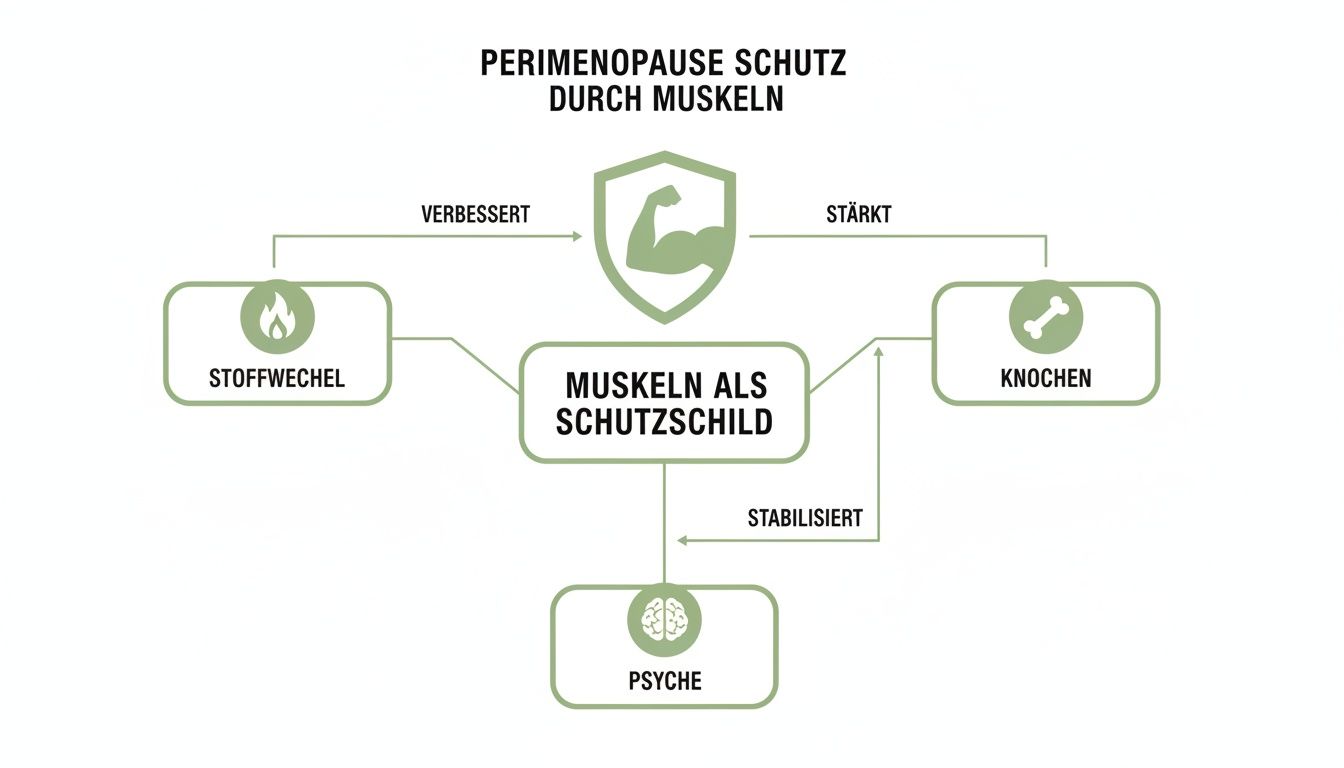
As you can see, strong muscles have a direct positive effect on your metabolism, your bone health and even your psychological stability.
This table shows you at a glance the typical physical changes of perimenopause and how strength training acts as a targeted protective mechanism.
| Challenge in perimenopause | Cause (hormonal change) | How strength training works as protection |
|---|---|---|
| Loss of bone density (risk of osteoporosis) | Less estrogen stimulates bone-breaking cells and slows down those that build bone. | Mechanical pull of the muscles on the bone stimulates bone formation and increases density. |
| Loss of muscle mass (sarcopenia) | Estrogen deficiency accelerates age-related muscle loss. | Sets targeted growth stimuli that counteract muscle breakdown and build new mass. |
| Slowed metabolism & weight gain | Less muscle mass lowers the basal metabolic rate (calorie consumption at rest). | More muscle burns more calories, even at rest. The basal metabolic rate increases again. |
| Increased risk of falls and fractures | Weaker muscles and bones as well as declining balance increase the risk. | Strengthens supporting muscles, improves coordination and balance, which prevents falls. |
Strength training is not just a single measure, but a comprehensive protective shield that starts exactly where the hormonal changes have their greatest effect.
Protecting your bones is one of the most important reasons for Strength training during perimenopause. When you tense your muscles while lifting a dumbbell, they pull on the bones to which they are attached. This mechanical stimulus is exactly the signal that your bone-building cells (osteoblasts) need to become active.
Think of it like a house: If it is regularly exposed to minor vibrations, construction workers are called in to reinforce the foundations. This is exactly what strength training does for your skeleton.
The numbers speak for themselves. Studies such as the well-known LIFTMOR study have shown that women can increase bone density in the lumbar spine by strength training with heavy weights twice a week 3% and even impressive in the hips 13.6% could increase.
At the same time, you build active muscle mass through training. And muscles are your biggest calorie consumers. The more muscles you have, the higher your basal metabolic rate is - so your engine runs hotter even when idling.
This effect helps you control hormonal weight gain and keep stubborn belly fat at bay. By specifically strengthening your body, you give it the tools to stay strong, resilient and full of energy in this new phase of life. It is your best investment in a healthy and active future.
With estrogen levels falling during perimenopause, two major health risks suddenly come knocking: osteoporosis, i.e. gradual bone loss, and Cardiovascular diseases. Your bones can become more porous and your blood vessels can lose elasticity. That sounds worrying at first, but the best news is: you are not helpless.
Your most powerful tool in this phase is targeted, intelligent strength training.
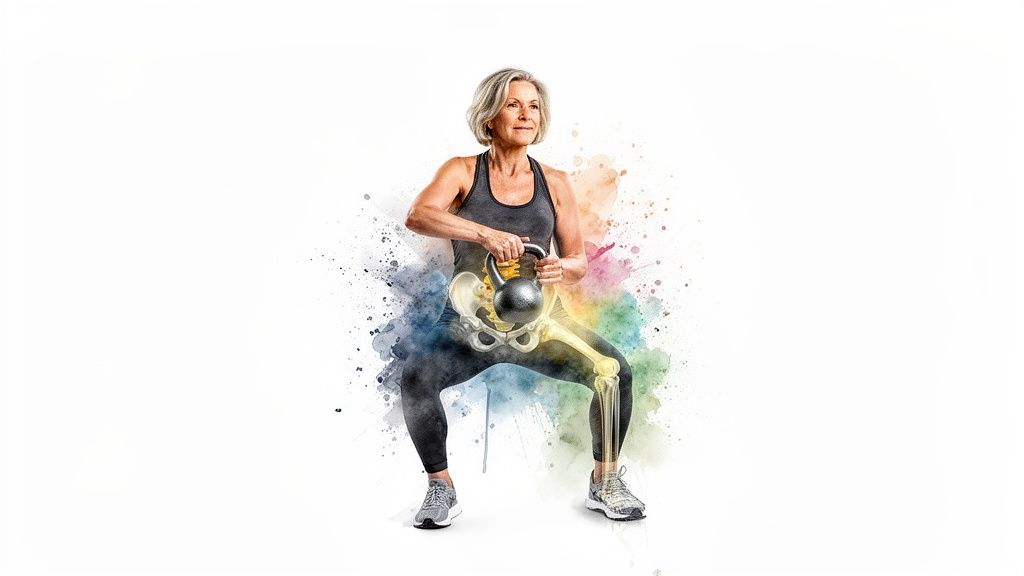
Imagine that with every squat, deadlift, or shoulder press you send a direct signal to your skeleton. The mechanical pull that your muscles exert on the bones as they work is like a wake-up call for your bone-building cells Osteoblasts.
This targeted stimulus encourages them to become active and build new, dense bone substance. Without this impulse, your body would tend to simply break down valuable bone mass due to hormonal changes.
Strength training literally forces your body to invest in the stability of your skeleton. It is the most effective method to increase bone density and actively protect you from osteoporosis.
But the effect of strength training goes far beyond the bones. It is an equally crucial protective shield for your cardiovascular system. When estrogen's protective effect wears off, your blood vessels tend to become stiffer, increasing your risk of high blood pressure and other heart problems.
But strong muscles are like a built-in regulator: they improve yours Insulin sensitivity. This means that your body can transport sugar from the blood into the cells much more efficiently and use it as energy. This not only relieves pressure on your pancreas, but also reduces the risk of type 2 diabetes, one of the biggest threats to heart health.
In addition, your heart itself will be strengthened. It doesn't have to work as hard to pump blood around the body, which can naturally lower blood pressure. The effects are enormous: Studies show that exercise, especially strength training, increases the risk of death from cardiovascular disease in women in Switzerland by an incredible amount 36% reduced - this is more than twice as much as in men (14%). You can find out more about this here: Importance of strength training during menopause.
An often overlooked but absolutely crucial advantage is protection against falls. The hormonal changes of perimenopause can affect coordination and balance. Strength training trains exactly these skills.
Not only do you build pure strength, but you also improve the neuromuscular connection - the communication between your brain and your muscles. This makes you safer, more stable and more responsive in everyday life.
This protection has a double effect:
This is exactly where we come in at Templeshape in Zurich. Our goal is to offer you training that focuses precisely on these protective mechanisms. Our courses like HIIT & Boot Camp are designed to provide intense but safe stimuli that stimulate muscle building and get your metabolism going at full speed.
In our small groups and personal training sessions, we attach great importance to clean technology. This way you get the maximum benefit from every exercise without overloading yourself. We create an environment where you feel strong and confident while you work on your health for the future. With every session you actively invest in your bones, your heart and your general resilience.
Okay, now you know Why Strength training is your strongest ally during perimenopause. But how do you actually tackle the whole thing? What does a training plan look like that really makes a difference during this crucial phase of life?
First of all: Forget the myth that women should only train with light, pink dumbbells. This is long outdated.
To trigger real change - denser bones, tighter muscles and a metabolism that's running at full speed - you need a very simple but powerful principle: this progressive overload. Sounds technical, but it just means: You have to keep challenging your muscles a little bit more so that they have a reason to grow.
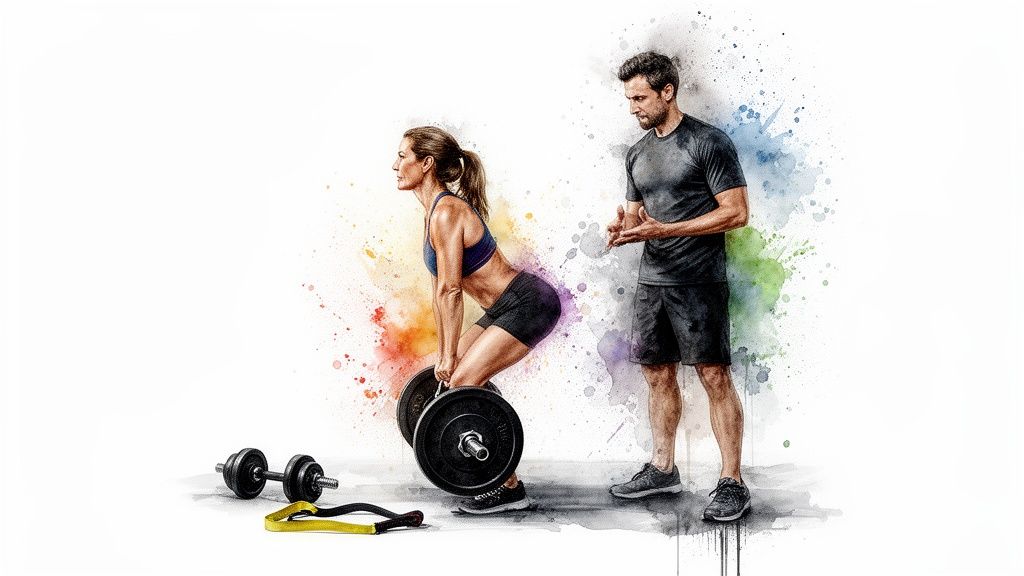
Your plan should be based on big, fundamental movements - the so-called Basic exercises. These are exercises that work multiple joints and muscle groups at once. They are brutally efficient because they not only build muscle, but also increase your strength for everyday life and give the bones the strongest impulse to become stronger.
These are the Big Five that should not be missing from any plan:
Diese Übungen sind das Herzstück deines Erfolgs. Sie geben dir den grössten "Bang for your buck" – maximalen Nutzen für deine investierte Zeit and Energie.
During perimenopause the motto is: quality beats quantity. Your body reacts more sensitively to stress and needs targeted breaks to become stronger.
Two to three strength sessions per week are the sweet spot. This gives your body – from your muscles to your tendons to your nervous system – enough time to recover and make the important adjustments.
Intensity is the key. You need to train with a weight that really challenges you. A good rule of thumb: choose a weight that you 8 to 12 clean reps you can do it, although the last one or two should be really strenuous. You should feel like there might be one more repetition possible, but definitely not more than that. This is exactly the stimulus your muscles need to grow.
Regeneration is now more important than ever. Learn to listen carefully to your body's signals. During perimenopause, your regeneration times can lengthen. Poor sleep, stress or the hormonal rollercoaster – all of these influence how quickly you recover.
Watch out for these warning signs:
If you notice this, it's not a sign of weakness. It's your body's signal that it needs more time. Take an extra rest day or do a light workout. Active recovery like a walk, gentle stretching or a session of yoga can work wonders.
This plan will guide you on how to combine two to three effective strength training sessions per week with active recovery for optimal results.
| day | activity | Focus & Examples |
|---|---|---|
| Monday | Strength training (full body) | Squats, bench presses, rows, planks |
| Tuesday | Active recreation | 30-45 minutes of brisk walking or gentle yoga |
| Wednesday | Rest day | Complete break for regeneration |
| Thursday | Strength training (full body) | Deadlifts, shoulder presses, lunges, pull-up variations |
| Friday | Active recreation | 30 minutes cycling or swimming |
| Saturday | Optional third unit or activity | A HIIT class, a hike or light Pilates |
| Sunday | Rest day | Relaxation, preparation for the new week |
Of course, this plan is just an example. The key is to adapt it to your needs, your daily routine and your energy level.
At Templeshape in Zurich we put in our Personal training and small group courses ensure that you carry out each exercise technically cleanly and safely. Our coaches will help you find the right intensity and adapt your training so that you reach your goals without overwhelming yourself. This way you can fully exploit your potential and build sustainable strength. If you would like to find out more about how you can successfully build muscle after the age of 50, read our guide Building muscle at age 50.
Good training is only half the battle. Especially during the perimenopause, nutrition and regeneration become the decisive factors for your success. Imagine your body like a construction site being renovated – a stable new building requires the right, high-quality building materials. Without it, all the hard work in training goes to waste.
Your most important building material is now: protein.
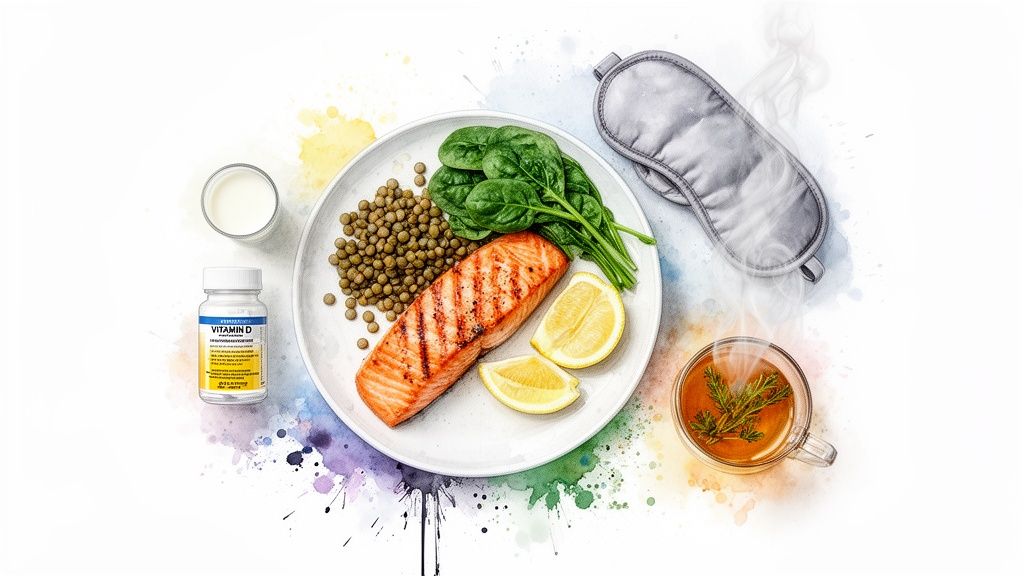
The hormonal changes make it harder for your body to build and maintain muscle mass. One also speaks of one here anabolic resistance. This means that your muscles no longer react to the training stimulus as efficiently as they used to. You have to provide them with more building material - i.e. protein - to achieve the same effect.
Your goal should About 1.6 to 2.0 grams of protein per kilogram of body weight every day be. For a woman weighing 70 kilograms, this means around 112 to 140 grams of protein.
The best way to do this is to make protein a regular part of every meal. Here are a few simple examples:
If you want to delve deeper into the topic, check out our Beginner's guide to protein to.
In addition to protein, two other nutrients come into focus: Calcium and Vitamin D. They are the unbeatable duo for strong bones. Calcium is the primary building block of your bones, while vitamin D ensures that your body can absorb calcium in the first place.
So consciously pack calcium-rich foods on your plate - think dairy products, green leafy vegetables like kale or calcium-fortified plant-based milk alternatives. Your body produces vitamin D through sunlight, but in our latitudes, a supplement is often a good idea, especially in winter.
During perimenopause, your basal metabolic rate drops by 300-500 calories per day. One Study by the German Sport University Cologne showed that a combination of strength and endurance training together with adjusted protein and carbohydrate intake caused significant improvements in strength capacity, fat loss and bone metabolism.
The construction break is just as important as the building materials. Your body repairs and strengthens itself not during exercise, but in the rest periods afterwards. Quality sleep now becomes your most important recovery strategy.
While you sleep, your body releases growth hormones, which are essential for repairing muscle tissue. However, many women struggle with sleep disorders during perimenopause, which makes a relaxing evening routine even more important. Imagine drinking herbal tea, reading a few pages of a book, or taking a warm bath – small rituals can make a big difference.
Targeted breathing exercises can be of great help here. At Templeshape we offer Breathwork sessions that will help you to specifically shut down your nervous system and prepare you for a restful night.
Active relaxation such as gentle yoga or a walk in the fresh air can also work wonders. By consciously paying attention to recovery, you support your hormonal balance and get the most out of your training.
You now know how incredibly valuable strength training is as a protective shield for your body during perimenopause. But the big question remains: How the hell are you supposed to fit this into the hectic everyday life of Zurich? At Templeshape, we know the hurdles that stand in your way as a working woman or mother at this stage of your life. Time is short, energy is on a rollercoaster and often there is simply not the right support to keep going.
That's exactly why we created a place where you feel safe, understood and truly motivated.
We know that the first step is often the hardest. With us you are not alone. In our studios CITY and AIRPORT Our qualified coaches will take you by the hand - regardless of whether you are an absolute beginner or already have training experience. They pay close attention to ensure that you perform each exercise safely and effectively to achieve your goals.
Our diverse range of courses is perfectly tailored to your needs. You can choose exactly what is good for you and challenges you best:
Wir sind mehr als nur ein Fitnessstudio – wir sind eine Community. Unser Ziel ist es, dir dabei zu helfen, Gesundheit zu einer nachhaltigen, positiven Gewohnheit zu machen: "Make Health Your Habit".
And if you would like even more individual support, we can Personal training tailored specifically to your wishes and physical requirements.
Your well-being goes far beyond just training. Exchange yourself Motherhood Club Talk to like-minded people about the joys and challenges of motherhood or join one of our Retreats new energy and a precious moment of peace just for you. At Templeshape you will find the space and support you need to go through perimenopause strong, healthy and confident.
Deciding to start strength training is one of the best decisions for your health. However, particularly during the perimenopause, very specific questions and uncertainties often arise. Here we answer the most frequently asked questions so that you can get started confidently and safely.
Clearly: Yes, to improve your bone density and build muscle, you need noticeable resistance. The myth of light, pink dumbbells for women is long outdated. Your body needs real incentive to adapt and get stronger - and you give it that by challenging it.
But that doesn't mean that you have to start immediately with maximum loads. The magic word is progressive overload. You are improving slowly but surely. The weight is right when you can perform an exercise cleanly, but the last few repetitions really require effort.
For the best results, a rhythm of two to three times a week proven to be ideal. During perimenopause, your body often needs a little more time to regenerate. This frequency gives your muscles, tendons and bones enough time to recover between training sessions and complete the important adaptation processes.
Always remember: Quality absolutely trumps quantity here. Two focused, really good training sessions are worth a lot more than five half-hearted ones.
That's not a problem at all - quite the opposite! As a beginner, you will probably make noticeable and visible progress very quickly, which is incredibly motivating. The only important thing is that you get started safely and pay attention to the correct technique right from the start.
Professional instructions are worth their weight in gold, especially for beginners. A coach ensures that you learn the movements correctly from scratch. This way you avoid injuries and get the most out of every repetition.
You start with simple exercises and learn the movement first before increasing the weight. Our trainers at Templeshape are specialized in introducing you to your first training session safely and effectively.
When done correctly, the exact opposite happens. Strength training strengthens the muscles surrounding your joints. Imagine these muscles as a supportive corset that stabilizes the joints and relieves stress in everyday life.
It is important that you listen to your body and if you are in pain, adjust an exercise or choose an alternative. Correctly dosed and cleanly executed Strength training is one of the best measures against joint problems.
Are you ready to make your body strong and resilient for whatever is to come? At Templeshape In Zurich you will find the perfect support and a community that will motivate you to get started safely and effectively. Discover our courses or book a personal trial training session. We look forward to seeing you
tags
Health menopause, hormones and fitness, strength training perimenopause, muscle building for women 40+, templeshape Zurich