
Yoga
Yoga Nidra: Step-by-Step Guide, Practice and Effects
Yoga Nidra is guided relaxation usually practised lying down. Learn the typical sequence, try a clear 15-minute practice and understand its realistic limits.
Yoga Nidra is guided relaxation usually practised lying down. A voice takes you through body awareness, observation of the breath and a gradual return. The method is also called “yogic sleep”, but you do not have to sleep or reach a special state of consciousness.
Yoga Nidra at a glance
- Position: on your back or in another comfortable, pain-free position
- Duration: 15 to 20 minutes is enough for a first practice
- Sequence: settle, notice the body, observe the breath, return
- Purpose: a conscious pause without pressure to perform
- Equipment: a mat, blanket and optional support under your head or knees
Falling asleep does not mean you failed. Next time, try a shorter recording or practise earlier in the day.

What is Yoga Nidra?
Yoga Nidra is a guided relaxation method rooted in the yoga tradition. Unlike an active yoga class, you remain mostly still. You listen to the instructions and move your attention through the body, the breath and inner sensations.
The word “sleep” can be misleading. Yoga Nidra does not replace nightly sleep. Some people remain awake throughout, others become drowsy or briefly fall asleep. All three responses are common.
The usual sequence
- Get comfortable: Lie down, cover yourself and make sure you will not be disturbed.
- Arrive: Feel the surface below you and notice sounds without following them.
- Sankalpa: Some practices use a short personal intention. This step is optional.
- Body scan: Move attention systematically through individual parts of the body.
- Breath awareness: Notice the breath without forcing a particular pace.
- Imagery: Depending on the style, the guide may introduce images, opposites or sensations.
- Return: Deepen the breath, move your hands and feet and sit up slowly.
The order varies between teachers. A responsible recording allows time to return and avoids exaggerated promises.
A 15-minute Yoga Nidra practice
Choose a place where you can lie safely. Silence your phone and leave two quiet minutes after the practice. Do not use Yoga Nidra while driving or whenever you need to remain alert.
1. Set up your position
Lie on your back. If that is uncomfortable, turn onto your side or raise your upper body. A cushion under the knees can ease pressure in the lower back. Cover yourself before you become cold.
Close your eyes only if that feels comfortable. Otherwise, keep a soft gaze on one fixed point.
2. Notice where your body meets the floor
Feel the contact points beneath your head, shoulders, back, pelvis, legs and heels. Nothing needs to change. Let the floor support your weight for several breaths.
3. Move through the body
Start with your right hand: thumb, fingers, palm, wrist, forearm, upper arm and shoulder. Switch to the left side. Continue through the chest, abdomen, pelvis, right leg and left leg to the toes.
You do not need to feel a distinct sensation everywhere. If one area feels vague, name it silently and continue.
4. Observe the breath
For five to ten breaths, notice where your body moves as you inhale and exhale. Let the breath keep its natural rhythm. When thoughts appear, return to the next movement of the breath.
5. Return gradually
Notice the room again. Move your fingers and toes, stretch if needed and roll onto one side. Sit up only when you feel awake and oriented. Avoid standing abruptly after deep relaxation.
What are the possible effects?
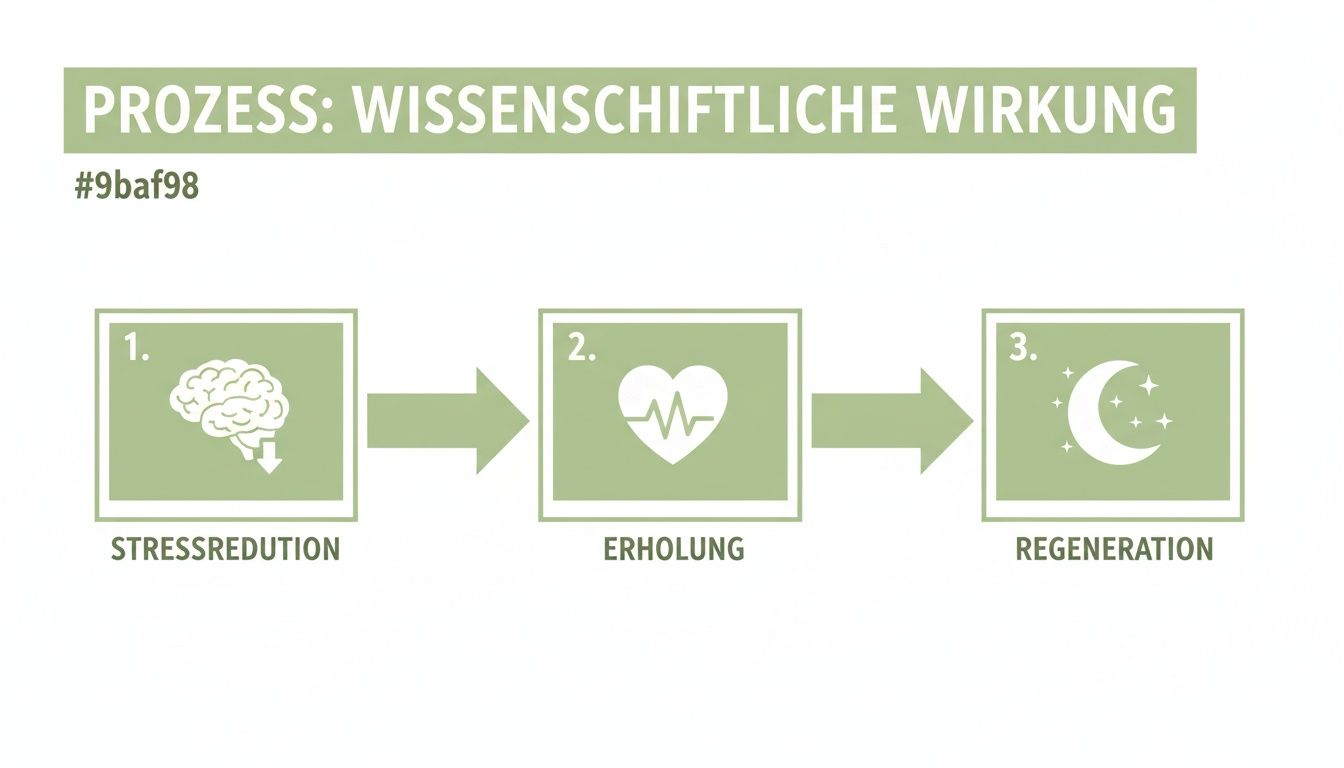
People use Yoga Nidra to unwind after a busy day, develop body awareness or prepare for sleep. The immediate experience varies. One person may feel calm, another sleepy, while someone else may notice little change.
Research has examined Yoga Nidra in relation to stress, sleep and wellbeing. The evidence is still mixed because studies use different group sizes, durations and instructions. Claims such as “30 minutes of Yoga Nidra replace several hours of sleep” are not supported well enough to present as fact.
Yoga Nidra can complement a relaxation routine. It does not replace adequate sleep, medical care or psychotherapy.
When to take extra care
Guided inward attention can make some people feel unsettled or bring up difficult memories. Keep your eyes open, change position or stop if you feel uncomfortable. Seek professional support for persistent sleep problems, anxiety, pain or other symptoms.
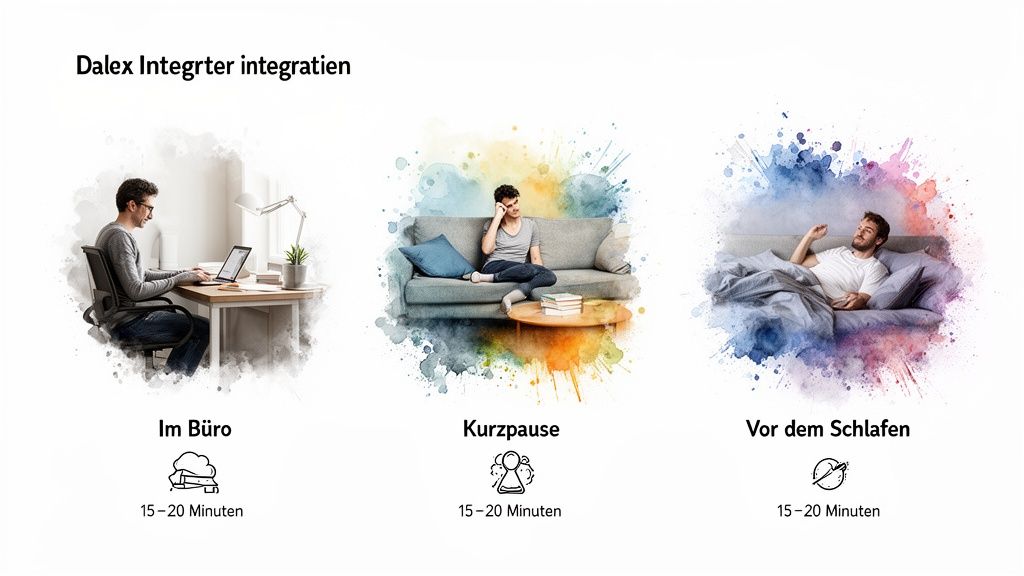
When can you practise?
Short sessions are often easier to repeat than occasional long ones. Possible times include:
- after work, before the evening begins
- as a quiet afternoon pause
- after an active yoga or training session
- before bed, if the recording does not make you more alert
You do not need a rigid schedule. Testing two or three voices and session lengths will tell you more than trying to design a perfect routine in advance.
Yoga Nidra, meditation or Yin Yoga?
Yoga Nidra is guided and usually practised lying down. Meditation may be guided or silent and often takes place seated. Yin Yoga uses longer-held physical postures and involves more movement. None is universally better; choose the practice you can use safely and consistently.
If you want guided movement in person, explore Yoga in Zurich Wiedikon. You can also read our guide to Breathwork in Zurich: studio or home or check the current class schedule.
Frequently asked questions
Do I have to stay awake during Yoga Nidra?
No. The guide invites you to remain aware, but falling asleep can happen. If conscious practice matters to you, choose a shorter session or a time when you are less tired.
How long does Yoga Nidra take?
Recordings often last between 10 and 45 minutes. Fifteen to twenty minutes is manageable for beginners. A longer session is not automatically better.
Can I practise Yoga Nidra in bed?
Yes. You are more likely to fall asleep in bed. A mat may suit a conscious daytime pause; the bed is fine for an evening routine.
Is a sankalpa required?
No. A sankalpa is a short personal intention used in some traditions. You can leave it out and focus on the body and breath.
Does Yoga Nidra help with sleep problems?
It may help you settle, but it is not a guaranteed treatment for a sleep disorder. Seek medical advice if problems falling or staying asleep persist or affect your daily life.
Templeshape
Turn reading into action.
Discover the Templeshape offer that fits your next step.
View schedule