
Ernährung
Coffee on an empty stomach: what it does to your cortisol
Coffee on an empty stomach can stress cortisol, blood sugar and digestion. Build a better morning routine with water, movement, breakfast and coffee after.
Reaching for your coffee cup first thing in the morning is a ritual many of us hold sacred. But what feels like the perfect start to the day could do more harm than good. Here is what happens in your body when caffeine hits an empty system.
# Why your first coffee should wait

# # The morning stress reaction
Your body is still waking up. Your hormonal system is gearing up for the day. If you drink coffee right now, you give your system an unnecessary electric shock. The caffeine triggers a sudden surge in the stress hormone cortisol.
This puts your body into an artificial fight-or-flight mode, even though there is no real danger. Instead of waking up gently, you press the panic button right after getting up. Imagine sitting relaxed on the sofa and someone jumps out from behind the curtain shouting “Boo!” That is what you do to your body every morning.
Your morning coffee should support you, not add stress. Drinking it on an empty stomach is like a false alarm for your entire system.
Over time, this daily stress can throw your blood sugar out of balance and lead to afternoon energy crashes. A small change in sequence makes a difference: water, movement or breakfast first, then coffee.
If you practice intermittent fasting, timing still matters. Read more about intermittent fasting.
# How coffee disrupts your morning hormone orchestra
Your hormonal system works like a well-rehearsed orchestra. Every hormone knows when to play so you stay energized and focused. The conductor of this morning concert is cortisol.
Cortisol is your built-in alarm clock. Your body releases it naturally when you wake up. The level rises slowly and typically peaks between 8 and 9 a.m. This is a healthy process that is part of your biorhythm. To dive deeper, read our article about your circadian rhythm.
Now coffee enters the picture. If you drink it during this window when cortisol is already at its peak, it is like drowning out the orchestra with a loud trumpet. The coffee pushes the cortisol peak even higher and puts your system into unnecessary alarm mode.
# # The double stress effect in the morning
Caffeine on an empty stomach acts like an accelerant for your body’s stress response. Instead of being gently woken, you are catapulted into fight-or-flight mode. Inner restlessness, nervousness or a racing heart often follow.
The tricky part: over time, your body adapts to this artificial stress. Natural cortisol production blunts. You feel more tired and listless without the morning coffee. You build a dependence just to feel normal again.
Coffee on an empty stomach sabotages your body’s fine timing. It amplifies stress instead of gently energizing you.
But cortisol is not the only hormone thrown off. The caffeine kick also adds extra adrenaline. Your heart beats faster, blood pressure rises — your whole body prepares for a danger that is not there.
The table below shows the hormonal effects in direct comparison:
# # Hormonal effects of coffee in the morning
A direct comparison of coffee on an empty stomach versus coffee after a meal.
| Hormone | Effect of coffee on an empty stomach | Effect of coffee after a meal |
|---|---|---|
| Cortisol | Strong, excessive release; can blunt the natural reaction long-term. | Moderate, gentler stimulation; the natural cortisol curve is less disturbed. |
| Adrenaline | Significantly increased output; promotes fight-or-flight response (nervousness, racing heart). | Lower adrenaline release; less abrupt rise in pulse and blood pressure. |
| Insulin | Higher blood sugar response after breakfast; may contribute to insulin resistance. | More stable blood sugar; food buffers the caffeine effect on cells. |
Whether your body has a foundation to work with makes a big difference. A small meal can soften the sharp edges of the caffeine kick considerably.
# # The underestimated blood sugar trap
This is particularly relevant in Switzerland, where we drink around 1,000 cups of coffee per person per year — among the highest in the world. Coffee before breakfast can increase post-meal blood sugar by up to 50%.
Why? Caffeine temporarily impairs how well your cells absorb sugar from the blood. Your pancreas works overtime, and your energy becomes less stable.
# Avoid the blood sugar roller coaster and the afternoon slump
Coffee on an empty stomach can send your blood sugar on a wild rollercoaster ride. It is like revving the engine with no fuel in the tank.
Caffeine can temporarily block your cells’ ability to absorb sugar. Normally, cells soak up sugar like a sponge to produce energy. Caffeine puts a thin barrier over those sponges.
When your stomach is empty, this effect is strongest. Your body reacts to the caffeine, releases stress hormones, and sugar enters the blood — but the cells cannot use it properly.
# # What really happens to your blood sugar
The result is a rapid rise followed by an equally rapid crash. At first you feel alert and energized, but soon the pendulum swings the other way.
This crash causes the dreaded afternoon slump. You feel tired, unfocused, and crave something sweet. Your body is crying out for quick energy to offset the drop.
A stable blood sugar level is the key to consistent energy throughout the day. Your first meal sets the foundation.
The chart below shows how much blood sugar can spike when you drink coffee before breakfast.
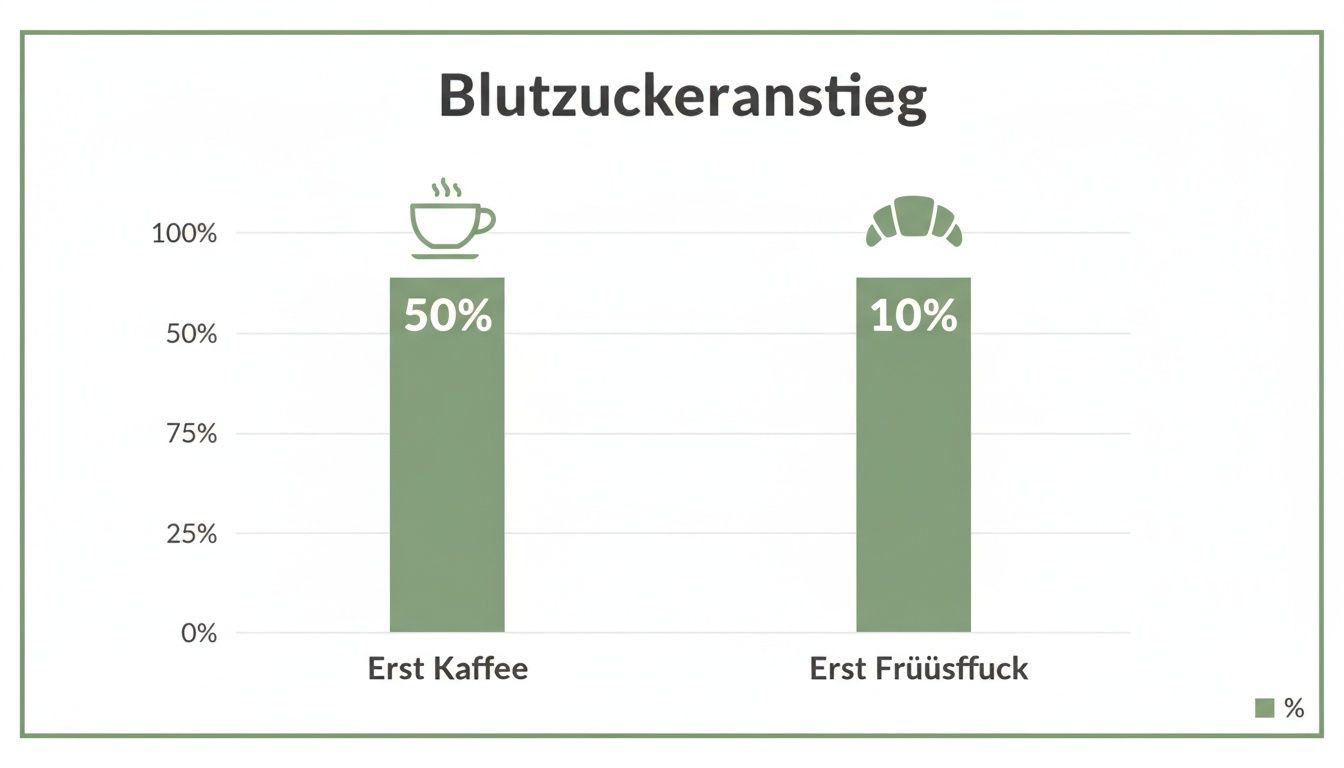
Coffee before the first meal can push blood sugar up by 50%. After breakfast, the reaction is significantly smaller.
# # The consequences for your everyday life
Imagine a typical work day. You start with coffee on an empty stomach and feel briefly energized. By 11 a.m. the first cravings hit. After lunch, around 2 p.m., you crash. Concentration drops and productivity suffers.
These fluctuations do not just affect your work performance. They drain the energy you need for your evening workout. Instead of feeling strong, you battle the day’s exhaustion.
Direct consequences of the blood sugar roller coaster:
- Cravings: Your body demands quick sugar to compensate for the drop. Unhealthy snacks follow.
- Poor concentration: Your brain struggles with the swings and cannot perform consistently.
- Energy crashes: The afternoon slump becomes a fixture instead of steady energy.
Breaking the cycle — eating first, then coffee — protects your hormonal system and secures stable energy from morning to evening.
# How coffee on an empty stomach disrupts your digestion

Beyond the hormonal chaos, there is a direct reason to delay that first coffee: your stomach. Coffee is naturally acidic and contains compounds that ramp up stomach acid production.
When this acid kick hits an empty, unprotected stomach, it gets uncomfortable. The stomach lining is directly irritated — heartburn, a burning chest, or acid reflux can follow.
Imagine pouring vinegar onto an unprotected wooden board. The acid attacks immediately. Breakfast acts like a protective tablecloth that absorbs and neutralizes it.
If you already have a sensitive stomach, morning coffee can trigger pain, bloating, or nausea and worsen existing problems.
# # Breakfast as an important protective buffer
Even a small snack before coffee acts as a shield for your stomach lining. Food dilutes the acid and prevents it from concentrating in one spot.
A handful of nuts, a small yogurt, or a banana can noticeably reduce the irritating effect.
# # When nutrients fall by the wayside
Certain compounds in coffee, especially tannins, can block mineral absorption in the intestines.
This affects iron and calcium — two nutrients essential for energy and bone health. On an empty stomach, this effect intensifies and can contribute to poorer nutrient supply over time.
Watch for these warning signals:
- Heartburn: A burning sensation rising from the stomach toward the throat.
- Stomach pain: A dull or cramp-like feeling in the upper abdomen.
- Nausea: A queasy feeling that often starts shortly after drinking coffee.
- Bloating: Feeling uncomfortably full despite having eaten little.
# Your new morning routine for stable energy and hormone balance
You do not have to give up coffee. The fix is simple: change the order. Give your body what it needs first, then enjoy your coffee.
Small adjustments build a routine that keeps hormones calmer, energy steadier, and the afternoon slump at bay.
# # Step 1: A gentle start to the day
Before you reach for the coffee maker, let your body wake up and rehydrate. After hours without fluids, your body is dehydrated. What it needs first is water.
Simple, effective alternatives for the first move in the morning:
- A large glass of water: Replenishes empty stores and kick-starts metabolism.
- Water with a squeeze of lemon: Supports digestion and provides a small dose of vitamin C.
- A short breathing exercise: Two to three minutes of deep breathing by an open window sends fresh oxygen to your brain and signals calm to your nervous system.
If stress hits you hard in the mornings, Breathwork in Zurich fits naturally into this routine.
# # Step 2: Stabilize blood sugar with a smart breakfast
Eat something before you drink your coffee. It does not need to be elaborate. A small protein- and fat-rich meal creates a buffer for the caffeine.
Your first breakfast is the foundation for the whole day. Give your body the right building blocks before you switch on the turbo.
Quick, hormone-friendly ideas — ready in under five minutes:
- Greek yogurt with berries: Protein, healthy fats, and antioxidants.
- A handful of nuts or almonds: Packed with healthy fats and fiber.
- A quick protein shake: Protein powder with water or plant milk, maybe half a banana.
- Two boiled eggs: A classic that keeps you full and delivers key nutrients.
These keep blood sugar stable, so caffeine enters your system more slowly and gently.
# # Step 3: The perfect timing for your coffee
After water and food, it is time for coffee. The ideal moment is when your natural cortisol level starts to drop again.
That is usually after 9:30 a.m. Coffee then works best because it does not compete with your body’s own stimulant. You get the energy boost without overloading your hormonal system. For more on structuring your day, read our guide on biohacking routines for more energy.
# # Hormone-friendly alternatives to early morning coffee
Simple morning rituals that wake your body gently instead of stressing it.
| Alternative | Effect on the body | Practical tip |
|---|---|---|
| Large glass of water (lukewarm) | Rehydrates after the night, stimulates metabolism without shocking the system. | Prepare the glass the night before and put it on your nightstand. |
| Water with lemon and salt | Provides electrolytes (sodium) and vitamin C, supports adrenal glands and digestion. | Squeeze half a lemon, add a pinch of sea salt, top up with water. |
| Short breathing exercise (2–3 min) | Supplies your brain with oxygen, lowers stress, activates the parasympathetic nervous system. | Sit by an open window. Inhale 4 seconds, hold 4, exhale 6. Repeat 5–10 times. |
| Light snack (protein/fat) | Stabilizes blood sugar and prevents a cortisol-insulin spike from coffee. | A handful of almonds, a spoon of nut butter, or a boiled egg. |
# Why movement before coffee is the better choice
When you drink coffee first, you give your body a quick stimulus. When you move first, you use the natural cortisol rise productively: circulation, breathing, and muscles activate before caffeine enters the system.
It does not need to be a hard workout. Ten to twenty minutes suffice:
- an easy walk
- a short mobility flow
- calm breathwork by the window
- a light yoga or Pilates session
- gentle strength work if you feel awake
After that, coffee tastes better. Your body has had water, oxygen, and movement already. The order matters: regulate first, stimulate after.
If you want to train mornings in Zurich, check the Templeshape schedule. Yoga, Pilates, Breathwork, and HIIT at Health Temple CITY suit a routine that builds energy instead of stacking stress.
Try a better morning routine?
Start with water, 10 minutes of movement, and breakfast. Drink your coffee after. If you need a fixed slot, find suitable morning classes in the schedule.
# Your most pressing questions about coffee and cortisol
# # Does coffee on an empty stomach always raise cortisol?
Yes. Caffeine stimulates the adrenal glands to release cortisol regardless of whether you have eaten. On an empty stomach, the effect is stronger because there is no food to buffer the caffeine. If your cortisol is already peaking between 8 and 9 a.m. — which is natural — coffee pushes it even higher. Waiting until after breakfast, or at least after 9:30 a.m. when cortisol starts to decline, keeps the spike manageable.
# # Does it make a difference whether I drink black coffee or coffee with milk?
A small one, but it does not fix the root cause. A splash of milk provides some fat and protein, which can slightly delay caffeine absorption and buffer stomach acid.
The stomach may feel a bit gentler. But the core issue — the cortisol surge and blood sugar disruption — remains. A latte on an empty stomach is kinder to your gut than a black espresso, but a real breakfast is the better foundation for hormone balance.
# # I do intermittent fasting. How do I fit coffee in?
Black coffee with its few calories does not break the metabolic fast. But hormonally, coffee right after waking still triggers the stress reaction we described — even without calories.
Push your coffee as close to your first eating window as possible. Start the day with a large glass of water or unsweetened herbal tea instead.
If you need a caffeine kick while fasting, listen to your body. Shaky, restless, or nervous? That is a clear sign your system cannot handle the kick without food.
Consider adjusting your fasting window if these effects persist.
# # How long should I wait after eating before drinking coffee?
A simple rule: 15 to 30 minutes after eating is ideal. This gives your body time to start digestion and stabilize blood sugar.
The most important thing is having something in your stomach at all. A banana, a yogurt, or a handful of nuts is enough to cushion the hormonal spike. The goal is simple: give the caffeine a foundation so it does not hit your system unchecked.
# # Does all of this also apply to decaffeinated coffee?
Partially. Decaf does not trigger the strong cortisol surge and blood sugar roller coaster to the same degree.
For very early mornings, it is a better option. But note: decaf still contains acids that stimulate stomach acid production. If your stomach is sensitive, even decaf can cause discomfort. For hormone balance, it is the safer choice if you cannot skip the morning ritual.
Want a morning routine that fits real life? At Templeshape, you train in small groups: yoga, Pilates, Breathwork, HIIT, and personal training at Health Temple CITY. Check the schedule or start with Breathwork in Zurich if stress and energy are your main topics.
Templeshape
Turn reading into action.
Discover the Templeshape offer that fits your next step.
View schedule