
Wellbeing
Stretching exercises for more mobility and strength: your practical guide
Stretching exercises for more mobility and strength – that’s not a contradiction. On the contrary, it is an extremely clever combination. Many people still see stretching as just a “cooldown” after exercise. But these exercises are so much more than that. Think of stretching as a tool that makes your muscles work more efficiently and increases your range of motion […]
Stretching exercises for more mobility & strength - that’s not a contradiction. On the contrary, it is an extremely clever combination. Many people still see stretching as just a “cooldown” after exercise. But these exercises are so much more than that. Think of stretching exercises as a tool that makes your muscles work more efficiently and increases your range of motion. And that is exactly what can directly increase your strength performance.
# Why stretching is much more than just muscle relaxation
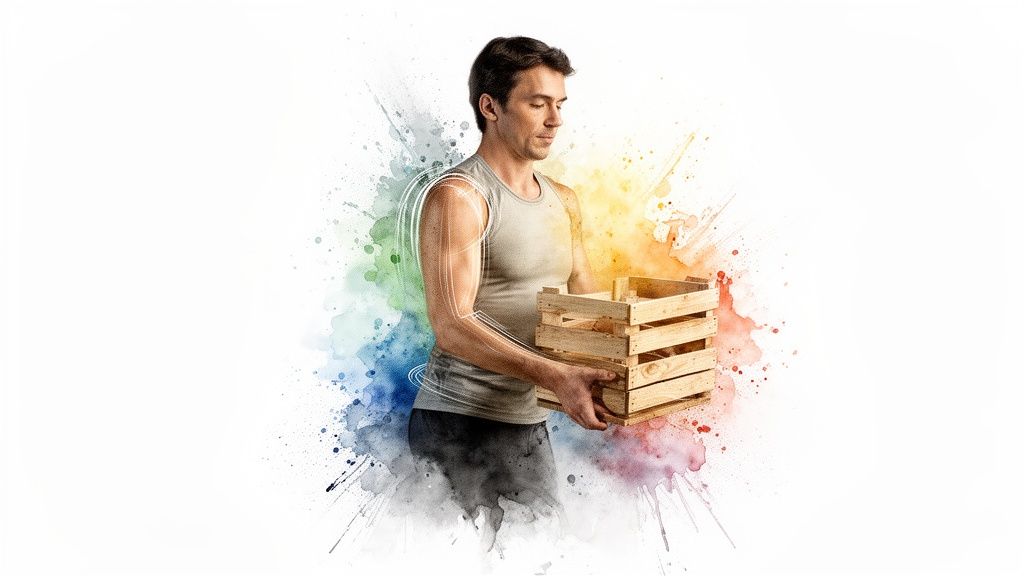
If you still think of stretching as just pulling muscles apart to avoid a hangover, let’s rethink that image. Stretching is an absolutely crucial component to a strong, resilient and healthy body. It is the bridge between pure strength and functional movement that you need in everyday life.
Imagine your muscles like rubber bands. A short, brittle band can withstand a certain amount of tension, but tears quickly and only has a short range. A long, elastic band, on the other hand, can stretch widely without tearing, generating force over a much greater range of motion. This is exactly what happens in your body when you regularly incorporate stretching exercises into your routine for more mobility and strength.
# Flexibility as a basis for strength and stability
A greater range of motion in your joints – the so-called Range of Motion (ROM) – is the direct key to more strength. If your muscles and surrounding fascia tissue are flexible, they can perform movements beyond their full, intended radius.
A great example of this is the squat:
- With limited mobility: If your hips or ankles are stiff, you simply won’t be able to squat deeply. Your body has to compensate for this, your form suffers, and you only activate the large muscle groups such as your buttocks and thighs insufficiently. At the same time, the risk of injury to your lower back increases.
- With good flexibility: You can squat deeply and with control. Your muscles work much more efficiently, you build more strength and protect your joints at the same time.
Agility is not a passive trait. It is the active ability to guide your joints through their full range of motion in a controlled manner. It is the prerequisite for you to be able to develop your strength safely and effectively.
This connection is not only crucial in training, but also in everyday life. Effortlessly lifting a heavy crate of drinks? This requires flexible hips and a stable core. And maintaining an upright posture during a long day at the office is only possible if your chest muscles are stretched and your back muscles are strong.
These benefits show how regular stretching has a holistic effect on your body.
# Your benefits from regular stretching at a glance
| Stretching exercises influence your mobility, strength and well-being in everyday life.Advantage | Description | Practical example |
|---|---|---|
| Better power development | A greater range of motion (ROM) allows muscles to generate force over a longer distance. | A deeper squat activates your glutes more intensely, resulting in more strength gains. |
| Lower risk of injury | Flexible muscles and fascia can better absorb and compensate for sudden stress. | A flexible ankle joint can provide better stability when stumbling on uneven ground and prevent ligament injuries. |
| Improved posture | Targeted stretching of shortened muscles (e.g. chest muscles) and strengthening of opposing muscles (e.g. upper back) straightens your body. | Regularly stretching your chest muscles helps to counteract the “office hunched back” and reduce neck pain. |
| Faster regeneration | Stretching promotes blood circulation, which improves the removal of metabolic products and the supply of nutrients. | A light stretching session after training can relieve muscle soreness and get you ready for the next session more quickly. |
Each of these points contributes to making you feel stronger, safer and simply more comfortable not only in training but also in everyday life.
# More than just muscles – a holistic effect
The benefits of regular stretching exercises go far beyond just muscle physiology. They influence your entire system in a positive way:
- Improved Blood Circulation: Stretching promotes blood flow to the muscles. This improves the supply of nutrients and accelerates regeneration.
- Stress Relief: A conscious stretching routine combined with deep breathing activates the parasympathetic nervous system - this is the part of your nervous system responsible for rest and recovery. Learn more about how you can mentale Gesundheit durch Sport stärken.
- Increase body awareness: You learn to interpret your body’s signals better, feel tension earlier and can take targeted countermeasures.
A well-thought-out stretching routine is crucial, especially in a country as active in sports as Switzerland. According to the “Sport Switzerland 2020” report from the Federal Office of Sport FOSPO, around 80% of the adult population meet the exercise recommendations. The proportion of very active athletes even increased from 44 to 51% between 2014 and 2020.
At the same time, studies show how effective targeted stretching can be: just stretching the hip flexors on one side can increase the range of motion on the stretched side by 6.3%. These numbers illustrate how important stretching exercises are for increased mobility and strength in order to remain productive and injury-free in the long term.
# The basic principles for effective and safe stretching
Before you get on the mat, let’s talk about the rules for Stretching Exercises for More Flexibility & Strength. Because not every stretch is the same, and above all, the right timing determines success or failure. This knowledge is essentially your insurance against injury and the key to really getting the most out of every single exercise.
Probably the most important question that comes up again and again: static or dynamic stretching? The answer is actually quite simple: it depends on what you’re doing. Both methods are extremely effective, but only if you use them at the right time.
# Dynamic stretching as the perfect startDynamic stretching is your first choice pre-workout. Think of it as an active preparation that wakes up your muscles and really “lubricates” your joints. This is not about holding a position forever. It’s about flowing, controlled movements that utilize the full range of motion of your joints.
Think of large arm circles, leg swings or gentle hip rotations. These movements get the circulation going, increase blood circulation in the muscles and increase the temperature in the tissues. This makes everything much more elastic and resilient. Studies even show that dynamic stretching can improve performance in strength or power exercises, while long static holds tend to reduce performance in the short term.
A very practical example: Before you start a HIIT class at Templeshape, prepare your body perfectly for the intensive movements with dynamic stretches. A few minutes of “leg swings” and “torso twists” clearly signal to your nervous system: “Attention, here we go!”
# Static stretching for regeneration and flexibility
Static stretching is the absolute classic: You get into a stretching position and hold it for a certain time, usually between 30 to 60 seconds. This is your tool for the time after sport or as a separate, relaxing session in the evening.
When you hold a stretch, you give your nervous system the signal to finally let go. The muscle tone – i.e. the basic tension in the muscle – decreases and the fascia tissue around the muscle is stimulated to realign itself in a new and more flexible manner. This is not only great for regeneration, but also increases your mobility in the long term.
Important tip: Be sure to avoid rocking or bouncing into a static stretch. Get into the position slowly and controlled until you feel a clear but pleasant pull. And then hold exactly this point. This rocking can trigger the so-called stretch reflex - a protective reaction in which the muscle suddenly contracts. This is exactly the opposite of what you want to achieve.
# The role of breathing and the sensation of pain
Your breathing is much more than just taking a breath - it’s your most powerful ally when stretching. Deep, calm and controlled breathing will help you find your way deeper into the stretch and calm your nervous system.
- Deep breath: Prepare for the stretch.
- Exhale slowly: As you exhale, gently go deeper into the position, little by little. Your body is naturally much more relaxed when you exhale.
By concentrating fully on your breathing, you shift the focus away from tension and promote letting go. If you want to learn more about the power of breathing, check out our article on Atemtechniken im Yoga und wie du Pranayama lernst.
And finally, we need to dispel a common myth: Stretching shouldn’t hurt. There’s a huge difference between an effective stretch stimulus and harmful pain.
Look for the so-called “feel-good pain”. This is the point at which you feel a clear pull but can still continue to breathe relaxed and deeply. If the pain becomes stabbing, burning, or electrifying, you’re going too far. This is a clear stop signal from your body - stop immediately to avoid injury. Listen to these signals because they are your very best training partner.
# Your stretching program for the whole bodyNow it gets practical. Here are some of the most effective stretching exercises that you can easily do at home or in the studio to specifically work on your mobility and strength.
| muscle group | Exercise | Instructions | Hold time (static) / repetitions (dynamic) |
|---|---|---|---|
| Neck & Shoulders | Ear to shoulder | Sit or stand upright. Gently tilt your head to the side as if you were resting your ear on your shoulder. Increase the stretch slightly by holding your hand on your head. | 30 seconds per side |
| Chest & Front Shoulder | Chest opener on the door frame | Stand in a doorway. Place your forearms on either side of the frame so that your elbows are at shoulder height. Take a small step forward until you feel a stretch in your chest. | 30-45 sec. |
| Upper Back | Cat-Cow | Get on all fours. When you breathe out, round your back completely (cat); when you breathe in, let it sag gently (cow). | 10-15 repetitions |
| Hip Flexors | Low Lunge | Take a large lunge forward and place your back knee on the floor. Gently push your hips forward until you feel a pull on the front of the hip on the back leg. | 30-45 seconds per side |
| Back of thigh | Standing Forward Bend | Stand upright, feet hip-width apart. With your back as straight as possible, slowly bend forward. Let your head and arms hang loosely. The knees may be slightly bent. | 45-60 sec. |
| Buttocks & hip external rotators | Pigeon Pose (Pigeon) | Start on all fours. Bring your right knee forward toward your right hand and place your shin in front of you as crosswise as possible. Extend your left leg straight back. | 45-60 seconds per side |
| calves | calf stretch on the wall | Stand in front of a wall and take a step back. Keep your back leg straight and your heel on the floor as you lean slightly against the wall. | 30 seconds per side |
# This is how you can effortlessly integrate stretching exercises into your everyday life
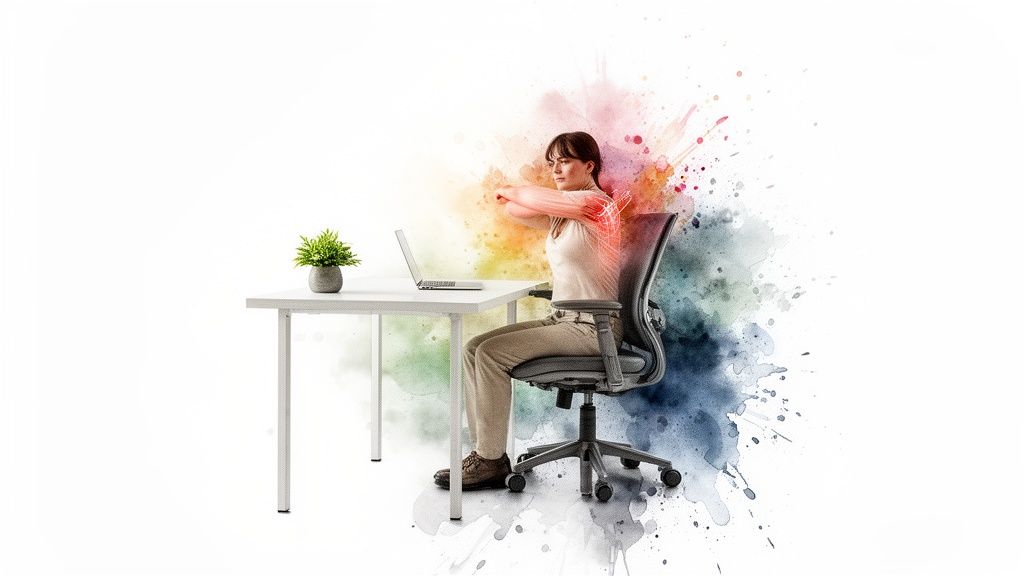
The best stretching exercises are of no use if you don’t do them regularly. And the most common excuse we all know? “I have no time.” Let’s remove this obstacle once and for all.
It’s not about spending an hour on the mat every day. It is much more effective to establish small but consistent stretching rituals that fit into your daily routine almost unnoticed. Think of them as small moments of mindfulness for your body - and you’ll see how a chore quickly becomes a pleasant need.
# Start your day with a 5-minute routine
The alarm clock rings and you jump straight out of bed into the hustle and bustle of everyday life? Try something different: Consciously take just five minutes to gently wake up your body. A quick morning routine can make a huge difference to your energy levels and mobility.
Just imagine what it feels like to start the day not stiff and tense, but awake and supple.* Cat-cow in bed: Before you even get up, get on all fours. Breathe in as you gently arch your back (cow), and breathe out as you round your back completely (cat). Repeat 5-10 times and feel your spine mobilizing.
- Pulling up your legs while lying down: Lie on your back and pull one knee towards your chest, the other leg remains loosely stretched out. Hold the stretch for 30 seconds per side. This is a blessing for the lower back and glutes.
- Standing forward bend: Stand next to your bed, take a deep breath, stretch your arms up. As you breathe out, slowly bend forward and let your upper body and arms hang loosely. This stretches the entire back of the body.
These three simple exercises take no longer than five minutes. But they signal to your body that the day is starting and really get the blood circulation going.
# Make the desk your stretch zone
Sitting for hours is poisonous for your neck, shoulders and hips. The good news: You don’t have to wait for your lunch break to take countermeasures. Effective stretching exercises for more mobility and strength can be integrated discreetly directly into the workplace.
The best time for a little stretching break is right now. Don’t wait until the tension hurts. Integrate short movements into your workflow every 30-60 minutes.
Here are a few of my favorite “desk stretches” that you can try right away:
- Neck Stretch: Gently tilt your head toward your right shoulder until you feel a comfortable pull on your left side. Hold for 20-30 seconds, then switch sides.
- Chest Opener: Interlace your fingers behind your back, stretch your arms and lift them slightly. A perfect balance to the typical hunched back at the desk.
- Forearm Stretch: Extend one arm with the palm facing upwards. With your other hand, gently pull your fingers down toward the floor. This is worth its weight in gold if you type a lot on the computer.
Switzerland is a very active country in sports, which makes regular stretching exercises all the more important to maintain balance in the body. For chronic effects, two to three series of 30-120 seconds each, five days per week are often recommended. Just four minutes of static stretching per day has been proven to relieve neck tension in office workers, studies show. The report Sport Schweiz 2020 des BASPO also provides a good overview of sporting activity in Switzerland.
# Use your workout as an anchor for stretching
One of the smartest methods is to link your stretching session directly to your existing training. This is how you create a solid habit and make optimal use of the warmed-up state of your muscles.
After an intense boot camp or HIIT class, your muscles are warm and particularly receptive to static stretches. Concentrate specifically on the muscle groups that you are currently using the most.
**Example after an intensive leg workout:**1. Front of thigh (quadriceps): Hold onto a wall, grab your ankle and gently pull your heel toward your buttocks. Hold 30-45 seconds per side. 2. Back of thighs (hamstrings): While standing, place one heel on an elevated area (e.g. a bench) and bend forward with your back straight. Again, hold 30-45 seconds per side. 3. Gluteus muscles: Sit on the floor, put one leg up and place the ankle of the other leg on it. Now pull your raised leg towards you and feel the stretch in your buttocks.
# End the day with a 10-minute evening routine
The evening is the perfect time to literally stretch the stress of the day out of your body and prepare for a restful night. A calm 10-minute routine can help you sleep better and wake up more refreshed in the morning. Dim the lights, maybe put on some relaxing music and concentrate entirely on your breathing.
For example, incorporate a “Pigeon Stretch” for the hips, a gentle lying twist for the spine and the “Happy Baby Pose” to relax the lower back. Stretching becomes a calming ritual that you won’t want to miss any more.
# How to take your mobility to the next level at Templeshape
You now have the theory and the best exercises ready - but how do you really stick with it? How do your stretching exercises for more mobility & strength become a fixed ritual? Quite simply: by getting support, structure and a motivating community on your side. This is exactly where the holistic offering from Templeshape in Zurich comes into play.
We don’t believe in quick fixes, but in sustainable health habits. Our courses and our environment are designed to support you in exactly this. You don’t have to walk the path alone - with us you become part of a community that supports and inspires you.
# Find your perfect course for more mobility
Our studios in Zurich offer you a variety of courses that specifically improve your flexibility. Each class has a different focus, but they all share the goal of making you stronger and more flexible.
-
Yoga: Our yoga classes are the classic way to systematically work on your flexibility. Through flowing sequences (Vinyasa) and longer held positions (Yin), you not only address your muscles, but also the deeper fascia tissue. Our experienced trainers will guide you safely through the asanas and help you gently expand your limits.
-
Pilates: Pilates is a core powerhouse, but it’s also a fantastic tool for increased flexibility. Through controlled movements that combine strength and stretching, you’ll improve your posture and create length in your spine and limbs.
-
Breathwork: Sometimes the biggest blockage isn’t in the muscle, but in the head. In our breathwork sessions you will learn to relax deeply and let go mentally through your breathing. This ability is worth its weight in gold for sinking deeper into stretches and calming the nervous system.
# Stretching as an integral part of your entire workout
Agility is not an isolated goal. It is the basis for every powerful movement. That’s why our trainers integrate the right stretching principles into all of our courses - even the most sweaty ones.After an intensive HIIT or boot camp class, our coaches will guide you through a targeted cool-down with static stretches. Here you consciously stretch the muscle groups that you have just challenged. This not only promotes regeneration, but also ensures that you remain flexible in the long term and can increase your performance.
At Templeshape, stretching is not an optional add-on. It is a fundamental part of our philosophy because we know that true strength always requires flexibility.
# A community that supports you
Change is easier when you tackle it together. At Templeshape you will find an appreciative, non-competitive environment. This isn’t about who is the most flexible or can do the most difficult pose.
It’s all about making progress for yourself - at your own pace. The positive energy of the group and the friendly guidance of our trainers will give you exactly the motivation you need to turn your stretching exercises into a sustainable habit. Discover our courses in the studios in Zurich and find the right setting for your health goals.
# Your most burning questions about stretching
Finally, I would like to give you a few answers to the most frequently asked questions that I come across again and again in the studio. With this knowledge you can train safely and effectively and get the most out of every stretching session.
# Should I stretch before or after training?
The short answer: It depends on what you want to achieve. Both have their place, but serve completely different goals.
Before a workout, dynamic stretching is your best friend. Imagine active, springing or swinging movements that prepare your muscles and joints for the stress to come. Think arm circles, leg swings or gentle hip rotations. These movements get your circulation going and wake up your nervous system.
After training - or as your own, quiet session - static stretching comes into play. You hold a stretching position for about 30 to 60 seconds. This helps to reduce muscle tension after exertion, promotes regeneration and improves your mobility in the long term. Long static stretching directly before exercise can inhibit your speed in the short term, so it should be done at the end of your session.
# How often do I have to stretch to notice a difference?
Here, regularity is the absolute key to success – it beats intensity by far. To really noticeably improve your flexibility, you should try to stretch at least three to five days per week.
These don’t have to be hour-long sessions. Often just 10 to 15 minutes a day makes a huge difference. Instead of torturing yourself for an hour once a week, focus on short but consistent sessions. This gives your body and nervous system the chance to slowly adapt and internalize the new movement patterns.
# Will stretching help my back pain?
Yes, the chances are very good! A large part of non-specific back pain, especially in the lower back, comes from tight hip flexors and a shortened back of the thigh. This is a typical result of sitting in the office or car for a long time.Targeted stretching exercises for precisely these areas can take the strain off the lumbar spine and often relieve pain surprisingly effectively. Stretches like the “Pigeon Stretch” for the hips or a gentle forward bend for the hamstrings are real gold here.
Important note: If you have acute, severe or radiating pain, you should always consult a doctor or physiotherapist first. Have the cause clarified before starting a new stretching program.
# I am extremely immobile – does stretching even make sense for me?
Absolutely! This is precisely when it not only makes sense, but is particularly important. Everyone starts somewhere. Immobility is not a judgment, but the perfect starting point for great change. The trick is to start slowly, patiently and without pressure.
Make your life easier and use tools. A belt, a scarf or even a towel can become an extension of your arms, for example to reach your feet in a forward bend. Only go into a position until you feel a pleasant pull - never a sharp pain. Your body will thank you for every single session and will become more compliant over time.
Are you ready to make agility a habit and let the energy of a community carry you? At Templeshape you will find the guidance, structure and motivation you need. Discover our diverse courses in Zurich and start your journey to more strength and mobility.
Templeshape
Turn reading into action.
Discover the Templeshape offer that fits your next step.
View schedule