December 22
Yoga Ausbildungen Schweiz: Finde die passende Yoga-Ausbildung für dich
0 comments

December 22
0 comments
Du liebäugelst mit einer Yoga Ausbildung in der Schweiz? Wunderbar! Damit machst du den ersten, entscheidenden Schritt auf einer Reise, die dich unglaublich bereichern und weit über die Yogamatte hinausführen wird. Eine fundierte Ausbildung, wie sie mittlerweile an vielen Orten in der Schweiz angeboten wird, gibt dir nicht nur das nötige Handwerkszeug zum Unterrichten an die Hand. Sie vertieft vor allem deine eigene Praxis und dein Verständnis für dich selbst.
Eine Yoga Ausbildung ist so viel mehr als nur das korrekte Ausführen von Körperhaltungen. Sie ist eine tiefgreifende Auseinandersetzung mit dir, deinem Körper und einer jahrtausendealten Philosophie. Stell dir diesen Weg am besten wie den Bau eines Hauses vor: Jede Ausbildungsstufe ist ein wichtiger Bauabschnitt, der auf dem vorherigen aufbaut und alles stabiler macht.
Die Nachfrage nach gut ausgebildeten Yogalehrerinnen ist in der Schweiz in den letzten Jahren förmlich explodiert. Das ist deine Chance, deine Leidenschaft zum Beruf zu machen oder dein Wissen einfach für dich persönlich auf ein neues Level zu heben.
Yoga ist längst kein Nischenthema mehr, sondern fest in der Schweizer Gesellschaft verankert – eine anerkannte Praxis für mehr Gesundheit und Wohlbefinden. Die Zahlen sprechen für sich: Laut einer Umfrage des Bundesamts für Sport (BASPO) praktizieren heute rund 12 Prozent der Schweizer Bevölkerung ab 15 Jahren regelmässig Yoga. Das sind etwa 1,04 Millionen Menschen!
Zum Vergleich: 2007 lag dieser Anteil noch bei knapp 6 Prozent. Wir reden hier also von einer Verdoppelung in weniger als zwei Jahrzehnten. Mehr Details zu dieser spannenden Entwicklung findest du auf bildung-schweiz.ch.
Dieser wachsende Bedarf schafft eine stabile Grundlage für dich, wenn du eine professionelle Yoga Ausbildung in der Schweiz anstrebst. Es bedeutet mehr Möglichkeiten, in Studios zu unterrichten, eigene Kurse zu leiten oder spezialisierte Workshops anzubieten.
Um in dieser Welt Fuss zu fassen, ist es wichtig, die international anerkannten Standards zu kennen. Sie bilden das Gerüst für fast jede seriöse Ausbildung, die du finden wirst, und helfen dir, die Qualität eines Angebots einzuschätzen.
Die gängigsten Formate sind:
200-Stunden-Ausbildung (Dein Fundament): Das ist der klassische Einstieg und die Basis für alles, was danach kommt. Hier lernst du die Grundlagen von Asanas (Körperhaltungen), Pranayama (Atemtechniken), Anatomie und Philosophie. Nach dem Abschluss bist du qualifiziert, deine ersten eigenen Yogaklassen sicher und kompetent zu unterrichten.
300-Stunden-Aufbauausbildung (Der Aufbau): Diese Ausbildung richtet sich an dich, wenn du bereits eine 200-Stunden-Zertifizierung in der Tasche hast und tiefer eintauchen möchtest. Hier spezialisierst du dein Wissen in fortgeschrittenen Themen wie therapeutischem Yoga, komplexem Sequencing oder einem bestimmten Yogastil.
500-Stunden-Zertifizierung (Dein fertiges Haus): Dieser Titel ist keine einzelne, separate Ausbildung. Er ist das Ergebnis deiner 200-Stunden-Grundausbildung plus einer 300-Stunden-Aufbauausbildung. Wenn du dieses Level erreichst, signalisierst du ein wirklich umfassendes und tiefes Fachwissen.
Ein wichtiger Gedanke für deinen Weg: Die Stundenzahl ist ein guter Indikator für die Tiefe einer Ausbildung. Aber was am Ende wirklich zählt, ist die Qualität der Lehrenden und des Lehrplans. Sie sind entscheidend für deine persönliche und professionelle Entwicklung.
Dieser Leitfaden ist dafür da, dir einen klaren Überblick über die verschiedenen Yoga Ausbildungen in der Schweiz zu geben. So kannst du eine informierte Entscheidung treffen, die sich für dich richtig anfühlt.
Wenn du dich für eine Yoga Ausbildung in der Schweiz umsiehst, wirst du schnell merken: Die Stundenzahl ist nur die halbe Wahrheit. Eine 200-Stunden-Ausbildung ist nicht einfach eine 200-Stunden-Ausbildung. Lass uns mal genauer unter die Haube schauen, was sich hinter den Zahlen verbirgt, damit du genau das findest, was zu dir und deinem Weg passt.
Stell dir die Ausbildungsstufen am besten wie den Bau eines Hauses vor. Jede Ebene hat ihren ganz eigenen Zweck und bereitet dich auf den nächsten Schritt vor. Das Fundament muss solide sein, bevor du die Wände hochziehst und das Dach deckst.
Diese Grafik zeigt dir schön, wie die Stufen typischerweise aufeinander aufbauen.
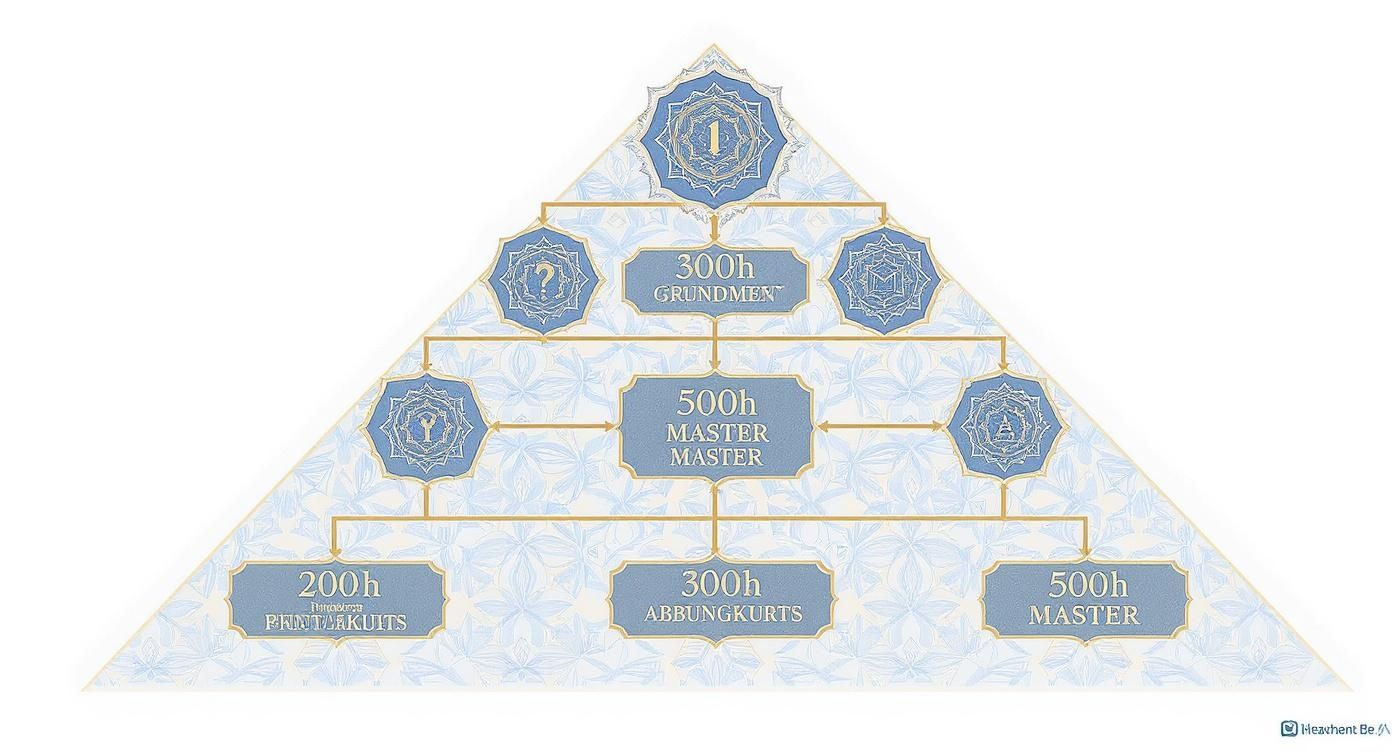
Du siehst es selbst: Die 200-Stunden-Ausbildung ist das unentbehrliche Fundament für alles, was danach kommt.
Die 200-Stunden-Ausbildung ist dein Fundament, das absolute Kernstück deines Wissens. Hier bekommst du das grundlegende Handwerkszeug an die Hand, das du brauchst, um sicher und mit gutem Gefühl unterrichten zu können.
Du tauchst tief in die korrekte Ausrichtung der Asanas (Körperhaltungen) ein und lernst, wie du sie präzise anleitest und für unterschiedliche Körper anpassen kannst. Ein grosser Teil ist auch der Anatomie gewidmet – denn nur wenn du verstehst, wie der Körper tickt, kannst du Verletzungen vermeiden helfen.
Gleichzeitig öffnet sich die Tür zur faszinierenden Welt der Yoga-Philosophie. Du wirst dich mit alten Texten wie den Yoga-Sutras von Patanjali auseinandersetzen und lernen, wie du deine erste eigene Yogastunde sinnvoll aufbaust.
Die 200-Stunden-Ausbildung ist nicht das Ende, sondern der Anfang deiner Reise. Sie gibt dir die Lizenz zu lernen und zu wachsen – sowohl auf der Matte als auch als Mensch.
In der Schweiz orientieren sich die meisten Ausbildungen an internationalen Standards. Die Grundausbildungen umfassen 200 Unterrichtsstunden und dauern berufsbegleitend meist zwischen 9 und 12 Monaten. Preislich bewegst du dich hier in der Regel zwischen 2'500 und 4'500 CHF.
Du hast deine 200 Stunden in der Tasche, unterrichtest vielleicht schon eine Weile und spürst: Da ist noch mehr. Dann ist die 300-Stunden-Ausbildung der nächste logische Schritt. Stell sie dir wie ein Masterstudium nach dem Bachelor vor. Hier geht es nicht mehr um die Basics, sondern um Vertiefung und Spezialisierung.
Jetzt kannst du dich auf Themen konzentrieren, die dich wirklich brennend interessieren. Mögliche Schwerpunkte sind zum Beispiel:
Diese Aufbauausbildung macht aus einer guten Lehrerin eine exzellente. Du gewinnst an Selbstvertrauen, findest deine eigene Stimme und kannst deinen Schülern ein viel reicheres, tieferes Erlebnis bieten.
Neben den grossen Ausbildungen gibt es unzählige kürzere Weiterbildungen, mit denen du dich auf einen ganz bestimmten Yogastil oder eine Zielgruppe spezialisieren kannst. Diese Kurse dauern meist zwischen 30 und 100 Stunden.
Ein klassisches Beispiel ist eine Yin Yoga Ausbildung. Hier konzentrierst du dich voll und ganz auf diese ruhige, meditative Praxis, lernst die spezifischen Haltungen, die dahinterstehende Meridianlehre und wie du einen Raum der tiefen Entspannung schaffst.
Andere beliebte Nischen sind:
Solche Spezialisierungen sind perfekt, um deine Nische zu finden und zum Experten auf einem bestimmten Gebiet zu werden. Sie ergänzen deine Grundausbildung ideal und machen dein Profil als Lehrerin einzigartig. Ein tiefes Verständnis für Körper und Geist, wie es in achtsamen Bewegungspraktiken gelehrt wird, ist hierbei von grossem Wert. Wenn dich die Verbindung von Körperbewusstsein und Bewegung interessiert, könnte dir auch unser Artikel über somatisches Pilates als Revolution deiner Fitness gefallen.
Die folgende Tabelle fasst die wichtigsten Unterschiede noch einmal kompakt für dich zusammen.
Ein direkter Vergleich der Inhalte, Ziele und Voraussetzungen verschiedener Yoga Ausbildungsformate in der Schweiz.
| Merkmal | 200-Stunden-Grundausbildung | 300-Stunden-Aufbauausbildung | Spezialisierte Weiterbildung (z.B. Yin Yoga) |
|---|---|---|---|
| Ziel | Fundament schaffen, um sicher unterrichten zu können | Wissen vertiefen, eigene Stimme als Lehrerin finden | Expertin in einer spezifischen Nische werden |
| Zielgruppe | Yoga-Praktizierende, die Lehrerin werden möchten | Zertifizierte 200h-Lehrerinnen (RYT-200) | Lehrerinnen, die ihr Angebot erweitern möchten |
| Inhalte | Asana-Alignment, Anatomie, Philosophie, Sequencing-Grundlagen | Fortgeschrittene Asanas, therapeutische Ansätze, Philosophie-Vertiefung | Spezifische Techniken, Zielgruppen-Anpassungen, Theorie des Stils |
| Dauer | 9-12 Monate (berufsbegleitend) | Variabel, oft modular über 1-2 Jahre | 30-100 Stunden, oft an Wochenenden oder als Intensivkurs |
| Voraussetzung | Solide eigene Yoga-Praxis | Abgeschlossene 200h-Ausbildung | Meist eine 200h-Ausbildung empfohlen |
| Ergebnis | Zertifizierung als Yogalehrerin (z.B. RYT-200) | Fortgeschrittene Zertifizierung (z.B. RYT-500 nach Abschluss) | Zertifikat für die jeweilige Spezialisierung |
Wie du siehst, baut jeder Schritt logisch auf dem vorherigen auf. Am Ende ist die Wahl des richtigen Formats eine sehr persönliche Entscheidung. Frag dich: Wo stehe ich gerade auf meinem Weg? Was möchte ich lernen? Und vor allem: Welcher Stil und welche Philosophie sprechen mein Herz an?
Ein schönes Zertifikat ist schnell gedruckt, aber was steckt wirklich dahinter? Wenn du dich in der Schweiz auf die Suche nach der perfekten Yoga Ausbildung machst, ist es entscheidend, die Spreu vom Weizen zu trennen.
Qualität und Anerkennung sind hier keine leeren Marketing-Worthülsen. Sie sind deine Eintrittskarte in professionelle Studios und die Garantie dafür, dass sich deine grosse Investition an Zeit und Geld auch langfristig auszahlt.

Im Yoga-Universum gibt es verschiedene Organisationen, die Standards setzen wollen. In der Schweiz werden dir vor allem zwei Namen immer wieder begegnen: die internationale Yoga Alliance und der nationale Yoga Verband Schweiz. Wenn du verstehst, wofür sie stehen, kannst du die Ausrichtung einer Schule viel besser einschätzen.
Die Yoga Alliance ist eine US-amerikanische Organisation und der weltweit grösste Branchenverband. Ist eine Schule als RYS (Registered Yoga School) registriert, erfüllt sie bestimmte Mindeststandards bei Lehrplan und Stundenzahl. Für dich als Absolventin bedeutet das eine international anerkannte Basis – besonders wertvoll, wenn du vielleicht mal im Ausland unterrichten möchtest.
Der Yoga Verband Schweiz legt den Fokus hingegen auf tiefere, landesspezifische Qualitätskriterien. Eine Anerkennung ist hier oft an eine längere Ausbildungsdauer (häufig über vier Jahre) und strengere Prüfungsordnungen geknüpft. Dieses Label wird dann besonders relevant, wenn du eine Anerkennung bei Schweizer Krankenkassen anstrebst, damit deine zukünftigen Schüler einen Teil der Kurskosten zurückerstattet bekommen können.
Du könntest sagen: Ein Zertifikat der Yoga Alliance ist wie ein international anerkannter Bachelor-Abschluss – es öffnet weltweit Türen. Die Anerkennung durch den Yoga Verband Schweiz gleicht eher einem eidgenössischen Fachausweis – ein starkes Qualitätsmerkmal, das speziell auf den Schweizer Markt zugeschnitten ist.
Ein schickes Logo allein macht noch keine gute Ausbildung. Echte Qualität steckt im Detail. Nutze die folgende Checkliste, um jede Schule, die du in die engere Wahl nimmst, kritisch zu durchleuchten. So gehst du sicher, dass du am Ende nicht nur ein Stück Papier, sondern echtes, fundiertes Wissen in den Händen hältst.
Die wichtigsten Prüfpunkte für deine Auswahl:
Manchmal sind es die kleinen Dinge, die dich stutzig machen sollten. Lerne, auf dein Bauchgefühl zu hören und Warnsignale frühzeitig zu erkennen.
Ein klassisches Alarmsignal ist eine vage Beschreibung der Lehrenden. Wenn auf der Webseite nur steht "unterrichtet von einem Team erfahrener Yogalehrer", ohne konkrete Namen, Fotos und Biografien, ist Vorsicht geboten. Du hast ein Recht darauf zu wissen, von wem du lernst.
Eine weitere rote Flagge ist der Mangel an glaubwürdigen Erfahrungsberichten. Findest du nur perfekt formulierte, anonyme Zitate, aber keine echten Geschichten von Absolventinnen mit Namen oder Social-Media-Profilen, solltest du nachhaken. Echte Begeisterung lässt sich nicht so leicht verstecken.
Indem du diese Punkte prüfst, wirst du von einer einfachen Interessentin zu einer informierten Bewerberin. Du investierst nicht blind, sondern triffst eine bewusste Entscheidung für eine Ausbildung, die dich als Yogalehrerin und als Mensch wirklich weiterbringt.
Eine Yoga-Ausbildung ist wohl eine der wertvollsten Investitionen, die du in dich selbst machen kannst. Aber Hand aufs Herz: Neben all der Vorfreude braucht es auch einen ehrlichen Blick auf Finanzen und Zeit. Lass uns ganz offen über die Zahlen sprechen, damit du weisst, was auf dich zukommt und eine Entscheidung triffst, die wirklich zu deinem Leben passt.
Für eine fundierte 200-Stunden Yoga-Ausbildung in der Schweiz solltest du ein Budget zwischen 3'500 und 5'000 CHF einplanen. Diese Preisspanne ist absolut normal und hat gute Gründe – sie hängt von verschiedenen Faktoren ab, die wir uns jetzt genauer ansehen.
Die Kosten setzen sich aus vielen kleinen Puzzleteilen zusammen, die am Ende die Qualität und das Erlebnis deiner Ausbildung formen. Ein grosser Posten ist oft der Standort der Schule. Zum Beispiel wird eine Ausbildung im Herzen von Zürich oder Genf logischerweise mehr kosten als eine im ländlichen Raum. Das liegt schlicht an den höheren Mieten für die Studios und den allgemeinen Lebenshaltungskosten, die sich im Gesamtpreis widerspiegeln.
Weitere wichtige Preisfaktoren sind:
Mein Tipp: Frag bei den Schulen, die dich interessieren, ganz direkt nach, was im Preis alles enthalten ist. Sind die Prüfungsgebühren abgedeckt? Musst du die Fachliteratur extra kaufen? Kläre das unbedingt vorher, um später keine bösen Überraschungen zu erleben.
Neben dem Geld ist die Zeit die zweite grosse Variable, die du gut durchdenken musst. Im Grunde gibt es zwei gängige Formate, und jedes hat seinen ganz eigenen Rhythmus.
1. Der Intensivkurs (Sprint)
Dieses Format ist wie ein Deep Dive: Du tauchst für drei bis vier Wochen am Stück komplett in die Welt des Yoga ein. Stell dir vor, du lebst und atmest Yoga von morgens bis abends, ohne Ablenkung.
2. Die berufsbegleitende Ausbildung (Marathon)
Dieses Modell zieht sich meist über neun bis zwölf Monate, oft mit Unterricht an den Wochenenden oder in einzelnen Blockwochen. Du integrierst das Lernen in dein bestehendes Leben.
Die Wahl zwischen diesen beiden Wegen ist super individuell. Sei ehrlich mit dir selbst: Welcher Rhythmus passt zu meinem Lerntyp und zu meiner aktuellen Lebenssituation? Es gibt hier kein Richtig oder Falsch – nur das, was für dich funktioniert, ohne dich auszubrennen.
Jetzt wird’s konkret: Wo genau findest du die eine Yoga Ausbildung in der Schweiz, die sich für dich wie ein zweites Zuhause anfühlt? Das Angebot kann auf den ersten Blick überwältigend wirken, aber mit der richtigen Herangehensweise wird die Suche klar und zielgerichtet. Die Schweiz bietet dir eine faszinierende Vielfalt – von pulsierenden Studios in urbanen Zentren bis hin zu ruhigen Oasen inmitten der Berge.
Stell dir deine Suche am besten wie eine Landkarte vor. Es gibt klare Hotspots, aber eben auch versteckte Juwelen. Deine Aufgabe ist es, den Ort zu finden, dessen Energie und Philosophie wirklich mit deiner eigenen Vision im Einklang stehen.
Ein Blick auf die geografische Verteilung zeigt eine klare Tendenz: Die meisten Anbieter für Yoga Ausbildungen tummeln sich in den städtischen und deutschsprachigen Regionen. Ungefähr 70 Prozent der Schulen findest du in der Deutschschweiz, wobei Zürich, Luzern und Basel die wichtigsten Zentren bilden. Allein in Zürich gibt es mindestens fünf renommierte Schulen, die sowohl 200- als auch 500-Stunden-Ausbildungen anbieten. Mehr Details zur Verteilung der Yogaschulen in der Schweiz findest du auf bookyogaretreats.com.
Städte wie Zürich bieten dir natürlich eine riesige Auswahl. Du kannst verschiedene Stile und Lehrer kennenlernen, Probestunden besuchen und so ein echtes Gefühl für die jeweilige Community entwickeln. Das ist ein grosser Vorteil, um Vergleiche zu ziehen und sicherzugehen, dass es passt. Wenn du mehr über die vielfältige Szene vor Ort erfahren möchtest, schau mal in unseren Artikel über Yoga in Zürich Wiedikon (Kreis 3).
Aber unterschätze nicht den Zauber einer Ausbildung abseits des Trubels. Ein Retreat-Format in den Alpen kann eine unglaublich tiefgreifende, intensive Erfahrung sein. Die Ruhe der Natur hilft dir, dich voll und ganz auf dich selbst und die Lehren zu konzentrieren – eine ungestörte Reise nach innen, ohne Ablenkungen des Alltags.
Deine Wahl des Ortes prägt die gesamte Erfahrung. Frag dich ehrlich: Brauche ich die Energie und Vielfalt der Stadt oder die Stille und den Fokus der Natur, um optimal zu lernen und zu wachsen?
Jede Yogaschule hat ihre eigene DNA, ihre einzigartige Philosophie. Es geht nicht nur darum, was gelehrt wird, sondern vor allem wie. Um dir die Orientierung zu erleichtern, stellen wir dir hier drei typische Ausrichtungen vor, die du in der Schweiz häufig antreffen wirst.
1. Traditionell und klassisch: Zum Beispiel Hatha Yoga nach Sivananda
Stell dir eine Schule vor, die auf einer klaren, bewährten Tradition aufbaut. Hier lernst du einen ganzheitlichen Ansatz, der Asanas, Pranayama (Atemübungen), Entspannung, Ernährung und positives Denken als gleichwertige Säulen betrachtet.
2. Modern und athletisch: Zum Beispiel Vinyasa Flow
Im Gegensatz dazu steht eine moderne, dynamische Schule. Hier dreht sich alles um fliessende Bewegungen, die mit dem Atem synchronisiert werden. Kreativität, Musik und ein athletischer Anspruch stehen oft im Vordergrund.
3. Spirituell und energetisch: Zum Beispiel Kundalini Yoga
Diese Schulen legen den Fokus stark auf die Arbeit mit der Lebensenergie (Kundalini). Es ist eine sehr transformative Praxis, die weit über das rein Körperliche hinausgeht und tief in die energetischen Ebenen eintaucht.
Diese Beispiele zeigen, wie unterschiedlich Yoga Ausbildungen in der Schweiz sein können. Nimm dir die Zeit, die Webseiten der Schulen genau zu studieren, an Infoveranstaltungen teilzunehmen und – ganz wichtig – mit Absolventen zu sprechen. Finde die Gemeinschaft, in der du dich nicht nur als Schülerin, sondern als Mensch willkommen und wirklich zu Hause fühlst.
Herzlichen Glückwunsch, das Zertifikat deiner Yoga Ausbildung in der Schweiz liegt frisch gedruckt in deinen Händen! Aber was kommt jetzt? Die Realität nach der Ausbildung sieht oft ein bisschen anders aus, als du es dir vielleicht erträumt hast. Dieser Abschnitt soll dir einen ehrlichen und praktischen Kompass für deine ersten Schritte in die Berufswelt geben.
Verabschiede dich am besten gleich von der Vorstellung, sofort ausgebuchte Kurse in einem schicken Studio zu leiten. Das ist natürlich ein wunderbares Ziel, doch der Weg dorthin beginnt meist mit kleineren, aber ungemein wichtigen Schritten. Für die allermeisten frischgebackenen Yogalehrerinnen heisst das: wertvolle Erfahrungen durch Vertretungsstunden sammeln oder erste, eigene Kurse für Freunde, Familie und Bekannte anbieten.
Diese ersten Stunden sind pures Gold. Hier kannst du in einem sicheren Rahmen üben, deine Ansagen verfeinern, lernst mit ganz unterschiedlichen Körpertypen zu arbeiten und baust langsam das Selbstvertrauen auf, das du später für grössere Klassen brauchst.
Grundsätzlich stehen dir nach deiner Ausbildung zwei Hauptwege offen. Beide haben ihre ganz eigenen Vor- und Nachteile. Wichtig ist, dass du ganz ehrlich für dich entscheidest, welcher Weg zu deiner Persönlichkeit und deiner aktuellen Lebenssituation passt.
Als selbstständige Yogalehrerin bist du deine eigene Chefin, deine eigene Marketingabteilung und deine eigene Buchhalterin. Das heisst, du musst dich zum Beispiel um die Anmeldung bei der AHV, um Versicherungen und die Finanzen kümmern. Das erfordert Disziplin und ein gewisses unternehmerisches Denken.
Der Yoga-Markt wirkt auf den ersten Blick riesig und vielleicht sogar überlaufen. Genau deshalb ist es so entscheidend, dass du deine eigene kleine, feine Nische findest. Frag dich mal ganz ehrlich: Für wen schlägt mein Yoga-Herz am lautesten? Wo liegen meine besonderen Stärken?
Eine Nische zu haben bedeutet nicht, andere auszuschliessen. Es bedeutet, für eine ganz bestimmte Gruppe von Menschen die absolut beste und klarste Lösung zu sein.
Vielleicht bist du die perfekte Lehrerin für gestresste Büroangestellte und bietest kurze, knackige Yoga-Einheiten direkt in Unternehmen an. Oder deine Stärke liegt im sanften, regenerativen Yoga für Senioren, das Mobilität und Lebensfreude fördert. Deine Nische macht dich sichtbar und zieht genau die Schüler an, die zu dir passen. Ein fokussiertes Angebot wie gezielte Privatstunden kann ebenfalls ein grossartiger Start sein; wenn du mehr darüber erfahren möchtest, findest du in unserem Guide für Yoga-Privatstunden wertvolle Tipps dazu.
Deine ersten Schüler findest du selten über grosse, teure Werbekampagnen. Vielmehr geht es um authentische Verbindungen und kreative Ideen in deinem direkten Umfeld.
Ein persönliches Instagram-Profil, auf dem du nicht nur perfekte Posen zeigst, sondern auch deine Gedanken zum Yoga teilst, kann Wunder wirken. Wie wäre es mit einer Kooperation mit deinem Lieblingscafé für einen "Yoga & Brunch"-Event? Oder du bietest im Sommer kostenlose Probestunden im Park an. Sprich mit Menschen, erzähle von deiner Leidenschaft und sei mutig. Deine Begeisterung ist dein bestes Marketing-Instrument, um deine Karriere als Yogalehrerin erfolgreich ins Rollen zu bringen.
Hier klären wir die Fragen, die uns im Studio immer wieder begegnen, wenn es um Yoga Ausbildungen in der Schweiz geht. Wir wollen dir ganz direkt und ehrlich antworten, damit du mit einem guten Gefühl deine Entscheidung treffen kannst.
Nein, absolut nicht. Bei einer Yoga Ausbildung geht es nicht darum, die Füsse hinter den Kopf zu klemmen. Vielmehr lernst du, deinen eigenen Körper zu verstehen und die Haltungen so anzupassen, dass sie für dich funktionieren. Der Weg ist das Ziel, nicht die perfekte, akrobatische Pose.
Ganz ehrlich: Viele machen eine Ausbildung nur für sich selbst. Stell es dir wie eine intensive Reise zu dir vor, die dein Verständnis von Yoga so vertieft, wie es in normalen Klassen niemals möglich wäre. Es ist eine Investition in dein persönliches Wachstum.
Ja, das Zertifikat gibt dir offiziell die Qualifikation dafür. Aber der beste Weg ist, langsam und bewusst zu starten. Gib vielleicht zuerst Stunden für Freunde, biete im Sommer kostenlose Kurse im Park an oder übernimm mal eine Vertretungsstunde im Studio.
Jede grosse Lehrerin hat einmal klein angefangen. Der Mut und die Sicherheit wachsen mit jeder Stunde, die du unterrichtest. Es geht um die praktische Erfahrung.
Für eine fundierte 200-Stunden-Ausbildung solltest du in der Schweiz mit Preisen zwischen 3'500 und 5'000 CHF rechnen. Sei skeptisch bei extrem günstigen Angeboten – diese klingen oft zu gut, um wahr zu sein.
Qualität hat ihren Preis, besonders wenn es um die Erfahrung der Ausbildner und eine persönliche Betreuung geht. Schau immer genau hin, was im Preis alles drin ist, um böse Überraschungen wie zusätzliche Kosten für Lehrmaterial oder Prüfungen zu vermeiden.
Deine Yoga Ausbildung in der Schweiz ist der Grundstein für einen wundervollen neuen Weg. Triff diese Entscheidung bewusst und gut informiert.
Bereit, deine eigene Reise zu beginnen und Bewegung zu einem festen Teil deines Lebens zu machen? Bei Templeshape GmbH in Zürich findest du eine Community, die dich unterstützt, und Kurse von Yoga bis HIIT, die dich auf deinem Weg begleiten. Entdecke unsere Angebote und finde den perfekten Kurs für dich auf https://templeshape.com.
Tags
200h yoga ausbildung, yoga ausbildung schweiz, yoga schule zürich, yoga zertifizierung, yogalehrer ausbildung