December 22
Finde die beste Yoga Ausbildung Zürich für dich
0 comments

Du träumst davon, Yogalehrerin oder Yogalehrer zu werden, bist aber von der riesigen Auswahl in Zürich etwas überfordert? Keine Sorge, das ist völlig normal. Die Suche nach der passenden Yoga Ausbildung in Zürich ist der allererste, wichtige Schritt auf einer unglaublich spannenden Reise. Es geht darum, eine Entscheidung zu treffen, die sich richtig anfühlt – für deine Ziele, aber vor allem für dein Leben.
Sich für eine Yoga Ausbildung zu entscheiden, ist ein bisschen wie die Planung einer grossen Reise. Bevor du startest, brauchst du eine gute Karte, um dich zu orientieren. Zürich bietet eine beeindruckende Vielfalt, von intensiven Vollzeitkursen bis hin zu flexiblen Modellen, die du neben deinem Job machen kannst. Der erste Schritt ist also, dir einen klaren Überblick über die grundlegenden Weichenstellungen zu verschaffen.
Bevor du dich in die Details verschiedener Yoga-Stile oder Schulen stürzt, solltest du dir drei ganz zentrale Fragen stellen:
Eine der wichtigsten Weichenstellungen ist die Frage nach dem Zeitmodell. Beide Formate haben ihre ganz eigenen Vor- und Nachteile, und was für dich passt, hängt stark von deiner persönlichen Lebenssituation ab.
Ein Intensivkurs ist wie ein Sprung ins kalte Wasser – im besten Sinne. Du tauchst für eine begrenzte Zeit, oft vier bis sechs Wochen, komplett in die Welt des Yoga ein. Dieses Format ist perfekt, wenn du dich voll und ganz auf den Lernprozess konzentrieren und dein Zertifikat schnell in den Händen halten möchtest.
Im Gegensatz dazu lässt sich ein berufsbegleitendes Modell (Teilzeit) viel einfacher in den Alltag integrieren. Die Module finden meistens an Wochenenden oder an bestimmten Abenden statt. Das gibt dir die Freiheit, weiterzuarbeiten und dem Gelernten Zeit zu geben, sich über einen längeren Zeitraum zu setzen und wirklich zu verinnerlichen.
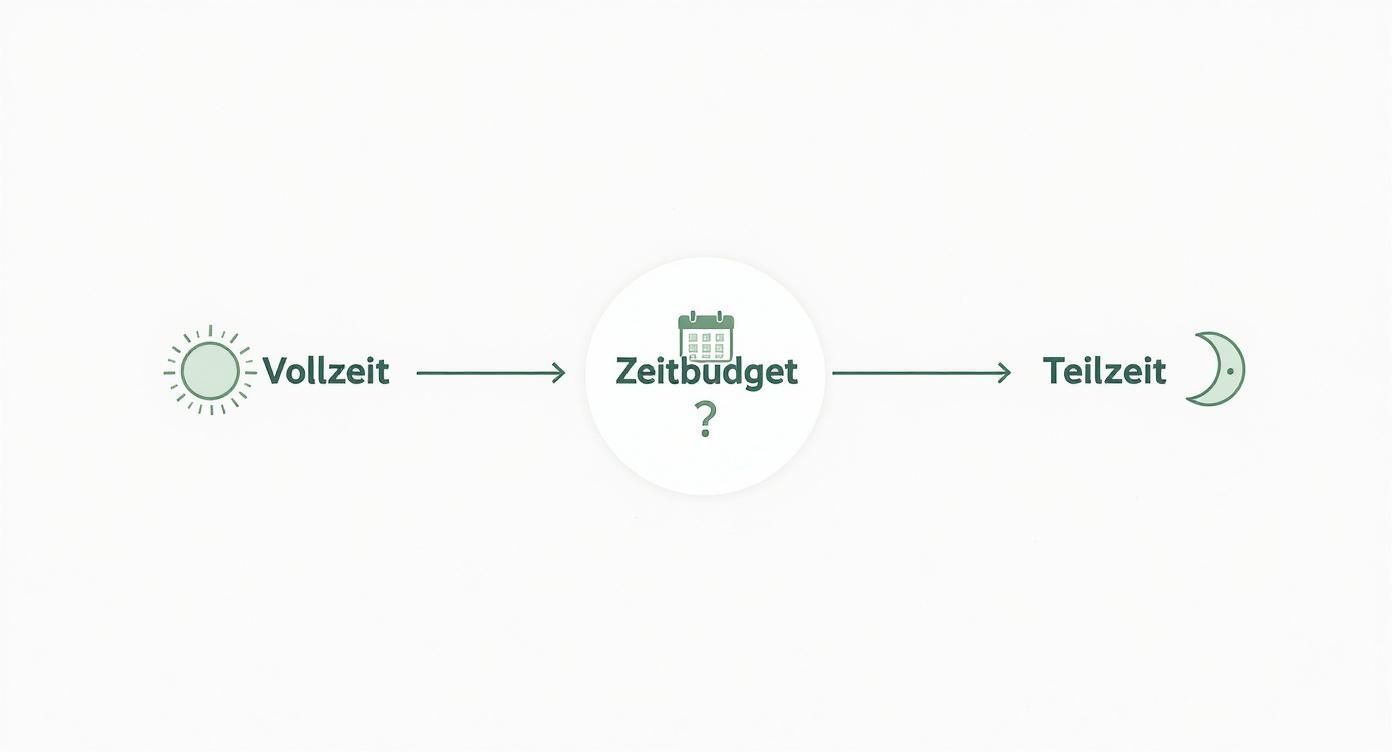
Wie du siehst, führt die zentrale Frage nach deiner verfügbaren Zeit direkt zu den beiden Hauptpfaden: Vollzeit (intensiv) oder Teilzeit (berufsbegleitend). Diese erste Entscheidung schafft eine solide Basis.
Als Nächstes schauen wir uns die verschiedenen Ausbildungsformate in Zürich genauer an, um dir die Wahl noch leichter zu machen.
Diese Tabelle hilft dir, das richtige Format für deine Lebenssituation zu finden, indem sie die wichtigsten Merkmale gegenüberstellt.
| Merkmal | Intensiv-Ausbildung (Vollzeit) | Berufsbegleitende Ausbildung (Teilzeit) | Online- oder Hybrid-Modell |
|---|---|---|---|
| Dauer | Kompakt: 4–6 Wochen | Gestreckt: 6–12 Monate oder länger | Flexibel, oft selbstgesteuert |
| Zeitaufwand | Täglich, ganztags (Mo–Fr/Sa) | Wochenenden, Abende | Eigene Zeiteinteilung, feste Online-Termine |
| Ideal für… | Personen in einer beruflichen Pause, mit Sabbatical oder voller zeitlicher Flexibilität. | Berufstätige, Eltern, Studierende – alle mit einem vollen Terminkalender. | Menschen, die örtlich ungebunden sind oder maximale Flexibilität benötigen. |
| Lernprozess | Sehr intensiv, schnelle Wissensaufnahme, starker Gruppenfokus. | Gelerntes kann zwischen den Modulen verarbeitet und im Alltag integriert werden. | Hohe Selbstdisziplin erforderlich, weniger direkter Austausch mit der Gruppe. |
| Integration | Weniger Zeit zur Integration des Gelernten in den Alltag während der Ausbildung. | Kontinuierliche Anwendung und Reflexion über einen längeren Zeitraum möglich. | Integration hängt stark von der eigenen Initiative ab. |
Jedes dieser Modelle hat seinen eigenen Charme und seine Berechtigung. Es gibt kein "besser" oder "schlechter" – nur das, was für dich und deine aktuelle Lebensphase am besten funktioniert.
Mit dieser grundlegenden Orientierung im Gepäck kannst du jetzt viel gezielter in die Details der Inhalte und Zertifizierungen eintauchen, die für deine Yoga Ausbildung in Zürich wirklich zählen.
Die Wahl des richtigen Yogastils für deine Ausbildung ist ein bisschen wie die Suche nach dem passenden Musikinstrument. Jeder Stil hat seine eigene Melodie, seinen eigenen Rhythmus und spricht eine andere Saite in dir an. Bevor du dich also in das Abenteuer einer Yoga Ausbildung in Zürich stürzt, ist es entscheidend, den Stil zu finden, der wirklich mit deiner Persönlichkeit und deinen Zielen im Einklang schwingt.
Diese Entscheidung legt das Fundament für deine gesamte Reise als Yogalehrer. Sie bestimmt nicht nur, welche Asanas (Körperhaltungen) du meisterst, sondern prägt auch die Philosophie dahinter, die Unterrichtsmethodik und die Energie, die du später in deinen eigenen Klassen weitergeben wirst.

Stell dir eine tänzerische, fliessende Bewegung vor, bei der jeder Atemzug eine neue Haltung einleitet – das ist die Essenz von Vinyasa Yoga. Oft auch als Flow Yoga bezeichnet, ist es ein dynamischer, athletischer Stil, bei dem die Asanas kreativ und ohne starre Reihenfolge miteinander verbunden werden.
Eine Vinyasa-Ausbildung ist genau dein Ding, wenn du:
Der Fokus in einer Vinyasa-Ausbildung liegt ganz klar auf dem Sequencing, also der Kunst, eine Stunde logisch und harmonisch aufzubauen. Du lernst, wie du Bewegungen sicher anleitest und Übergänge so fliessend gestaltest, dass ein kraftvolles und gleichzeitig meditatives Erlebnis entsteht.
Hatha Yoga ist sozusagen die Mutter vieler moderner Yogastile. Hier geht es etwas langsamer und ruhiger zu, die einzelnen Körperhaltungen werden länger gehalten. Das gibt dir Zeit, tief in jede Haltung hineinzuspüren, deine Ausrichtung zu verfeinern und die Verbindung zwischen Körper und Geist ganz bewusst zu erfahren.
Eine Hatha-Ausbildung könnte dein Weg sein, wenn du:
Im Vergleich zum Vinyasa ist eine Hatha-Ausbildung oft philosophischer und traditioneller ausgerichtet. Ein moderner Ansatz, den du oft findest, ist das Alignment Yoga. Hier liegt der Fokus noch stärker auf der individuellen Anatomie und der korrekten Ausrichtung, um Verletzungen vorzubeugen.
Während Vinyasa und Hatha eher die Muskeln (das Yang-Gewebe) ansprechen, widmet sich Yin Yoga dem tieferen Bindegewebe wie Faszien, Bändern und Gelenken. Die Haltungen sind passiv, werden meist im Sitzen oder Liegen eingenommen und für drei bis fünf Minuten oder sogar länger gehalten. Es ist eine sehr stille, meditative Praxis, die zur tiefen Entspannung und Regeneration einlädt.
Eine Yin-Yoga-Ausbildung ist perfekt für dich, wenn du:
Die Ausbildungslandschaft in Zürich hat sich seit den frühen 2000er-Jahren enorm professionalisiert. Ein gutes Beispiel dafür ist AIRYOGA, das bereits seit 2005 als bei der Yoga Alliance registrierte Schule (RYS) nach international anerkannten Standards ausbildet. Mit einem 200-Stunden-Grundprogramm und einem weiterführenden 300-Stunden-Training gehören sie zu den führenden Ausbildungsstätten bei AIRYOGA in der Schweiz. Das zeigt, wie wichtig eine fundierte, anerkannte Ausbildung geworden ist.
Am Ende ist die Wahl des Stils eine zutiefst persönliche Entscheidung. Hör auf dein Bauchgefühl, besuche verschiedene Klassen und sprich mit den Lehrern. Finde heraus, welche "Melodie" dich am meisten berührt – denn genau diese Leidenschaft wird der Motor für deine authentische Reise als Yogalehrerin oder Yogalehrer sein.
Eine hochwertige Yoga Ausbildung in Zürich ist so viel mehr als nur das Aneinanderreihen von Körperhaltungen. Sie ist ein tiefgehendes Studium, das dich auf allen Ebenen wachsen lässt. Stell dir deine Ausbildung am besten wie den Bau eines Hauses vor: Du brauchst ein solides Fundament, tragende Wände und ein schützendes Dach, damit am Ende alles stabil und stimmig ist.
Hier lüften wir den Vorhang und zeigen dir, welche Bausteine dich im Lehrplan einer 200- oder 300-Stunden-Ausbildung wirklich erwarten. Dieses Wissen ist dein wichtigstes Werkzeug, um die Qualität verschiedener Anbieter in Zürich ganz genau unter die Lupe nehmen zu können.
Der erste und vielleicht wichtigste Baustein ist die Anatomie. Ohne ein tiefes Verständnis für den menschlichen Körper ist sicheres und verantwortungsvolles Unterrichten schlicht unmöglich. Es ist das Fundament, auf dem dein ganzes Wirken als Lehrerin oder Lehrer aufbaut.
Du lernst nicht nur, wo welcher Muskel liegt. Viel wichtiger ist, wie Gelenke funktionieren, welche Bewegungen sicher sind und wie du Haltungen an die verschiedensten Körper anpassen kannst. Denn jeder Mensch ist einzigartig – was für den einen eine wohltuende Dehnung ist, kann für den anderen ein echtes Verletzungsrisiko sein.
Eine gute Ausbildung lehrt dich, den Körper deiner Schüler zu "lesen". Du erkennst, warum jemand eine Haltung nicht einnehmen kann, und bietest sinnvolle Alternativen an, anstatt alle in die gleiche Form zu pressen.
Nehmen wir das Knie als Beispiel. In einer erstklassigen Ausbildung erfährst du genau, wie das Kniegelenk aufgebaut ist und warum eine falsche Ausrichtung im Krieger II oder im Lotussitz zu Schmerzen führen kann. Mit diesem Wissen schützt du deine zukünftigen Schüler ganz aktiv.
Yoga ist keine reine Gymnastik; es ist eine jahrtausendealte Philosophie, die dem Leben Tiefe und Sinn gibt. Die Auseinandersetzung mit diesen Wurzeln verleiht deinem Unterricht eine Seele und hebt ihn vom reinen Workout ab.
Die wichtigsten Säulen sind hier oft:
Diese alten Weisheiten sind alles andere als trockene Theorie. Sie werden lebendig, wenn du lernst, sie in deine Stunden einzuflechten. Anstatt nur "Atme ein, atme aus" zu sagen, kannst du zum Beispiel das Konzept von "Ahimsa" (Gewaltlosigkeit) aufgreifen und deine Schüler dazu ermutigen, liebevoll und ohne Zwang mit ihrem Körper umzugehen.
Der letzte grosse Baustein ist die Unterrichtsmethodik – das Dach, das alles zusammenhält. Hier lernst du das Handwerkszeug, um dein Wissen kompetent und inspirierend weiterzugeben. Es ist die Brücke zwischen deinem eigenen Verständnis und der Erfahrung deiner Schüler.
Dieser Teil deiner Ausbildung konzentriert sich auf ganz praktische Fähigkeiten:
Diese drei Bausteine – Anatomie, Philosophie und Unterrichtsmethodik – sind das Herzstück jeder seriösen Ausbildung. Wenn du dir die Lehrpläne der verschiedenen Schulen in Zürich ansiehst, achte darauf, wie diese Bereiche gewichtet und miteinander verknüpft werden. Erkunde beispielsweise die Details unseres umfassenden Curriculums, um ein Gefühl dafür zu bekommen, wie eine strukturierte Yoga-Lehrerausbildung bei Templeshape aussehen kann.
Eine Yoga-Ausbildung ist eine riesige Investition – nicht nur in deine Finanzen, sondern vor allem in dich selbst und deine Zukunft. Bevor du dich aber voller Elan ins Abenteuer stürzt, sollten wir uns die harten Fakten ansehen. Was kostet eine fundierte Yoga Ausbildung in Zürich wirklich? Und was bedeutet das Zertifikat am Ende für deinen Weg als Yogalehrer oder -lehrerin?
Für eine 200-Stunden-Grundausbildung in Zürich solltest du mit Kosten zwischen CHF 3'500 und CHF 5'000 rechnen. Das klingt erstmal nach einer grossen Summe, aber es lohnt sich, genau hinzuschauen, was du dafür bekommst. Eine transparente Schule legt dir klipp und klar dar, was im Preis enthalten ist.

Eine gute Ausbildung ist so viel mehr als die reinen Unterrichtsstunden. Um böse Überraschungen und unerwartete Zusatzkosten zu vermeiden, achte darauf, ob diese Punkte im Gesamtpaket enthalten sind:
Oft lauern die Kosten aber im Kleingedruckten oder ausserhalb des Programms. Plane also besser ein kleines Zusatzbudget für Fachbücher, eventuelle Reise- oder Übernachtungskosten und vielleicht eine neue, hochwertige Yogamatte ein.
Fast jede Yogaschule wirbt mit dem Siegel der Yoga Alliance®. Aber was steckt da eigentlich genau dahinter? Die Yoga Alliance ist eine US-amerikanische Organisation, die weltweit anerkannte Mindeststandards für Ausbildungen festlegt. Wichtig zu wissen: Es ist keine staatliche Behörde, sondern ein freiwilliges Register.
Stell dir ein Zertifikat einer bei der Yoga Alliance registrierten Schule (RYS – Registered Yoga School) wie deinen internationalen Pass für die Yogawelt vor. Es signalisiert Studios und Schülern auf der ganzen Welt, dass deine Ausbildung einem geprüften Qualitätsstandard entspricht.
Wenn du also davon träumst, eines Tages vielleicht in Bali, Berlin oder Barcelona zu unterrichten, ist eine RYT-Zertifizierung (Registered Yoga Teacher) quasi unerlässlich. Die bekanntesten Stufen sind die RYT 200 für die Grundausbildung und die RYT 500 für weiterführende Ausbildungen.
Planst du, vor allem in der Schweiz zu unterrichten, und möchtest deinen Schülern die Möglichkeit geben, die Kosten über ihre Zusatzversicherung abzurechnen? Dann wird es etwas komplizierter. Hier spielen nämlich Schweizer Qualitätslabels die Hauptrolle, und die Yoga Alliance allein reicht dafür meistens nicht aus.
Zwei Institutionen sind hier besonders wichtig:
Um diese Anerkennungen zu bekommen, brauchst du oft mehr als nur eine Yoga-Ausbildung (häufig über 300 Stunden). Meist wird zusätzlich ein Nachweis über medizinisches Grundlagenwissen von rund 150 Stunden verlangt. Prüfe also ganz genau, welche Zertifizierungen eine Schule anbietet, wenn dieser Karriereweg für dich infrage kommt.
Die Nachfrage nach gut ausgebildeten Yogalehrern in Zürich ist jedenfalls da und wächst. Eine Studie zum Sportverhalten im Kanton Zürich hat gezeigt, dass die Zahl der sportlich aktiven Menschen in den sechs Jahren vor 2020 stark zugenommen hat. Dieses wachsende Gesundheitsbewusstsein befeuert den Yoga-Markt und macht eine fundierte, anerkannte Ausbildung wertvoller denn je. Mehr dazu findest du im Bericht über die Entwicklung des Sportverhaltens im Kanton Zürich.
Der Gedanke, eine intensive Ausbildung neben Job, Familie und allem, was sonst noch so los ist, unterzubringen? Puh, das kann einem im ersten Moment schon den Atem rauben. Aber atme tief durch: Es ist absolut machbar. Es geht nämlich nicht darum, dir noch mehr auf die Schultern zu laden. Sieh die Ausbildung lieber als eine bereichernde Insel in deinem Alltag – ein Raum, der nur dir gehört.
Die eigentliche Frage ist doch: Wie schaffst du das, ohne dabei auf dem Zahnfleisch zu gehen? Der Schlüssel liegt in zwei Dingen: dem richtigen Zeitmodell und einer cleveren Planung. Deine Yoga Ausbildung in Zürich soll dich nähren, nicht auszehren.
Stell es dir wie beim Sprachenlernen vor. Die einen buchen einen vierwöchigen Intensivkurs im Ausland und tauchen komplett ein. Die anderen gehen ein Jahr lang jeden Samstag zum Unterricht. Beide Wege führen ans Ziel, aber sie fühlen sich komplett anders an. Genau so ist es auch bei deiner Yoga-Ausbildung.
Im Grunde gibt es zwei gängige Modelle:
Hör mal in dich hinein und sei ganz ehrlich: Welches Tempo passt gerade wirklich zu deinem Leben und zu deiner Energie?
Sobald die Entscheidung für ein Modell gefallen ist, wird dein Zeitmanagement zu deinem besten Freund. Es geht darum, ganz bewusst zu entscheiden, wofür du deine Zeit einsetzt und wo deine Prioritäten liegen.
Ein Beispiel aus der Praxis: Anna, eine unserer Absolventinnen, hat einen Vollzeitjob im Marketing und zwei kleine Kinder. Sie entschied sich für ein Wochenend-Modell. Ihr Geheimnis? Sie blockte sich nicht nur die Ausbildungs-Wochenenden fett im Kalender, sondern auch feste Lernzeiten unter der Woche – zweimal pro Woche für 90 Minuten, nachdem die Kids im Bett waren. Diese festen Rituale haben ihr geholfen, am Ball zu bleiben, ohne das Gefühl zu haben, ständig hinterherzuhinken.
Zeitmanagement heisst nicht, mehr zu tun. Es heisst, das zu tun, was wirklich zählt, und dafür bewusst Raum zu schaffen.
Die Ausbildung ist eine Zeit des Lernens und der Selbstfürsorge. Um diese anspruchsvolle Reise gut zu meistern, ist nicht nur die Praxis auf der Matte wichtig. Hier findest du weitere Tipps für einen gesunden Lebensstil, die dich zusätzlich unterstützen können.
Du musst diesen Weg nicht alleine gehen. Einer der häufigsten Gründe für Überforderung ist der Versuch, alles allein zu wuppen. Sprich offen mit deinem Partner, deiner Familie und deinen Freunden. Erkläre ihnen, warum dir diese Ausbildung so am Herzen liegt und was sie dir bedeutet.
So kannst du ganz konkret um Unterstützung bitten:
Neue, unterstützende Routinen aufzubauen, ist ein Prozess. Es geht darum, gesunde Gewohnheiten zu etablieren, die dich durch die Ausbildung tragen und darüber hinaus. Wenn du tiefer in das Thema eintauchen möchtest, wie man Gewohnheiten nachhaltig verändert, gibt dir unser Leitfaden zur Etablierung neuer Gewohnheiten wertvolle Impulse.
Mit der richtigen Einstellung, einem passenden Zeitmodell und einem starken Netz an deiner Seite wird deine Ausbildung zu einer der bereicherndsten Erfahrungen deines Lebens – eine Reise, die sich perfekt in deinen Alltag integriert, anstatt ihn zu stören.
Du hältst dein Zertifikat in den Händen – ein riesiger Meilenstein, herzlichen Glückwunsch! Aber was kommt jetzt, nachdem der Applaus verklungen ist? Sieh diesen Abschnitt als deinen persönlichen Karriere-Kompass für die Zeit nach der Yoga Ausbildung in Zürich. Die Reise hat nämlich gerade erst begonnen.
Vergiss die Vorstellung, dass dein Weg geradewegs in ein Fitnessstudio führen muss. Die Möglichkeiten sind so vielfältig wie das Yoga selbst. Zürich ist ein pulsierender Markt für hervorragend ausgebildete Yogalehrer, die ihre eigene, authentische Stimme gefunden haben.
Der erste Schritt in eine erfolgreiche Karriere ist oft, sich zu spezialisieren. Anstatt zu versuchen, alles für jeden anzubieten, finde die Nische, die dein Herz wirklich höherschlagen lässt. Das macht dich nicht nur einzigartig, sondern auch unglaublich wertvoll für eine ganz bestimmte Zielgruppe.
Denk mal über diese Richtungen nach:
Vielleicht träumst du ja sogar davon, dein eigenes kleines Studio zu eröffnen. Das ist ein grosser Schritt, der eine clevere Planung erfordert – von der Standortwahl bis zum Marketing. Fang klein an, vielleicht mit Kursen in einem gemieteten Raum oder im Sommer draussen im Park, um erste Erfahrungen zu sammeln. Viele erfolgreiche Studios in Zürich haben genau so angefangen.
Deine Authentizität ist dein grösstes Kapital. Unterrichten ist so viel mehr als reine Technik – es geht darum, deine Leidenschaft zu teilen. Finde heraus, was dich bewegt, und baue deine Karriere genau darauf auf.
Die Nachfrage nach qualifizierten Yogalehrern ist im gesamten deutschsprachigen Raum, Zürich inklusive, ungebrochen hoch. Eine Studie aus dem Jahr 2023 zeigt einen bemerkenswerten Trend: Der Anteil der Yoga-Praktizierenden in Deutschland sprang von nur 5 % im Jahr 2018 auf beeindruckende 20 % im Jahr 2023. Spannend ist auch, dass 74 % davon zu Hause üben, was den Bedarf an erstklassig ausgebildeten Lehrern für eine qualitativ hochwertige Anleitung nur noch verstärkt. Mehr dazu findest du in den aktuellen Entwicklungen im Yoga-Markt 2023.
Deine 200-Stunden-Ausbildung ist ein fantastisches Fundament, aber sie ist nicht das Ende des Lernens. Die Welt des Yoga entwickelt sich ständig weiter. Regelmässige Weiterbildungen sind entscheidend, um dein Wissen zu vertiefen, neue Inspiration zu tanken und dich von der Masse abzuheben.
Überlege dir, welche Bereiche dich besonders fesseln. Vielleicht eine 300-Stunden-Aufbauausbildung, um deine RYT 500 Zertifizierung zu erlangen? Oder spezialisierte Workshops zu Themen wie fortgeschrittene Anatomie, Yin Yoga oder trauma-informiertes Yoga? Jede Weiterbildung macht dich zu einem kompetenteren und vielseitigeren Lehrer. Wenn du neugierig bist, wo du in Zürich praktizieren kannst, schau dir unseren Guide über Yoga in Zürich Wiedikon (Kreis 3) an.
Was du in Zürich verdienen kannst, hängt stark von deiner Erfahrung, deiner Spezialisierung und deinem Geschäftsmodell ab. Als angestellter Lehrer in einem Studio kannst du mit einem festen Stundensatz rechnen.
Der Schritt in die Selbstständigkeit bietet dir natürlich mehr Freiheit und Potenzial, erfordert aber auch unternehmerisches Denken. Du bist dann nicht nur Yogalehrer, sondern auch dein eigener Manager für Marketing, Buchhaltung und Kundenakquise. Erfolgreiche selbstständige Lehrer bauen sich oft mehrere Standbeine auf: feste Kurse, Workshops, Privatstunden und zunehmend auch Online-Angebote. So kann deine Leidenschaft nachhaltig zu einem wirklich erfüllenden Beruf werden.
Wenn du kurz davor stehst, dich für eine Yoga Ausbildung in Zürich zu entscheiden, schwirren dir sicher noch ein paar ganz konkrete Fragen im Kopf herum. Das ist völlig normal! Dieser Abschnitt ist dafür da, die letzten Unklarheiten aus dem Weg zu räumen. Wir geben dir ehrliche, klare Antworten, damit du mit einem richtig guten Gefühl in dein Abenteuer starten kannst.
Diese Sorge hören wir ganz oft – und können dich sofort beruhigen. Nein, du musst kein Akrobat sein, um Yogalehrer zu werden. Eine Ausbildung ist eine Reise, kein sportlicher Wettkampf. Was wirklich zählt, ist deine Neugier und die Lust, tief in die Welt des Yoga einzutauchen. Das ist so viel wichtiger als die Fähigkeit, deine Füsse hinter dem Kopf zu verschränken.
Die meisten Schulen in Zürich wünschen sich, dass du schon eine Weile regelmässig Yoga praktizierst, meistens so um ein Jahr herum. Das stellt einfach sicher, dass du mit den Basics vertraut bist. Aber es geht nie darum, perfekt zu sein, sondern darum, wachsen zu wollen.
Diese Frage ist entscheidend für deinen weiteren Weg. Stell es dir am besten wie einen Bachelor- und einen Master-Abschluss im Yoga vor.
200-Stunden-Ausbildung: Das ist dein Fundament. Hier lernst du alles, was du brauchst, um sicher und kompetent Yoga zu unterrichten. Wir packen alles rein: Anatomie, Philosophie, die Asana-Praxis und natürlich, wie man eine Stunde aufbaut und anleitet. Mit diesem Zertifikat in der Tasche bist du offiziell qualifiziert, loszulegen.
300-Stunden-Ausbildung: Das ist die Vertiefung für alle, die schon eine 200-Stunden-Basis haben (Advanced Training). Hier kannst du dich spezialisieren und in bestimmte Themen noch viel tiefer eintauchen. Beide Ausbildungen zusammen ergeben dann die international hoch angesehene 500-Stunden-Zertifizierung.
Ja, absolut! Das Zertifikat deiner 200-Stunden-Ausbildung ist deine formale Qualifikation, um Yogastunden zu leiten. Du hast das nötige Handwerkszeug gelernt, um deine ersten Klassen sicher und strukturiert durchzuführen.
Dein Zertifikat ist sozusagen deine Lizenz zum Unterrichten. Der Mut, wirklich vor eine Gruppe zu treten, wächst dann mit jeder Stunde, die du gibst. Fang einfach an, sammle Erfahrung und du wirst sehen, wie dein Selbstvertrauen wächst.
Viele unserer Absolventen starten ganz sanft. Sie unterrichten erst mal im Freundes- und Familienkreis, bieten kleine Kurse an oder springen als Vertretung in ihrem Lieblingsstudio ein. Dieser schrittweise Einstieg ist perfekt, um Praxiserfahrung zu sammeln und deine ganz persönliche Stimme als Lehrerin oder Lehrer zu finden.
Bereit, deine Leidenschaft für Yoga auf ein neues Level zu heben? Bei Templeshape begleiten wir dich auf deiner Reise mit einer fundierten Ausbildung in einer Gemeinschaft, die dich trägt und inspiriert. Schau dir jetzt unsere Angebote an und finde den Kurs, der genau zu dir passt. Entdecke deine Ausbildung auf Templeshape.com.
Tags
yoga ausbildung zürich, yoga schule zürich, yoga teacher training, yogalehrer ausbildung, yogalehrer werden zürich