December 22
Dein Gym Kursplan, der wirklich funktioniert
0 comments

Ein gut durchdachter Gym Kursplan ist mehr als nur eine Liste von Terminen – er ist deine persönliche Roadmap zu deinen Fitnesszielen. Er sorgt dafür, dass du dranbleibst, motiviert bist und echte Fortschritte siehst. Ein Plan verwandelt zufällige Studiobesuche in ein gezieltes Training, das dich fordert, aber nicht überfordert.

Kommt dir das bekannt vor? Du startest voller Elan ins Gym, wählst deine Kurse aber eher spontan nach Lust und Laune. Heute ein intensives HIIT, morgen vielleicht Yoga, weil der andere Kurs schon ausgebucht war. Obwohl du regelmässig hingehst, hast du das Gefühl, nicht wirklich voranzukommen.
Genau an diesem Punkt macht ein smarter Gym Kursplan den entscheidenden Unterschied. Er ist dein persönlicher Fahrplan zum Erfolg, nicht nur ein weiterer Kalendereintrag.
Stell dir einfach mal zwei Leute vor. Beide wollen fitter werden, gehen aber ganz unterschiedlich an die Sache ran.
Person A (die Spontane): Geht dreimal die Woche ins Studio. Montags stürzt sie sich voller Energie in einen Bootcamp-Kurs. Dienstags fühlt sie sich zwar noch müde vom Vortag, geht aber trotzdem zum Spinning. Freitag ist die Zeit knapp, also wird es ein kurzer Bauch-Express-Kurs. Was ist die Folge? Ihr Körper bekommt keine klaren Reize und vor allem keine Zeit zur Erholung. Fortschritte bleiben aus, die Motivation schwindet.
Person B (die Planerin): Hält sich an einen strukturierten Kursplan. Montag ist Krafttag mit Bodypump. Der Dienstag ist für aktive Erholung reserviert, zum Beispiel mit einem Stretching-Kurs. Am Donnerstag fordert sie ihren Kreislauf mit einem HIIT-Workout. Das Ergebnis? Jede Trainingseinheit baut sinnvoll auf der vorherigen auf, die Muskeln können regenerieren und die Leistung steigert sich spürbar und kontinuierlich.
Ein guter Plan bringt Kontinuität und Balance in dein Training. Er schützt dich vor Überlastung, beugt Verletzungen vor und macht deine Erfolge messbar. Genau das ist der Schlüssel, um langfristig Freude an der Bewegung zu haben.
Diese Notwendigkeit einer klaren Struktur ist übrigens nicht nur im Sport entscheidend. Auch im Geschäftsleben ist die Erstellung einer Roadmap oft der entscheidende Faktor für den Erfolg. Dein Kursplan ist im Grunde deine ganz persönliche Fitness-Roadmap.
Mit einer festen Struktur fällt auch die ewige Frage weg, was du heute trainieren sollst. Das spart mentale Energie und erhöht die Wahrscheinlichkeit, dass du dein Training durchziehst – selbst an Tagen, an denen das Sofa lauter ruft als die Sporttasche.
Bevor du auch nur einen einzigen Kurs in deinen Kalender einträgst, braucht es einen Moment der ehrlichen Selbstreflexion. Frag dich mal ganz direkt: Was will ich eigentlich erreichen? Die Antwort auf diese Frage ist das Fundament, auf dem dein gesamter Kursplan aufbaut. Ohne ein klares Ziel stolperst du nur von Kurs zu Kurs und investierst Zeit und Energie, ohne wirklich voranzukommen.
Willst du spürbar mehr Kraft für den Alltag? Soll deine Ausdauer endlich so gut sein, dass du die Treppe zur U-Bahn ohne Schnappatmung meisterst? Oder suchst du einfach einen mentalen Ausgleich zum stressigen Job, der dir hilft, den Kopf freizubekommen?
Deine Ziele bestimmen die Auswahl deiner Kurse – nicht umgekehrt. Ein Plan, der auf dich persönlich zugeschnitten ist, ist der beste Weg, um motiviert zu bleiben und echte Ergebnisse zu sehen.
Jedes Studio hat so seine eigene Art, Kurse zu benennen, aber die Grundprinzipien sind meistens die gleichen. Lerne, ein bisschen zwischen den Zeilen zu lesen.
Begriffe wie "Power", "HIIT" oder "Bootcamp" schreien förmlich nach hoher Intensität, Ausdauer und Fettverbrennung. Namen wie "Bodypump", "Functional Strength" oder "Kettlebell" signalisieren hingegen ganz klar: Hier geht es um Krafttraining. Und Kurse wie Yoga, Pilates oder Stretching zielen auf deine Beweglichkeit, Körperhaltung und den mentalen Fokus ab.
Es ist kein Wunder, dass die Kurspläne immer voller und vielfältiger werden. Die Fitnessbranche in der Schweiz boomt, und mit ihr wachsen auch die Ansprüche. Ende 2024 knackte die Branche die Marke von 1,37 Millionen Mitgliedern – ein satter Anstieg von 4,7 % im Vergleich zum Vorjahr. Diese Entwicklung zwingt die Studios, ihre Angebote breiter aufzustellen, um Interessen wie Gesundheitskurse oder Functional Training besser abzudecken.
Um dir die Auswahl etwas leichter zu machen, haben wir hier eine kleine Orientierungshilfe für dich. Nutze diese Tabelle, um die effektivsten Kurse für deine individuellen Fitnessziele zu finden.
| Dein Ziel | Empfohlene Kursarten | Darum funktioniert es |
|---|---|---|
| Kraftaufbau & Muskeldefinition | Bodypump, Functional Training, Kettlebell, TRX | Diese Kurse setzen auf Widerstandstraining, das deine Muskeln gezielt zum Wachstum anregt und deinen Körper formt. |
| Ausdauer steigern & Abnehmen | HIIT, Bootcamp, Spinning, Running Club | Kurze, intensive Belastungsphasen treiben deinen Puls in die Höhe und kurbeln den Stoffwechsel maximal an. |
| Flexibilität & mentaler Ausgleich | Yoga, Pilates, Mobility & Stretching | Hier stehen kontrollierte Bewegungen, eine bewusste Atmung und die Verbindung von Körper und Geist im Mittelpunkt. |
| Ganzheitliche Fitness | Hyrox, Circuit Training, Crossfit-ähnliche Kurse | Diese Formate kombinieren Kraft-, Ausdauer- und Beweglichkeitselemente für ein komplettes Workout. |
Diese Tabelle gibt dir eine gute erste Richtung vor. Aber manchmal ist es gar nicht so einfach, die eigenen Ziele klar zu definieren oder den richtigen Startpunkt zu finden.
Wenn du dir unsicher bist, kann eine professionelle Einschätzung Gold wert sein. Zögere nicht, dir Unterstützung zu holen. Erfahre, wie eine Personal Trainerin in Zürich dir dabei helfen kann, deinen perfekten Weg zu finden.
Theorie ist eine Sache, aber ein guter Plan muss vor allem eines sein: alltagstauglich. Schauen wir uns also an, wie du einen effektiven Gym Kursplan ganz konkret in dein Leben integrieren kannst, ohne dass er zur Last wird.
Ein Plan, der funktioniert, fühlt sich nicht wie eine weitere Verpflichtung an. Er ist vielmehr eine feste Verabredung mit dir selbst – eine, die dir Energie gibt, statt sie zu rauben. Genau dafür haben wir vier realistische Wochenpläne entwickelt, die auf ganz unterschiedliche Lebenssituationen zugeschnitten sind.
Dein Kalender ist voll? Dann zählt jede Minute. Dein Trainingsplan muss kurz, knackig und maximal effizient sein. Schnelle Erfolge sind hier der Schlüssel, um dranzubleiben und die Motivation hochzuhalten.
Der Fokus liegt ganz klar auf hochintensiven Einheiten, die in kurzer Zeit viel bewirken. Kombiniert mit gezielter Erholung baust du gleichzeitig Stress ab.
Der Alltag mit Kindern ist oft ein Drahtseilakt und selten planbar. Dein Kursplan braucht deshalb vor allem Flexibilität und sollte dir mehr Energie geben, als er dich kostet. Es geht darum, feste, aber realistische Zeitfenster zu finden, die nur für dich sind.
Ein guter Kursplan für Eltern ist wie ein Baukasten. Er hat feste Elemente, lässt sich bei Bedarf aber anpassen, ohne dass das ganze Gebilde zusammenbricht.
Dieser Plan nutzt geschickt Vormittags- und Wochenendkurse und setzt auf eine gesunde Mischung aus Kraft und mentalem Ausgleich.
Zwei bis drei feste Termine pro Woche sind oft schon genug, um eine Routine zu etablieren. Eine interessante Statistik zeigt übrigens, dass die durchschnittliche Trainingshäufigkeit in Schweizer Gyms bei etwa 1,3 Besuchen pro Mitglied pro Woche liegt. Das macht deutlich, warum ein flexibler Plan mit ein oder zwei festen Ankerpunkten so gut funktioniert. Weitere spannende Einblicke findest du in den Studienergebnissen zur Schweizer Fitnessbranche auf swissactive.ch.
Diese einfache 3-Schritt-Methode hilft dir bei der Auswahl deiner Kurse, um den perfekten Plan für dich zu erstellen.
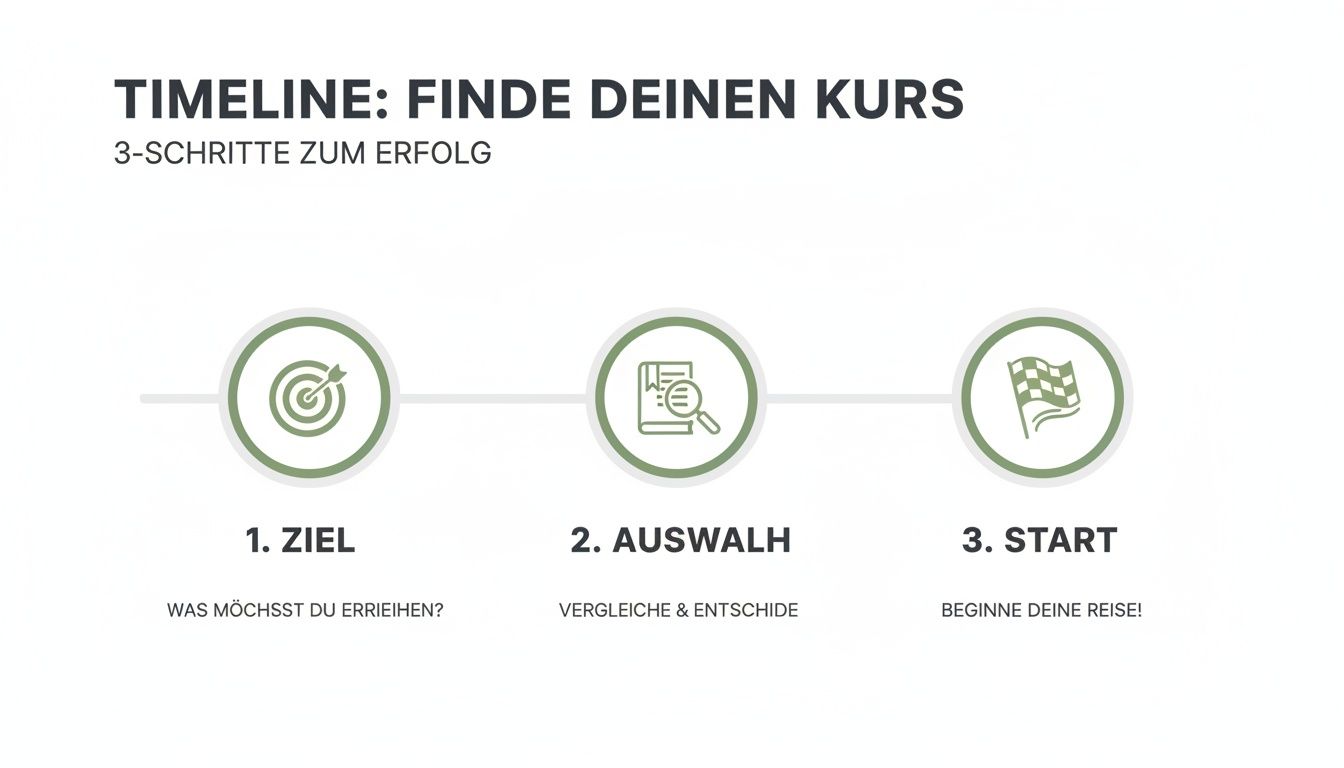
Die Grafik bringt es auf den Punkt: Der Weg zum richtigen Kursplan beginnt immer mit deinem persönlichen Ziel, gefolgt von der gezielten Auswahl und dem motivierten Start.
Du bist neu im Fitness-Game? Herzlich willkommen! Das Wichtigste ist jetzt, eine positive Routine aufzubauen und Spass an der Bewegung zu finden. Dein Plan sollte dich nicht überfordern, sondern dich langsam an die Belastung heranführen und dir Erfolgserlebnisse verschaffen.
Du trainierst regelmässig und willst deine Grenzen verschieben? Sehr gut! Dann braucht dein Plan gezielte Reize, Abwechslung und eine smarte Kombination aus Belastung und Regeneration, um Plateaus zu durchbrechen.
Diese Beispiele sind natürlich nur Vorschläge. Sieh sie als Inspiration, passe sie an deine Vorlieben an und finde den Rhythmus, der für dich und dein Leben am besten funktioniert.
Dein Körper ist ein echtes Anpassungswunder. Was dich am Anfang noch ordentlich gefordert hat, wird nach ein paar Wochen zur lockeren Routine. Genau aus diesem Grund verliert ein statischer Gym Kursplan, den du monatelang ohne Anpassung durchziehst, irgendwann seine Wirkung. Plötzlich stagnieren deine Fortschritte – du hast ein klassisches Trainingsplateau erreicht.
Aber keine Sorge, das ist kein Rückschritt, sondern im Gegenteil ein super Zeichen! Es bedeutet, dass dein Körper stärker geworden ist und jetzt einfach neue Reize braucht, um sich weiterzuentwickeln. Es ist also der perfekte Moment, um deinem Plan ein kleines Upgrade zu verpassen.
Doch woran genau merkst du, dass du an deinem Plan schrauben solltest? Dein Körper sendet da ziemlich eindeutige Signale. Achte mal auf diese Anzeichen:
Kommt dir das bekannt vor? Dann ist es höchste Zeit, an ein paar Stellschrauben deines Plans zu drehen.
Eine Anpassung heisst nicht, dass du sofort alles über den Haufen werfen musst. Meistens sind es die kleinen, gezielten Veränderungen, die den grössten Unterschied machen. Der Schlüssel zum Erfolg liegt im Prinzip der progressiven Überlastung. Das bedeutet nichts anderes, als die Belastung schrittweise und kontrolliert zu steigern.
Dein Ziel sollte es sein, deine Komfortzone gezielt zu verlassen, ohne dich dabei zu überlasten. Intelligente Progression ist wichtiger als blindes Auspowern.
Stell dir vor, du gehst regelmässig in einen Functional-Training-Kurs. Anstatt einfach so weiterzumachen wie bisher, könntest du die Intensität ganz gezielt erhöhen.
Ein paar konkrete Beispiele für die Steigerung:
Genauso wichtig ist es aber, auf deinen Körper zu hören. Wenn du merkst, dass du ständig müde bist oder die Regeneration länger dauert, musst du flexibel bleiben. Tausche eine intensive Einheit gegen einen entspannenden Mobility-Kurs oder leg einfach mal einen zusätzlichen Pausentag ein. Ein guter Gym Kursplan ist eben kein starres Korsett, sondern ein dynamischer Begleiter auf deinem Weg.

Du hast deinen Gym Kursplan perfekt auf deine Ziele abgestimmt und gibst in jedem Training alles. Super! Aber weisst du, wann die eigentliche Magie passiert? Nicht während du schwitzt, sondern in der Zeit danach.
Dein Körper braucht Pausen, um stärker, schneller und fitter zu werden. Die Phasen zwischen den Trainingseinheiten sind die eigentlichen Wachstumsphasen. Hier repariert dein Körper die beanspruchten Muskelfasern und baut sie stärker wieder auf. Wer das ignoriert, tritt auf der Stelle.
Ein Ruhetag ist keine verlorene Trainingszeit, sondern eine absolut smarte Investition in deine Leistung. Ohne genügend Regeneration riskierst du nicht nur ein Leistungsplateau, sondern erhöhst auch die Gefahr von Verletzungen. Denk immer daran: Kontinuität schlägt auf lange Sicht jede noch so hohe Intensität.
Regeneration ist kein passiver Zustand, sondern ein aktiver Prozess. Schlaf, Ernährung und bewusste Entspannung sind deine Werkzeuge, mit denen du deinem Körper hilfst, sich optimal anzupassen und zu wachsen.
Guter Schlaf ist dabei dein stärkster Verbündeter. Im Schlaf schüttet der Körper Wachstumshormone aus, die für die Reparaturprozesse unverzichtbar sind. Sieben bis neun Stunden pro Nacht sollten dein Ziel sein.
Was du isst, hat einen direkten Einfluss darauf, wie gut du dich erholst und welche Energie du im nächsten Kurs hast. Aber keine Sorge, eine ausgewogene Ernährung muss nicht kompliziert sein. Konzentriere dich auf ein paar einfache Grundlagen, die einen riesigen Unterschied machen.
Vor dem Training: Ein leichter, kohlenhydratreicher Snack wie eine Banane oder ein kleiner Riegel füllt deine Energiespeicher auf. So hast du die nötige Power für deine Session.
Nach dem Training: Jetzt schreit dein Körper nach Bausteinen! Er braucht Proteine für die Muskelreparatur und Kohlenhydrate, um die leeren Glykogenspeicher wieder aufzufüllen. Ein Shake, Quark mit Früchten oder eine vollwertige Mahlzeit sind jetzt ideal.
Gerade nach dem Training ist eine ausreichende Proteinzufuhr entscheidend, um die Regeneration so richtig anzukurbeln. Wenn du tiefer in das Thema einsteigen möchtest, schau dir unseren Einsteiger-Guide zum Thema Protein an.
Der Schweizer Fitnessmarkt boomt, und das aus gutem Grund. Die Bedeutung einer professionellen Betreuung, die auch Ernährungs- und Regenerationsthemen abdeckt, wächst stetig. Im Jahr 2023 waren in dieser Branche rund 28’300 Personen beschäftigt. Das zeigt, wie wichtig qualifiziertes Personal für den Erfolg ist.
Wenn du Erholung und Ernährung genauso ernst nimmst wie dein Training selbst, legst du das Fundament für nachhaltigen Erfolg und vor allem für langanhaltende Freude an der Bewegung.
Im Studioalltag tauchen immer wieder die gleichen Fragen auf, wenn es um den perfekten Kursplan geht. Hier habe ich die wichtigsten Antworten für dich gesammelt – quasi als kleine Abkürzung, um typische Stolpersteine direkt aus dem Weg zu räumen und dein Training auf das nächste Level zu heben.
Eine gute Faustregel ist, deinen Plan alle vier bis sechs Wochen mal genauer unter die Lupe zu nehmen. Das heisst aber nicht, dass du gleich alles über den Haufen werfen musst. Meistens genügt es schon, einen einzelnen Kurs auszutauschen, die Intensität anzuziehen oder einfach die Trainingstage anders zu verteilen, um neue Impulse zu setzen.
Das wichtigste Signal sendet dir ohnehin dein Körper. Spürst du, dass die Fortschritte stagnieren oder die Motivation langsam flöten geht? Dann ist es definitiv Zeit für einen frischen Reiz in deinem Plan.
Ein Klassiker, der nervt, aber absolut lösbar ist. Die meisten Studios bieten eine Online-Voranmeldung an – nutze sie konsequent. Stell dir am besten eine Erinnerung im Handy, um pünktlich buchen zu können. Dieser kleine Trick sichert dir oft den entscheidenden Vorsprung.
Ein weiterer Tipp: Sprich direkt mit den Trainer:innen. Sie führen manchmal Wartelisten oder kennen eine super Alternative mit einem ähnlichen Fokus, auf die du selbst vielleicht gar nicht gekommen wärst.
Sieh es als Chance, nicht als Hindernis. Vielleicht wartet dein neuer Lieblingskurs genau da, wo du ihn am wenigsten vermutest. Manchmal ist es genau dieser ungeplante Wechsel, der dich wieder neu begeistert und deinen Zielen einen überraschenden Schub gibt.
Kurz gesagt: Ja, du kannst allein mit Gruppenkursen topfit werden! Ein clever zusammengestellter Mix aus Kraft-, Ausdauer- und Beweglichkeitskursen deckt alle wichtigen Fitnessbereiche lückenlos ab und sorgt für eine wirklich ganzheitliche Entwicklung.
Gerade Kurse wie Functional Training oder Bodypump sind brutal effektiv für den Muskelaufbau. Sie fordern deinen Körper auf eine komplexe Weise, die dem Training an Geräten in nichts nachsteht.
Gerätetraining ist natürlich eine super Ergänzung, wenn du gezielt an bestimmten Schwachstellen feilen oder einzelne Muskelgruppen isoliert fordern willst. Für einen umfassenden Erfolg ist es bei einem smarten Kursplan aber absolut kein Muss.
Im Idealfall legst du Kraft- und Ausdauereinheiten auf getrennte Tage. So hat dein Körper für jedes Training die volle Power und kann sich zu 100 % auf die jeweilige Belastung einlassen.
Wenn dein Terminkalender das einfach nicht hergibt, gilt eine simple Regel: Dein Hauptziel kommt zuerst.
Egal, wie du deine Kurse legst, vergiss das Allerwichtigste nicht: Gönn deinem Körper mindestens einen kompletten Ruhetag pro Woche. In dieser Regenerationsphase passiert die eigentliche Magie – hier wirst du stärker.
Dein perfekter Kursplan wartet schon auf dich! Bei Templeshape findest du eine riesige Auswahl an Kursen, die dich motivieren und deinen Zielen näherbringen – von schweisstreibendem HIIT bis zu erdendem Yoga. Entdecke jetzt unseren Kursplan und finde die Energie und die Community, die du brauchst, um Gesundheit zu deiner Gewohnheit zu machen. Finde deinen Kurs bei Templeshape
Tags
fitnessplan erstellen, fitnessstudio kurse, gruppenkurse fitness, gym kursplan, trainingsplan gym