March 18
Breathing work vs. Meditation: What suits your lifestyle? – Find your practice
0 comments

March 18
0 comments
You are seeking more calm in your daily life, but you are wondering: Breathwork vs Meditation: What suits your lifestyle? The short answer is: Breathwork is ideal for you if you are looking for a fast and active method for immediate stress reduction or energization. Meditation, on the other hand, is your path if you want to develop a passive and long-term practice for mental clarity and emotional stability.
In a world that constantly demands your attention, the desire for an inner anchor is great. Both Breathwork and meditation are powerful tools to achieve exactly that – but they do so in very different ways.
The choice of a method heavily depends on your personal goals, available time budget, and lifestyle.
Are you looking for a quick reset button that you can press amid the tumult of professional life? Or do you want to establish a sustainable routine to soothe your thoughts long-term and refine your focus?
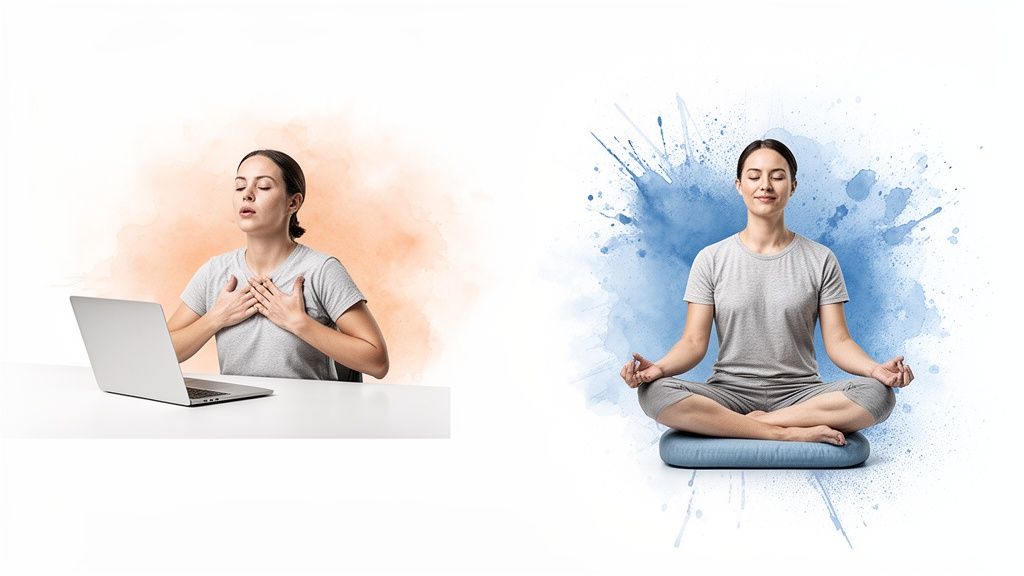
Breathwork is like a sprint for your nervous system – short, intense, and with an immediate effect. Meditation is more like a marathon – it requires endurance and consistency to get you to the finish line in the long term.
To give you an initial orientation, I have summarized the main differences in a clear overview. This table helps you quickly recognize which practice might suit you best in your current life situation.
This table summarizes the essential differences and helps you quickly identify the method that suits your current needs best.
| Characteristic | Breathwork | Meditation |
|---|---|---|
| Approach | Active: You consciously control your breathing. | Passive: You observe your thoughts. |
| Focus | Body sensations and nervous system. | Mental clarity and awareness. |
| Effect | Often immediately perceptible, intense and bodily. | Long-term, gradual and mental. |
| Time required | Flexible, effective from 5 minutes of use. | Regularity is essential, often 10-20 minutes. |
| Ideal for | A quick stress reduction, an energy boost, an emotional outpouring. | Inner calm, focus, personal reflection. |
Both paths are valuable. It’s not about what is “better”, but about what now works for you.
To clarify the question “Breathwork vs Meditation – what suits your lifestyle?”, we must first get to the root. Both practices can help you achieve more inner calm, but their paths to get there are fundamentally different. Imagine it like a sprinter and a marathon runner: both are athletes, but their training could not be more different.
Breathwork is an active practice. Hier geht es darum, deinen Atem ganz bewusst zu steuern und für dich zu nutzen. Du setzt spezifische Techniken ein – mal schnell und energetisierend, mal langsam und tiefenentspannend –, um dein Nervensystem direkt anzusprechen.
Man könnte es fast als einen Lichtschalter für den eigenen Körper bezeichnen: Du kannst ganz bewusst auf „Energie“ oder „Entspannung“ umlegen. Die Wirkung spürst du oft sofort und sehr körperlich.
Beim Breathwork geht es ums Tun. Du greifst aktiv in einen Prozess ein, der sonst völlig unbewusst abläuft, und erzeugst dadurch einen ganz bestimmten Zustand.
Breathwork ist dein Werkzeug, um deinen Zustand aktiv zu verändern. Es ist die direkte Kommunikation mit deinem autonomen Nervensystem in der Sprache des Atems.
Meditation hingegen ist eine passive Übung der reinen Beobachtung. Statt etwas aktiv zu verändern, lernst du, einfach nur wahrzunehmen, was gerade da ist: deine Gedanken, deine Gefühle, die Empfindungen in deinem Körper.
Das Ziel ist hier nicht, die Gedanken zwanghaft zu stoppen. Vielmehr geht es darum, eine gesunde Distanz zu ihnen aufzubauen. Du wirst zum Beobachter deines eigenen Geistes, ohne dich von jedem einzelnen Gedanken mitreissen zu lassen. Stell dir vor, deine Gedanken sind wie Wolken am Himmel – du sitzt auf einer Wiese, schaust ihnen beim Vorbeiziehen zu, ohne auf eine aufzuspringen. Wenn dich sanfte, passive Entspannungstechniken interessieren, ist vielleicht auch unser Artikel über Yoga Nidra etwas für dich.
Die Wirkung der Meditation spürst du oft subtiler und sie entfaltet sich über einen längeren Zeitraum. Es ist wie ein Training für deinen Geist, das dich langfristig zu mehr mentaler Klarheit, emotionaler Stabilität und einem tiefen inneren Frieden führt. Du baust quasi einen Muskel für Gelassenheit auf, der mit jeder Sitzung ein kleines bisschen stärker wird.
Wenn du dich zwischen Breathwork und Meditation entscheiden musst, sind oft zwei Fragen entscheidend: Wie schnell merke ich etwas und wie viel Zeit kostet es mich? Die Antwort darauf ist nicht schwarz-weiss, sondern hängt stark davon ab, was du gerade brauchst – einen schnellen Reset für den Moment oder eine tiefgreifende, langfristige Veränderung deiner mentalen Landschaft.
Breathwork ist deine Wahl für den unmittelbaren Effekt. Stell es dir wie einen Espresso für dein Nervensystem vor: kurz, intensiv und mit einer Wirkung, die du sofort spürst. Indem du aktiv deinen Atem steuerst, kannst du deinen körperlichen und emotionalen Zustand gezielt in wenigen Minuten verändern.
Der grösste Pluspunkt von Breathwork ist ganz klar die schnelle, messbare Wirkung. Du musst nicht wochenlang üben, um einen Unterschied zu bemerken. Schon eine einzige, kurze und intensive Session kann deinen Stresspegel nachweislich senken oder dir einen Energieschub geben, wenn du ihn am dringendsten brauchst.
Dieses direkte körperliche Feedback macht den Einstieg oft unkompliziert und motivierend. Auch die Wissenschaft bestätigt: Atemübungen sind besonders effektiv, um Stress zu reduzieren und die Stimmung zu heben – oft sogar schneller als reine Meditationspraxis. Eine kontrollierte Studie mit 140 Teilnehmenden zeigte, dass die Gruppe, die Atemübungen praktizierte, über 30 Tage hinweg eine signifikant höhere Steigerung ihrer positiven Stimmung erlebte.
Meditation hingegen spielt ihre Stärken eher auf lange Sicht aus. Es ist wie beim Muskeltraining: Ein einzelnes Workout fühlt sich gut an und bringt vielleicht einen kurzen Pump, aber wirkliche Stärke und Ausdauer baust du nur durch regelmässige, kontinuierliche Praxis auf.
Breathwork gibt dir den Fisch für den Moment, Meditation lehrt dich das Fischen für das ganze Leben.
Der Zeitaufwand für Meditation wird oft etwas höher angesetzt. Während du mit 5 Minuten Breathwork schon eine Menge erreichen kannst, empfehlen die meisten Lehrer, für eine Meditationssession mindestens 10 bis 20 Minuten täglich einzuplanen. Das gibt deinem Geist die nötige Zeit, um wirklich zur Ruhe zu kommen und in den Zustand des reinen Beobachtens einzutauchen.
Der Effekt ist subtiler, aber dafür umso nachhaltiger. Mit der Zeit wirst du feststellen, wie du zum Beispiel:
Beide Techniken haben übrigens eine starke Wirkung auf unser vegetatives Nervensystem, insbesondere auf den Vagusnerv, der für unsere Entspannungsreaktion zuständig ist. Wenn du gezielt nach Techniken suchst, um dein System herunterzufahren, wirf auch einen Blick in unseren Artikel über Übungen zur Stimulation des Vagusnervs.
Am Ende ist die Wahl also eine Frage deines Ziels. Suchst du einen schnellen Reset, ist Breathwork unschlagbar. Willst du deinen Geist nachhaltig trainieren und widerstandsfähiger machen, ist Meditation der verlässlichere Weg.
Die Entscheidung zwischen Breathwork und Meditation hat eigentlich weniger mit den Methoden selbst zu tun, sondern viel mehr mit dir und deinem Alltag. Deine aktuelle Lebenssituation, deine Ziele und sogar deine Persönlichkeit spielen die Hauptrolle dabei, welche Praxis dir am Ende am meisten bringt. Es geht darum, das richtige Werkzeug für die richtige Aufgabe zu finden.
Eine Methode, die sich nahtlos in deinen Tagesablauf einfügt, wirst du auch wirklich konsequent durchziehen. Schauen wir uns deshalb ein paar ganz konkrete Szenarien an, damit du ein besseres Gefühl dafür bekommst, was für dich passen könnte.
Imagine you are working in Zurich, rushing from one meeting to the next, and your mind is racing. You barely have time for a real break, but you can feel your stress level rising and your concentration slowly slipping away.
For you, Breathwork is like a mental espresso: It works instantly, has no calories, and you can discreetly fit it in between two appointments.
This decision tree shows you the way, depending on whether you are looking for an immediate effect or a long-term change.
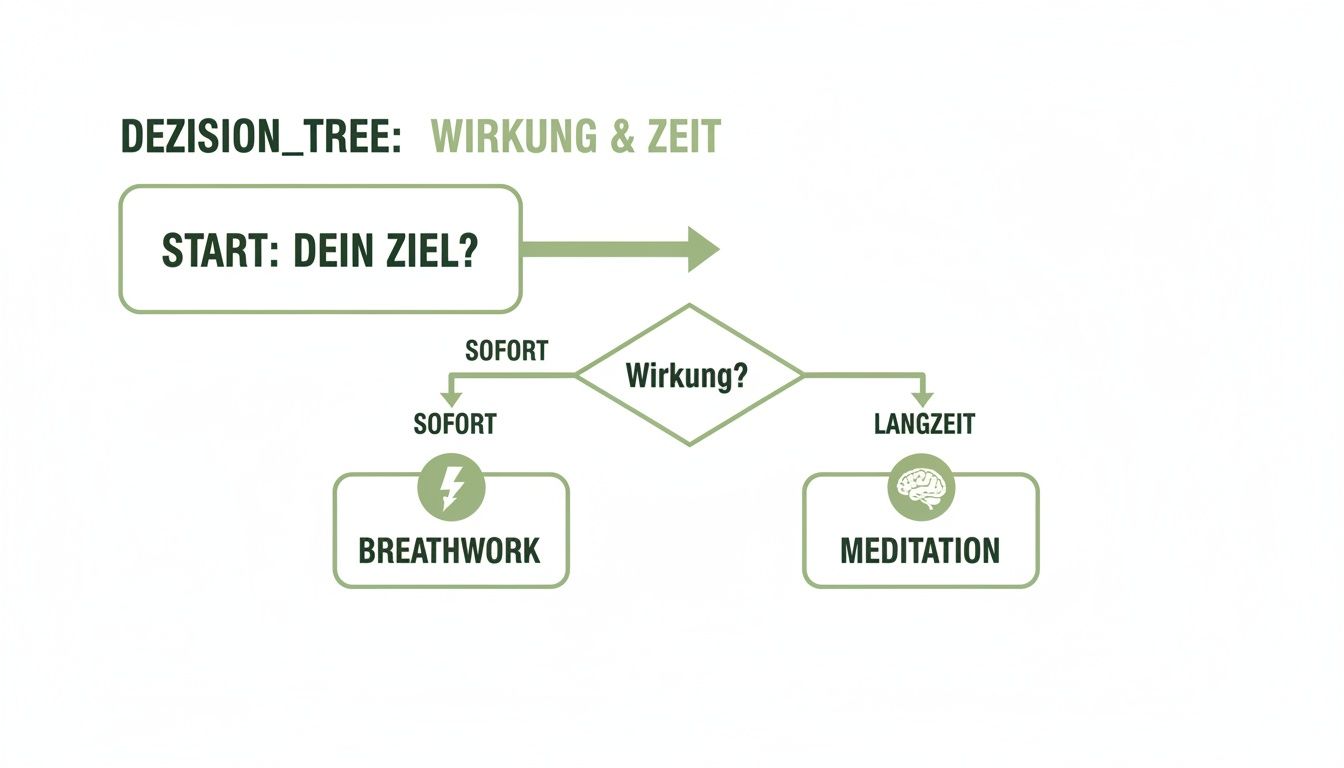
The graphic makes it clear: If you need an immediate intervention to change your state right now, Breathwork is your go-to option. However, if you want to sustainably change your mental patterns, meditation is the better path.
Your life as a mother is full of love, but also often unpredictable and chaotic. You juggle countless balls at the same time, your own needs are mostly neglected, and you long for an inner anchor that helps you stay calm and present even in stormy moments.
Interestingly, scientific data shows that women meditate significantly more often than men. These differences indicate varying needs, which is relevant for targeted wellness programs. For example, in Hamburg, 38 percent of the population meditates regularly, while Berlin with 25 percent is also well above the national average. You can read more about the spread of meditation practices in research here.
You train hard to improve your performance. Your focus is on recovery, mental strength in competition, and optimizing your physical processes. You want to get the most out of yourself.
Theory is all well and good, but in the end, only one thing counts: What do you actually implement from it? The best method is always the one that you apply regularly. Both Breathwork and meditation only unleash their full power when they become a habit. Here I show you how to incorporate both practices into your daily life without much effort.
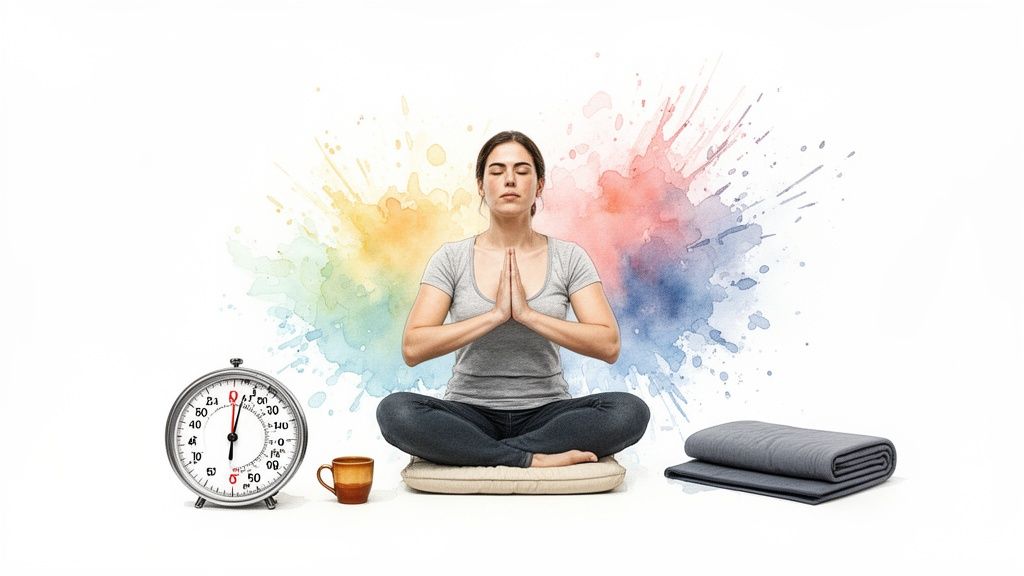
The good news is: You don’t have to clear hours of your day for this. Just a few conscious minutes can make a huge difference if you stick with it.
Breathwork is the perfect quick start, as you need zero prior knowledge and feel the effect immediately. You can use this simple routine in the morning for activation or in the evening to wind down – just as you need it.
Box breathing (Square breathing):
Repeat this cycle for five minutes. This technique is incredibly effective for balancing your nervous system and feeling immediately grounded again.
In meditation, consistency matters, not duration. Instead of overwhelming yourself with the goal of meditating for half an hour right away, start with10 minutes a day.
The magic of meditation lies not in the length of a session but in the consistency of the daily routine.
Create a small ritual for yourself: a fixed place, a fixed time. For example, just after waking up, on a cushion in a corner of your room. This helps your brain anchor the new habit more quickly. In Switzerland and Germany, the practice is gaining more and more importance. Studies show that already40 percentof Germans have experienced this. It is remarkable that15 percentmeditate several times a week, and more than95 percentreport positive effects such as increased serenity. You will find more information in theseexciting study results on meditation..
Why choose when you can have the best of both worlds? The clever combination of the two methods makes the most of their respective strengths for you.
A proven approach: start your meditation session with a short breathing exercise. Begin with three to five minutes of box breathing. This helps you reduce physical stress and calm the flow of thoughts. You will notice that it is much easier to dive into the silent observation of meditation afterwards.
We, atTempleshape, help you find a routine that truly motivates you. In our sessions ofguided breathing and ice baths in Zurich,you will learn under professional guidance to use the power of your breath purposefully – the perfect kick-off to make health a habit.
At the end of all this ‘breathing vs. meditation’ debate, there is actually a very simple truth: it is not about what is ‘better’ in general. The only question that really matters is: What works best for you at this moment, in your lifestyle and your personal goals?
You could say: breathing is your direct tool for quick and tangible changes. It is the reset button you press to actively manage your energy and catapult yourself out of daily stress.
Meditation, on the other hand, is your long-term companion. It trains your mind to a deeply anchored inner stability and lasting serenity.
Both practices are incredibly powerful and should not exclude each other – on the contrary, they complement each other perfectly. A short breathing session can, for example, be the perfect springboard to a deeper meditation.
At Templeshape in Zurich, we know from experience: for health and well-being, there is no one-size-fits-all model. Your path is unique, and that is why you don’t have to choose with us – we offer you both.
Discover the intense power of your breath in our guided breathing classes. Or find meditative tranquility and body awareness in our various yoga classes. We invite you to try both and feel for yourself what supports you best at this moment.
We accompany you on this path – with clear structures, professional guidance, and a community that motivates you. Discover how to bring more energy and at the same time more calm into your life with targeted exercises. Learn more about ourbreathing offer in Zurichand start your journey.
To conclude our big comparison, we still have a few answers to the questions that frequently arise in our studios in Zurich. They are here to help you dispel the last uncertainties and make the right choice for you.
One of the most frequently asked questions is whether you can mix the two methods.
Yes, absolutely! The two actually complement each other perfectly. A short breathing session before your meditation acts as a booster for your practice. It helps you release physical tension and finally stop the whirlwind of thoughts.
Try withfive minutes of box breathing, to calm your nervous system. You will notice that it will be much easier for you to dive into the silent observation of meditation and truly sink into calm.
Consider breathing as a warm-up for your mind. You are preparing the ground for meditation to truly flourish.
Another point that often comes up is safety – especially when it comes to more intense breathing techniques.
Safety always comes first. If you have certain pre-existing conditions, you should approach intense breathing techniques with caution. This is especially true in cases of:
Even during pregnancy, intense methods are not recommended. In all these cases, you should practice thisonly after having expressly consulted your doctor.Gentle and soothing breathing exercises are almost always safe and may even be beneficial.
This is the question that mainly revolves around one thing: patience. Some people feel a pleasant calm from the very first time, but this is rather the exception. The true deep and lasting effects of meditation usually only manifest after you have persevered for a few weeks.
Never forget: you are training a mental muscle here. It takes time andconsistencyto observe real transformations such as improved concentration, greater emotional balance, and less daily stress. Patience is truly your most important companion here.
Are you ready to experience for yourself what conscious breathing and movement can do for you? AtTempleshapein Zurich, we provide you with the perfect setting to start or deepen your practice – with professional support and a community that motivates you. Discover our classes and make health your new habit.
Find your course now athttps://templeshape.comand start your journey.
Tags