Es befinden sich keine Produkte im Warenkorb.
November 3rd
Breathwork Zurich: #1 studio comparison + instructions for at home
0 comments

November 3rd
0 comments
In the incessant hum of modern life in Zurich – amid deadlines, notifications and the constant pressure to achieve more – we often forget the most fundamental tool we have to control our inner world: ours breath.
What if you could consciously use this simple, automatic process to... to reduce stress, the to improve focus and profound states of the well-being to release?
Welcome to the world of Breath work.
This isn't just about taking deep breaths when you're stressed. It's the one conscious and systematic practiceto change your breathing patterns to improve your mental, physical and emotional health. From ancient yogis to modern neuroscientists, the power of breath has been revered and studied for thousands of years. This comprehensive guide from Templeshape, your studio in Zurich-Wiedikon, takes you on a journey through history, explains the science and offers you a practical toolbox of techniques
Although 'Breath work' is a wellness buzzword today, its roots are ancient and deep. It is a practice that bridges the gap between ancient wisdom and modern science.
For thousands of years, cultures have recognized that breath is life (Prana/Qi).
Pranayama: Was in ancient India Pranayama – translated as 'expansion of life force' or 'breath control' – a pillar of yoga. Techniques like Nadi Shodhana (alternative breathing) the energy channels (Nadis) harmonize and prepare the mind for meditation.
Qigong: In ancient China, Taoist practices such as Qigong and Tai Chi specific breathing patterns Qi (vital energy) to cultivate and balance.
The term 'breathwork' as we know it gained currency in the West in the 1960s and 70s, largely through pioneers such as Stanislav Grof (Holotropic breathing) and Leonard Orr (Rebirthing). These methods use fast, connected breathing, to induce altered states of consciousness for deep psychological healing.
Today is Breath work a Generic term for a wide range of techniques:
category | Goal | Examples |
|---|---|---|
Relaxing & Calming | Activates the body's relaxation response, reduces Fear and improves it Sleep. | box breathing, 4-7-8 breathing, abdominal breathing. |
Activating & energizing | Stimulates that Nervous system, increases the alertness and builds resilience. | Wim Hof Method, Connected Breathing. |
Deeply transformational | Goal: Deep emotional and psychological healing and altered states of consciousness. | Holotropic breathing, Conscious Connected Breath work (CCB) |
Breathwork is the art and science of conscious breathing. It is rooted in ancient traditions such as yogic pranayama and has evolved with modern science for healing.
The profound effects of breathwork are not just anecdotal; they are based on robust physiological mechanisms.
Your Autonomic nervous system (ANS) controls heart rate, digestion and breathing. It has two contradictory branches:
Chronic stress often keeps us stuck friendly overdrive. Breathwork, particularly techniques involving slow, prolonged exhalations, is one of the most effective ways to do this parasympathetic system switch on manually. This mainly happens through stimulation of the vagus nerve, which acts as the main highway of the PNS.
There are countless techniques. Here are the best ones that you can easily find in yours Zurich-Integrate everyday life.
Technology | Application | Advantages |
|---|---|---|
Box breathing | Breathe evenly in four phases (4 in, 4 hold, 4 out, 4 hold). | Immediate stress reduction, focus and mental calm (popularized by Navy SEALs). |
4-7-8 breathing | 4 on, 7 hold, 8 off. Often referred to as a 'natural sedative'. | Helps quickly Fall asleep and in acute Coping with anxiety. |
Physiological Sigh | Breathe in deeply (nose), then breathe out briefly without breathing out breathe for the second time (nose), then exhale long and completely (mouth). | Fastest method for real-time calming, improves mood. |
Because these techniques intense emotional reactions can trigger, we strongly recommend doing it in the safe confines of Templeshape, your studio in Zurich-Wiedikon, to carry out.
Conscious Connected Breath work (CCB): The core principle is one continuous breathing rhythm without pauses between inhalation and exhalation. Ideal for Release stored emotional energy and to process trauma.
Holotropic breathing: Uses rapid, deep breathing with evocative music to non-ordinary states of consciousness for achieving deep psychological healing.
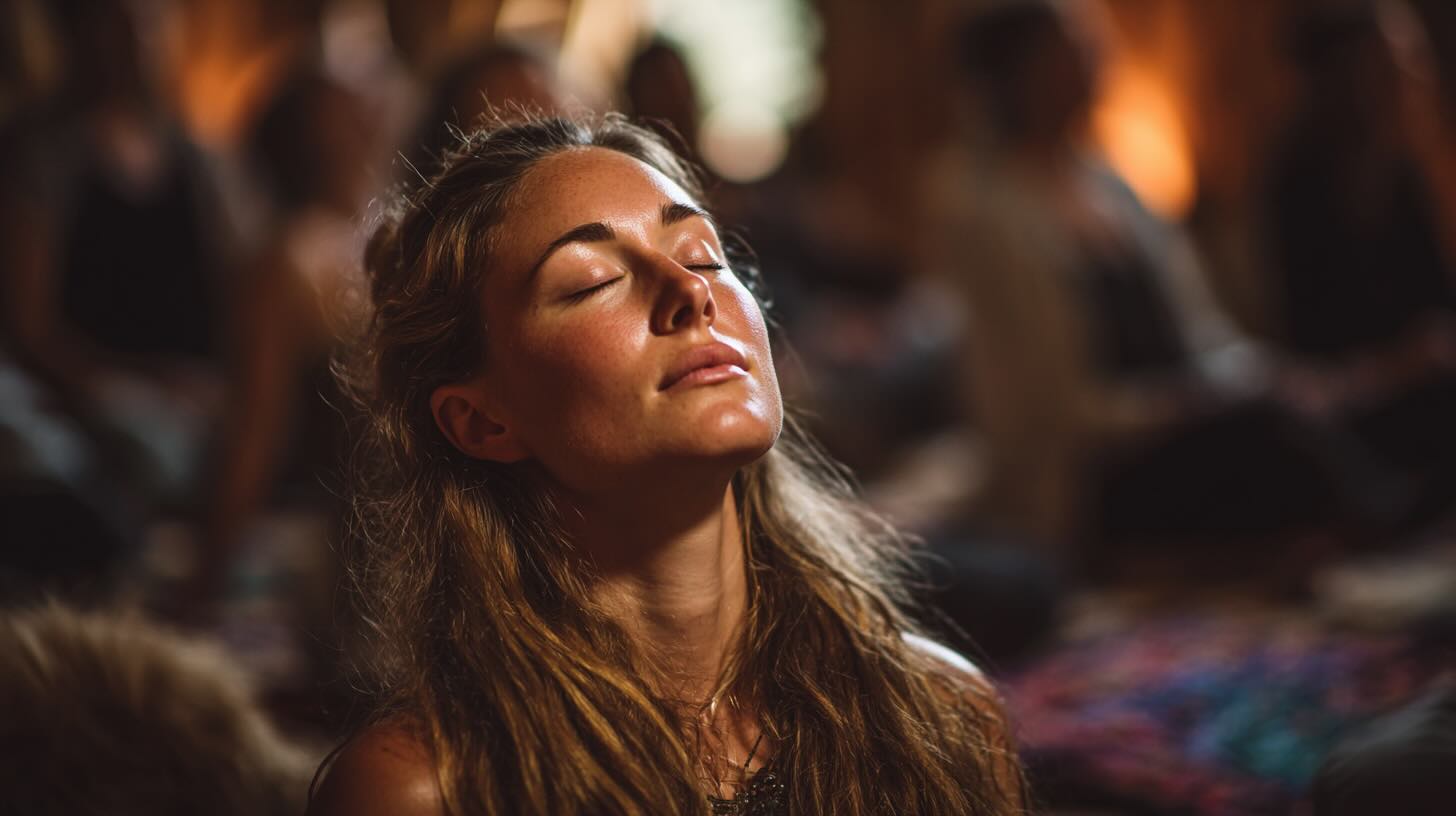
Take part in a breathwork session in Zurich now!
While gentle Breathing exercises While safe for almost everyone, more intense forms carry risks. Consult a doctorBefore you start intensive breathwork if you suffer from the following conditions:
Cardiovascular diseases (e.g. heart attack, stroke, severe high blood pressure)
Severe asthma (always have an inhaler ready)
Epilepsy or seizure disorder
Glaucoma or retinal detachment
pregnancy
Important: Never perform intensive breathing exercises, especially breath-holding, in or near water or while driving.
Zurich is known for combining old charm with innovation. This mix makes it perfect for the return of Breathwork. As people realize the benefits of better breathing, it is becoming key to personal health and work life.
In a fast-paced world where burnout is normal, breathwork promotes mental clarity and productivity. It is an easy and affordable way to deal with the stress of modern life, especially in the hectic city life of Zurich.
Of course, ours are also a cool alternative to escaping everyday life Retreats, which are very much about stress relief.
Breathwork isn't just about stress relief. It helps with personal development and finding peace in chaos. It connects people with themselves and creates a community that leads to happiness and well-being.
Choosing the right one Breathwork session in Zurich depends on your goals (relaxation vs. transformation) and your budget. In the following sections we will walk you through the specific ones Methods and the unique one Expertise at Templeshape and show you why our Value for money is unbeatable.
At Templeshape City We not only offer you the technology, but also the Expertise and the safe space for your deepest Breath work Journey.
Our sessions, led by experts like Valentina and Sabrina, integrate frequently Singing Bowls. Valentina uses their frequencies specifically to deepen relaxation and stimulate brain waves Theta state (4–8 Hz). This condition is deeper meditation, emotional healing and connected to access to your subconscious. This is ours E-E-A-T promise to you: expert-led, safe and scientifically based practice.
At places like Templeshape City you can attend sessions that will help you release emotions and encourage self-awareness. Templeshape offers in-person sessions for a more personalized experience led by experts.
In Zurich you will find different styles, from Holotropic Breathwork® to 4-7-8 breathing to Conscious Connected Breathwork (CCB). Studios may use music, touch, essential oils or acupressure to enhance your experience. Whether you want to go alone or with a friend, there is something for everyone.
Zurich is known for quality, but often also for high prices.
Even if you find other studios in the city, the Breathwork sessions offer, it's worth taking a closer look at the costs.
We at Templeshape in Zurich-Wiedikon are convinced: Deep transformation should be accessible. While you can hardly find anything comparable elsewhere in the city Breathing session for under CHF 40-50, we are making a clear statement.
There is no breathwork class available in Zurich for CHF 8.69 - except at Templeshape.
Through our special subscriptions and package prices, we ensure you get the best breathwork training in town without breaking your budget.
tags