April 7
An average treadmill is only used 7.2 times before it becomes an expensive clothes rack. A good treadmill will quickly cost you CHF 1,000 or more. Up to 67 % of gym memberships go completely unused, and billions are wasted every year on these neglected investments. What if I told you about a magical, underrated tool that's cheap, can be used almost anywhere and delivers a high ROI?
This tool only costs around 10 to 40 CHF and has been used for years by elite athletes such as Mike Tyson, Conor McGregor, Floyd Mayweather, Muhammad Ali, Rocky Marciano and George St Pierre to name but a few. For some of you, it's probably been since elementary school that you've had this thing in your hands. The tool I'm talking about is simple but super effective - jump rope.
1. skipping rope in the flow: your journey begins
Just imagine: It's August, the height of summer. The sun is shining down on you, the birds are chirping and the sound of your rope whipping and cutting through the air echoes outside. Your body is perfectly synchronized with every turn of the rope. Your breath, feet and hands move in complete unity as the rope glides along just below you.
Every day you notice that your sessions get a little longer and your timing becomes more precise. Once you've mastered the basics of jumping rope, you'll crave more complexity. Crossovers, side swings, double jumps, triple jumps, footwork, release moves, 180s and 360s. Your journey into the rope skipping wonderland has begun.
You are now in rope-jumping maxxing mode.

2. choose the right rope
Select a rope: There are different types of skipping ropes: PVC, beaded, leather, weighted and cable. I prefer PVC because I've built up my skills and tend to do more fast freestyle jumping. For beginners, I like beaded ropes because they give more tactile feedback due to the extra weight of the beads.
Cable ropes are more for double jumps and triple jumps, i.e. 2 or 3 rotations with just one jump. As you progress, they are a good option if double and triple jumps are your goal. I don't like leather ropes because they are too light, which affects feedback and speed.
But if you only have one Leather rope then go ahead and use it. Weighted ropes are great for building shoulder endurance and mental strength. Many Muay Thai fighters use weighted ropes in their training. Training for precisely these reasons. However, weighted ropes are not for beginners, so lay a foundation before you invest in one.
If your rope is not in use, I recommend hanging it up after each session to avoid kinks and knots.
Alternative to ski jumping:
HIIT workouts
Come and try it out!
3. the right surface and rope size
Jumping surface: When it comes to floors for jumping rope, wooden floors are unbeatable. Wood absorbs shocks and bounces with every jump. If you don't have a wooden floor, I recommend a rubber mat for jumping rope. Avoid concrete and asphalt as much as possible, because over time they can put a lot of strain on your joints and wear out your rope.
Determine the size of the rope: Lay your rope on the ground and stand with one foot in the center. The handles should reach about chest or armpit height; this is a good general starting point.
A rope that is too long can mess up your timing and movements, so I like about 25 cm of overhead clearance for the rope. As you progress in freestyle, double jumps and triple jumps, you can shorten the rope further to reduce the overhead clearance. Remember, rope size is totally individual because we all have different arm and body lengths.
4. rope jumping: Techniques
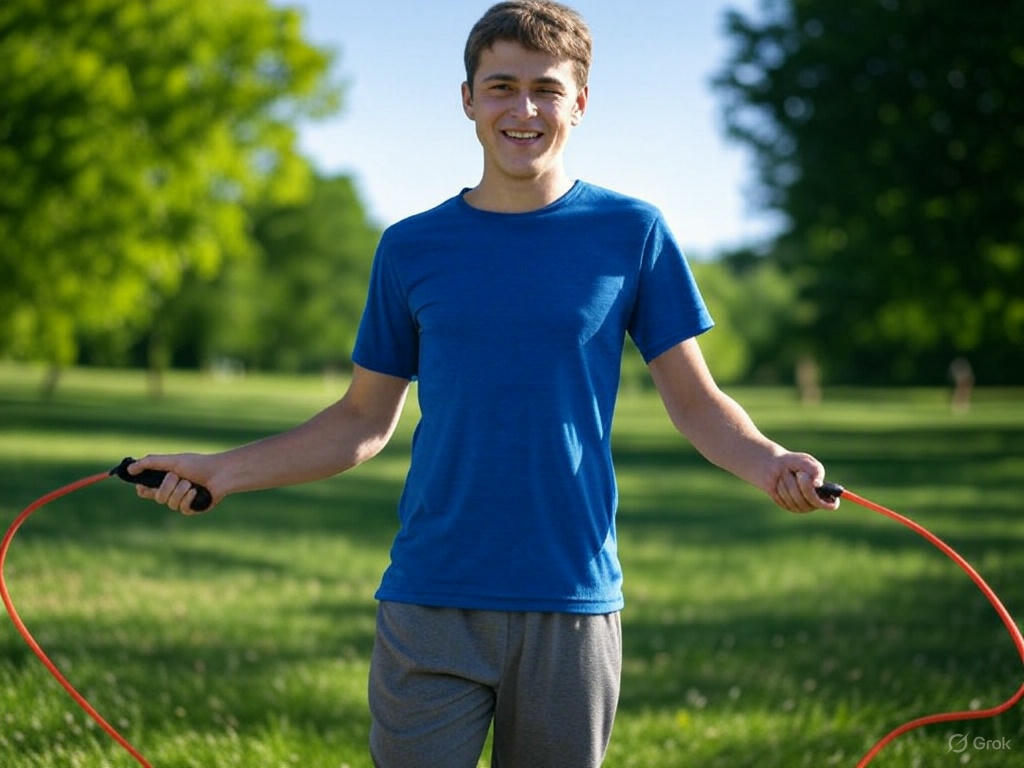
It's harder to get rid of a bad habit than to build a good one. Let's talk about the most common technique mistakes made by beginners. First mistake: holding the rope with the Poor to force. This is not an arm exercise; you should not waste your energy fighting with your arms. Let your wrists be the motors that drive the rotations of the rope. Another typical mistake is to jump way too high. You only need a small jump, just high enough for the rope to pass under your feet.
Use small jumps with soft landings; don't let your heels come down hard. Imagine you're jumping on eggshells - we want a nice, smooth, rhythmic jump. The next mistake is to keep your hands way too far apart, which artificially shortens the rope and causes you to stumble. Keep your hands close to your body and a little in front of your hips. This is much more efficient and saves energy instead of spreading your arms wide. Imagine your hands moving in a fixed path, like the bar in a Smith machine. Lastly: Maintain good posture and a neutral forward gaze. Don't look at your feet as you jump.
When you first start jumping rope, I don't recommend using music so you can hear the sound of the rope; this will help you develop your timing much faster. As you get better, feel free to turn up the music.

5. advantages of jumping rope
Heart health and fat burningJumping rope is a fantastic way to improve your cardio. You can vary the intensity at which you jump. You can stay in a comfortable, steady zone 1 cardio range or really get your heart pumping with more intense techniques such as double jumps or running on the spot. 10 minutes of jumping rope burns as many calories as a 30-minute run on the treadmill.
Agility and footwork: There's a reason why top boxers and MMA fighters make jumping rope an integral part of their training. Jumping makes you agile and light on your feet while strengthening the structures in your feet and ankles. The more time you spend on the rope, the better your balance and coordination will become.
Brain health and bone health: The timing, coordination and rhythm are great for your brain health. As you learn more complex rope techniques, your brain works at full speed to master these movements and patterns. Jumping rope is also contralateral, meaning it uses opposite limbs together, which improves your motor control by activating both hemispheres of your brain. After your session, your brain will be fueled by a wave of hormones and chemicals like BDNF, Endorphins, serotonin, dopamine and norepinephrine. Through the repetitive jumping impulses, jumping rope also strengthens your bone health and density. This becomes even more important when you consider that over 30 million Americans suffer from osteopenia. Just two to three rope jumping sessions per week can improve your bone health. Jump to the max to strengthen your bones.
Portability: As long as you have enough space above your head, you can take a skipping rope practically anywhere. To the park, your garden, when traveling, to the Gym - the possibilities are endless. If you travel a lot on business, this fitness tool is an absolute must-have. You can easily put your skipping rope in your suitcase or hand luggage without worrying about it taking up too much space.
Costs: I know we live in a tough economy and everyone has different financial commitments, but the jump rope is one of the most cost effective pieces of fitness equipment out there. Most ropes cost between 10 and 40 CHF. High quality ropes are around 70 CHF, but these are not necessary for beginners. If a new rope doesn't fit into your budget right now, I'm sure you can find a used one for as little as 5 CHF.

6. structure your rope skipping sessions
Structure your sessions: Keep in mind that there are no universal guidelines for the jump rope program, as we all have different starting points and athletic backgrounds. For beginners, I like to start with 6 sets of 20 seconds jumping and 10 seconds rest between each set. If that's too hard, you can shorten the jumping time or lengthen the rests - or both. If this is still too difficult for you, don't worry about the time - just focus on completing several successful jumps in a row and take breaks when you need them.
Once your rhythm and timing improve and simple jumping becomes easy, you can add sets and extend the time. Another cool way to structure your rope sessions is to create a Playlist with your favorite songs and see if you can skip through an entire song without stumbling. Advanced jumpers can do boxer style sessions consisting of several 3 minute rounds with 1 minute breaks. Experienced jumpers can do long density sessions of 20-45 minutes at a time, incorporating different moves and skills.
Then there are practice sessions where you concentrate fully on a specific skill. Always do your technique exercises at the beginning when you are fresh. For example, if you're working on crossovers, practise that first before you jump normally. I would even advise practicing without a rope first, just working on your hand position. There are many ways to structure your sessions - remember to have fun and enjoy the process. And contrary to what many believe, just 10-15 minutes a few times a week is enough to make incredible progress with the rope.
Thanks to the endless variations of techniques and tricks that jumping rope offers, it puts an end to the monotony that other cardio machines often bring. Summer is the perfect time to start your jumping rope journey. Get off the hamster wheel treadmill, get out there and jump. Find your flow state with the rope under the glorious sun. How long will you wait before you demand the best from yourself?
tags