No products in the cart.
November 4th
Pilates exercises for beginners & Wall Pilates
0 comments

In this brand new blog post, we'll show you how you can transform your living room into a Pilates sanctuary.
With these 5 at-home Pilates exercises you can create the balance you need in your own four walls to feel strong and toned and start the day optimally.
This means you no longer have to worry about fancy equipment or boring courses - all you need is a few square meters of free space and a positive attitude to succeed.
Be prepared to strengthen your muscles and posture during the training phases, make your body parts more flexible and thus significantly improve your overall well-being - without long journeys and in your own four walls.
The Hundred Exercise is part of the Pilates series.
This exercise focuses on arm work, core strength and Endurance training.
Pilates exercises for beginners include the Hundred, a classic exercise designed to build core strength and endurance.
This Pilates routine is great for beginners because it provides a solid foundation for advanced exercises.
By making the core of the body more stable and stronger, even newbies can observe better flexibility, posture, and overall strength with regular practice.
So get ready to feel the pain and master the hundred for beginners as you learn the basics of Pilates for a more balanced, stronger body in this Pilates exercise.
Focusing on the core of the body and synchronizing breathing with everything your body is doing, The Hundred will help you not only take your fitness to the next level, but also improve your cardiovascular health and increase awareness of your body.
The reason why the Hundred is so often included in Pilates classes is because the movements are nothing more than real Pilates: a specialized core or core workout in which users learn how to do the Deep muscles of the trunk can get started properly, strengthen restraint and increase the aesthetics of the body.
Everything happens with a breathing technique that will help you return to real life after training and feel less stressed.
The next time you sit on the Pilates mat or start Pilates, don't forget to do the beginner's hundred - the full-body workout exercise that will make you feel proud and strong.
By incorporating the Hundred into your Pilates routine, you'll not only lay the foundation for endurance and control, but you'll also have the opportunity to challenge yourself and take your training to the next level.
As you learn how rewarding it can be to perfect and master this basic movement, you will also feel the benefits in performing more advanced movements and in your improved fitness performance.
When it comes to executing the hundred, the motto is: progress is more important than perfection.
So please don't be discouraged if things don't quite work out at first.
With dedication and practice, it will soon be easy for you to do the hundred exactly with controlled generosity - maybe even do Pilates on the wall.
Continue to work persistently and confidently on your Pilates practice as you learn to appreciate and further develop the benefits for your whole-body fitness.
The Single Leg Stretch is a basic Pilates exercise that targets the muscles of the upper body and specifically the deep abdominal muscles.
For anyone who wants to strengthen their core and improve their posture, this exercise is a must.
Experienced people can also try a Pilates wall exercise: using the wall as support helps to increase the sense of balance and control over the body and maximize the benefits of the training.
So grab your mat, head to the wall and get ready for that burning sensation in all the right zones!
An important aspect that should not be neglected in Pilates is performing the exercises with precision.
As you straighten one leg and press the opposite knee toward your chest, make sure your abdominal core, which supports your lower back, remains as active as it was in the beginning.
Stabilizing the core is like your body's superhero: it keeps the situation under control and protects against unpleasant incidents.
Precision and control of your own body are always a must when practicing Pilates.
So channel your inner superhero and make sure your core supports you throughout your workout.
Put energy into it as you please and marvel at the progress your body makes over time.
Furthermore, there is still an interesting debate going on in sports circles: Should I commit to this? yoga or devote yourself to Pilates?
Both disciplines focus on physical strength and mental well-being, but they are worlds apart in their views on the rules of life.
Pilates offers a unique challenge for anyone seeking to improve their balance, coordination and stability.
By incorporating leg changes into your routine, you will not only create core strength that is stimulated from a variety of angles, but you will also be pushed to new limits.
Whether you're more of a yogic person or an avid Pilates fan, don't be afraid to try new things and see where the possibilities take you.
A small change can ultimately lead to you achieving your fitness goals.
Templeshape
Pilates
Why not come to our group lessons!
Do you already know the wall roll-up, an exercise that strains the core muscles and rolls up the back, vertebra by vertebra?
Imagine lifting your back off the mat like tearing a sticker off the wall.
It may be difficult, but it is also very satisfying when you complete the desired route.
If you want to practice the wall roll-up, you should try it on the wall as it provides additional support and cues that help.
The wall helps maintain proper alignment and control, allowing for a smoother, more controlled exercise routine.
The next time you lie down on the mat, be sure to roll against the wall and support your roll-up.
However, a roll-up on the wall is not the same as a roll-up on the mat - because the roll-up in wall Pilates has more far-reaching effects: strengthening the abdominal muscles, increasing the mobility of the spine and refining the general feeling of the body.
The next time you try the wall roll-up, you'll notice how much the navel and feet work together.
This exercise is a useful combination of core and flexibility that benefits both the stomach and core.
During the initial phase of the roll-up, focus on initiating the movement from the deep core muscles rather than using momentum.
This is particularly important in Pilates so that you build strength and control instead of wobbling back and forth uncontrollably like a fish out of water.
When you engage your core, you'll not only feel the burn in all the right places, but you'll also improve your overall posture and stability.
If you're tempted to swing, remember that Pilates is all about using your core to create the perfect roll-up.
The more controlled you move in your Pilates practice, the more effective an exercise as simple as the roll-up becomes.
The concentration should always be on the quality of the movement and not on quick passages.
Remember that “control” is the key word – keep the focus on your body’s alignment and engaging the core muscles to get the most out of each exercise.
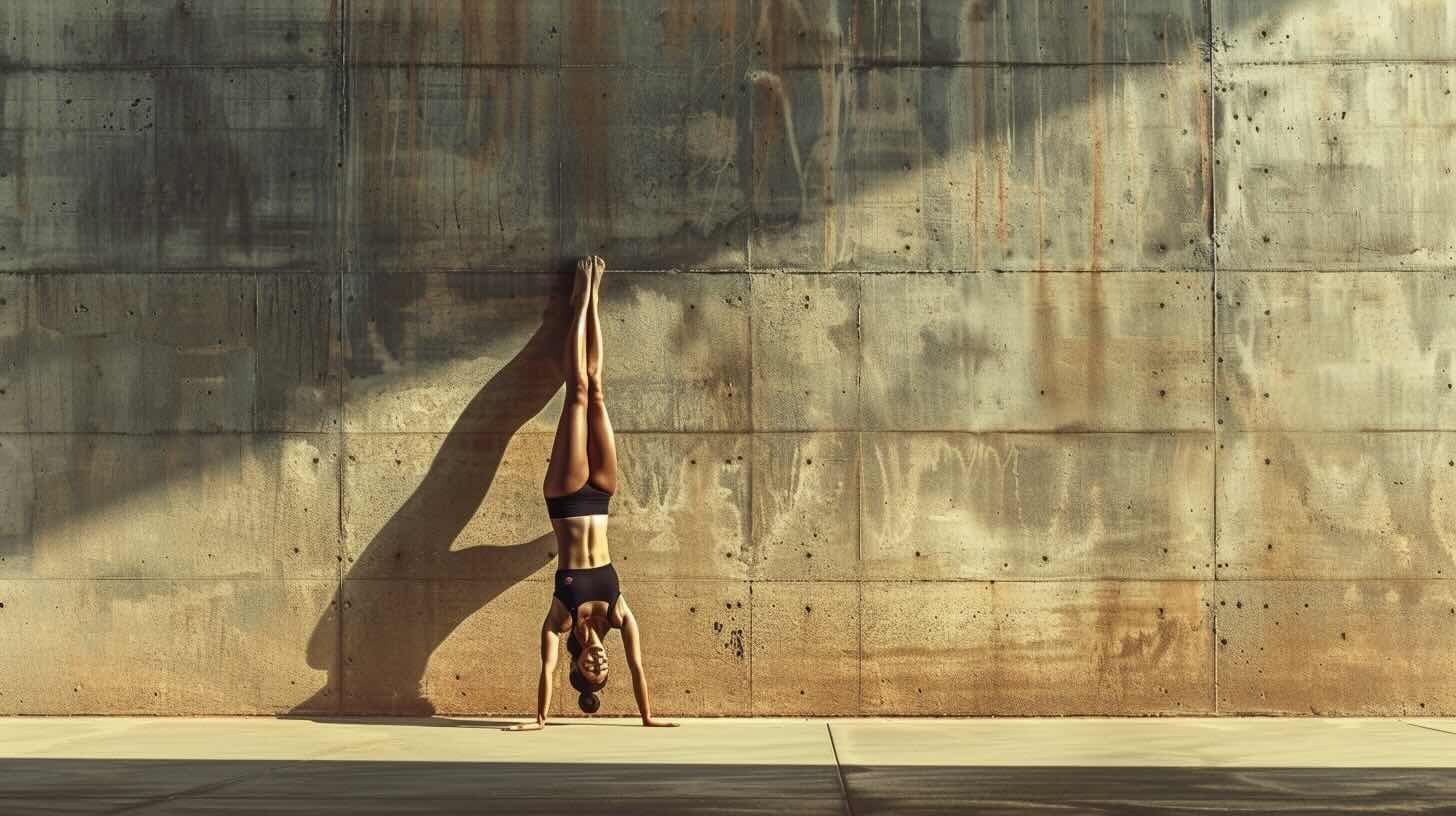
Pilates exercises are an effective solution to sculpt and strengthen the body, and the Plank to Pike exercise is no exception.
This special exercise is ideal for strengthening the core muscles and strengthening the upper body.
Changing from the plank to the pike position requires coordination and control and therefore uses multiple muscle groups.
Anyone who manages to perform the “Plank to Pike” exercise correctly will gain more stability and balance.
The next Pilates class, just like the exercise, should involve challenging yourself, sweating and also feeling stronger.
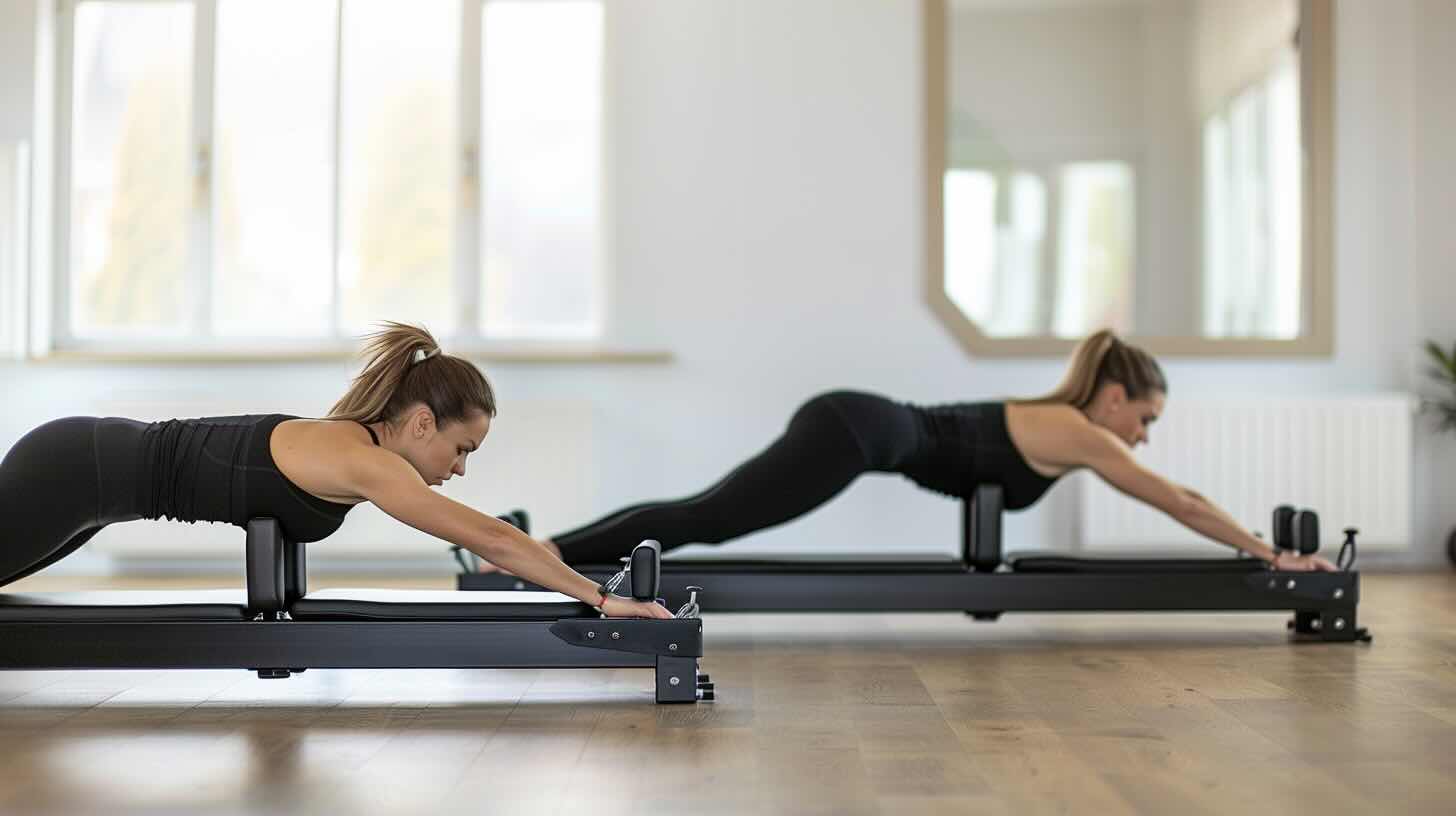
With the help of the “Plank to Pike” movement and many other movements on Pilates machines, parts of the body can be explored and flexibility can be increased at the same time.
Training in Pilates allows you to challenge the body in different ways, combining strength and stability training - all against the background of Breath control and good form.
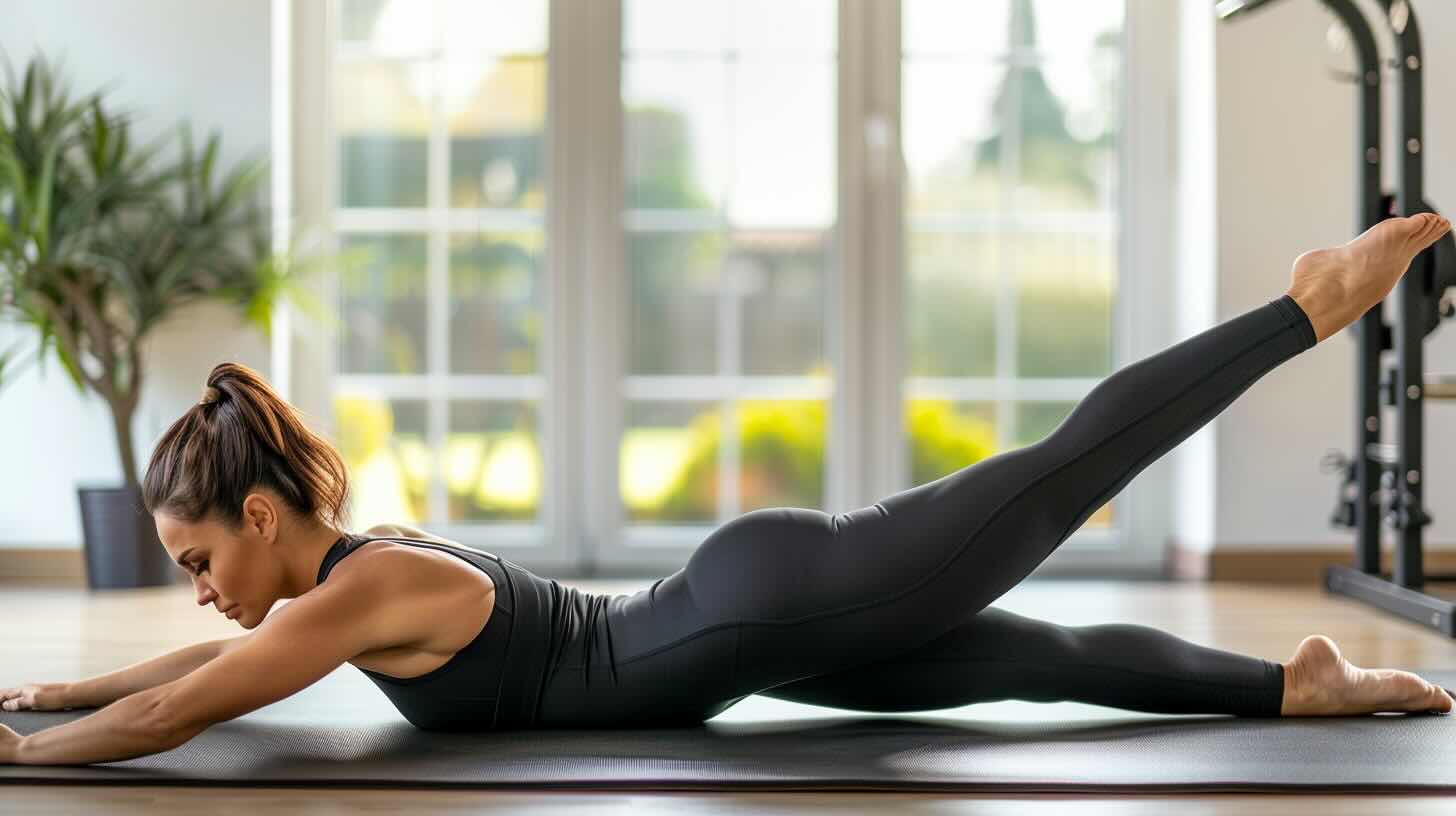
Do you want a slimmer midsection and unlock the hidden potential of your core muscles?
The Pilates exercise Criss-Cross, which is an obligatory part of many Pilates courses, stimulates the entire abdominal area with its tension and is at the same time friendly to the entire musculature.
Anyone who incorporates Criss-Cross into their training program comes a lot closer to the dream of a tight, defined and slim body.
If you would like to do this a little more intensively for 8 days, then you should check out our Pilates & Nutrition Retreat on Fuerteventura!
It doesn't matter if you're a Pilates beginner or using professional Pilates equipment - don't underestimate this exercise and its many supporting services to help you achieve your goals.
The criss-cross exercise particularly benefits your obliques, the sides of your torso and the rest of your muscles.
It adequately challenges the hard-to-reach oblique abdominal muscles and brings you significantly closer to your goal of a toned waist.
The rotational movement in Criss-Cross is used to release tension and nervous strain in the back area, so that your torso posture becomes more upright, stretchy and lively.
What makes the Criss Cross exercise so attractive in Wall Pilates is that it targets not just one muscle group, but several at the same time.
With Criss-Cross you can train your core, obliques and hip flexors in a single exercise - true multitasking in Pilates.
Why work harder when you can move smarter through a layered exercise?
The criss-cross exercise illustrates how Pilates not only targets the abdominal muscles, but also includes the deep core muscles, promoting stability and balance in the spine.
The rotational movement shapes the middle abdominal area, improves posture and prevents back pain.
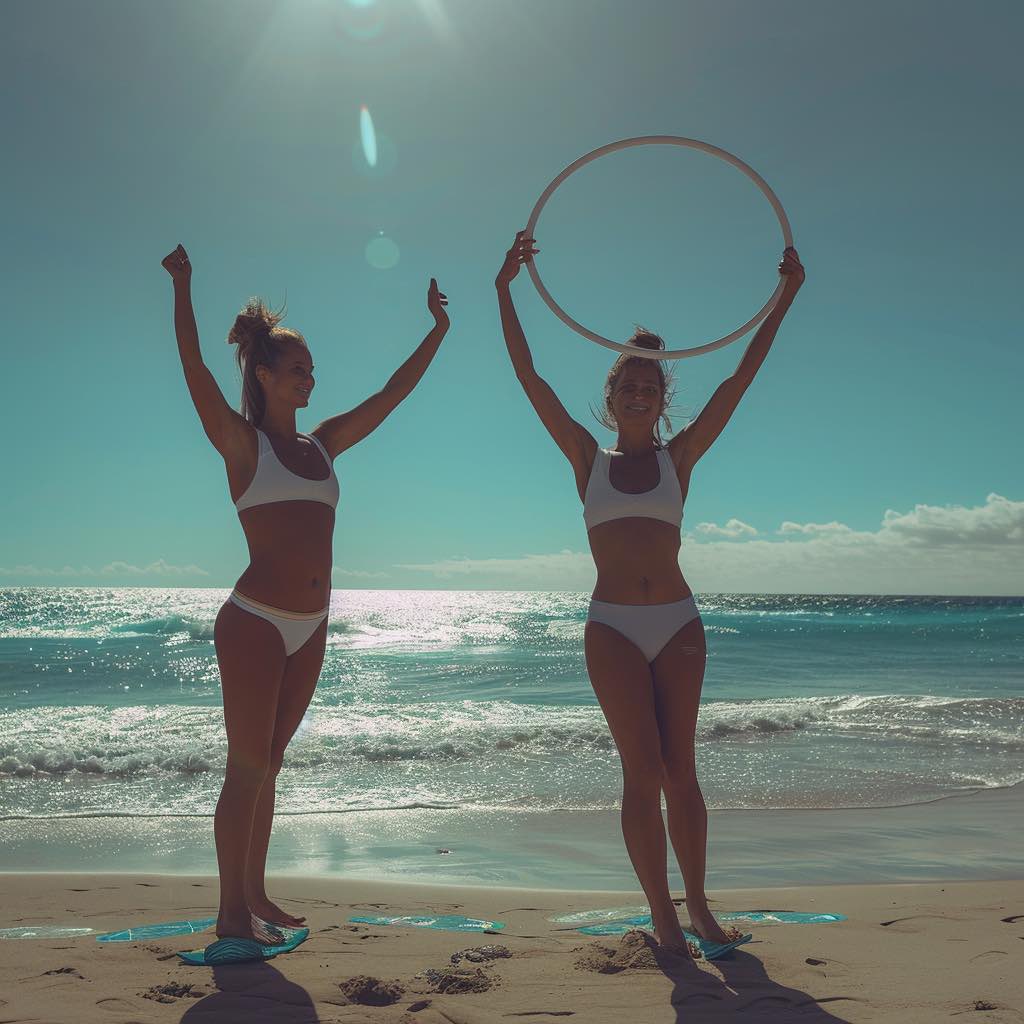
First, we'll take a closer look at one of the most famous Pilates devices: the Pilates ring.
This little device, often referred to as a magic circle, may not look particularly powerful at first glance, but first impressions are deceptive.
Once the ring is in use, it fundamentally changes your training program.
The ring is generally made of flexible material and has padded handles so that you can complete your workout in peace.
And what can't you do with him?
You will be amazed at what applications the ring can be used for.
You can use it for resistance training by pinching it between your fingers, knuckles, or thighs during exercises.
The result?
Your workout becomes more intense and your body assumes better stability and alignment.
By using this little tool, you'll be amazed at how you can train often-overlooked muscles.
The ring is unbeatable when it comes to correcting posture or strengthening the thigh muscles.
It also brings a breath of fresh air into your routine, and once the basics of Pilates are internalized, the magic circle becomes indispensable even for newcomers.
The next piece of equipment on our list is the wonderful Pilates ball!
You probably know it: the big, colorful ball that looks like fun.
But this ball is not just fun, it is also an incredibly effective training tool for strengthening core muscles, improving stability and promoting muscle dexterity.
The inflatable balls come in different sizes, so it doesn't matter whether you are tall or short - there is a ball that suits you.
The versatility of the balls is one of their outstanding features.
You can use it as an unstable surface to challenge your balance during traditional mat exercises.
One of my favorite scenarios: swapping your office chair for a ball to train your core during a long work day.
This is efficient multitasking!
Combined with movements such as squats or lunges, you will immediately feel how many muscles are being activated and trained in an unusual way.
Another benefit of the balls is that they promote proper alignment and posture during movements.
As you use the ball, you become increasingly aware of how you move and stand - a prerequisite for improving your posture.
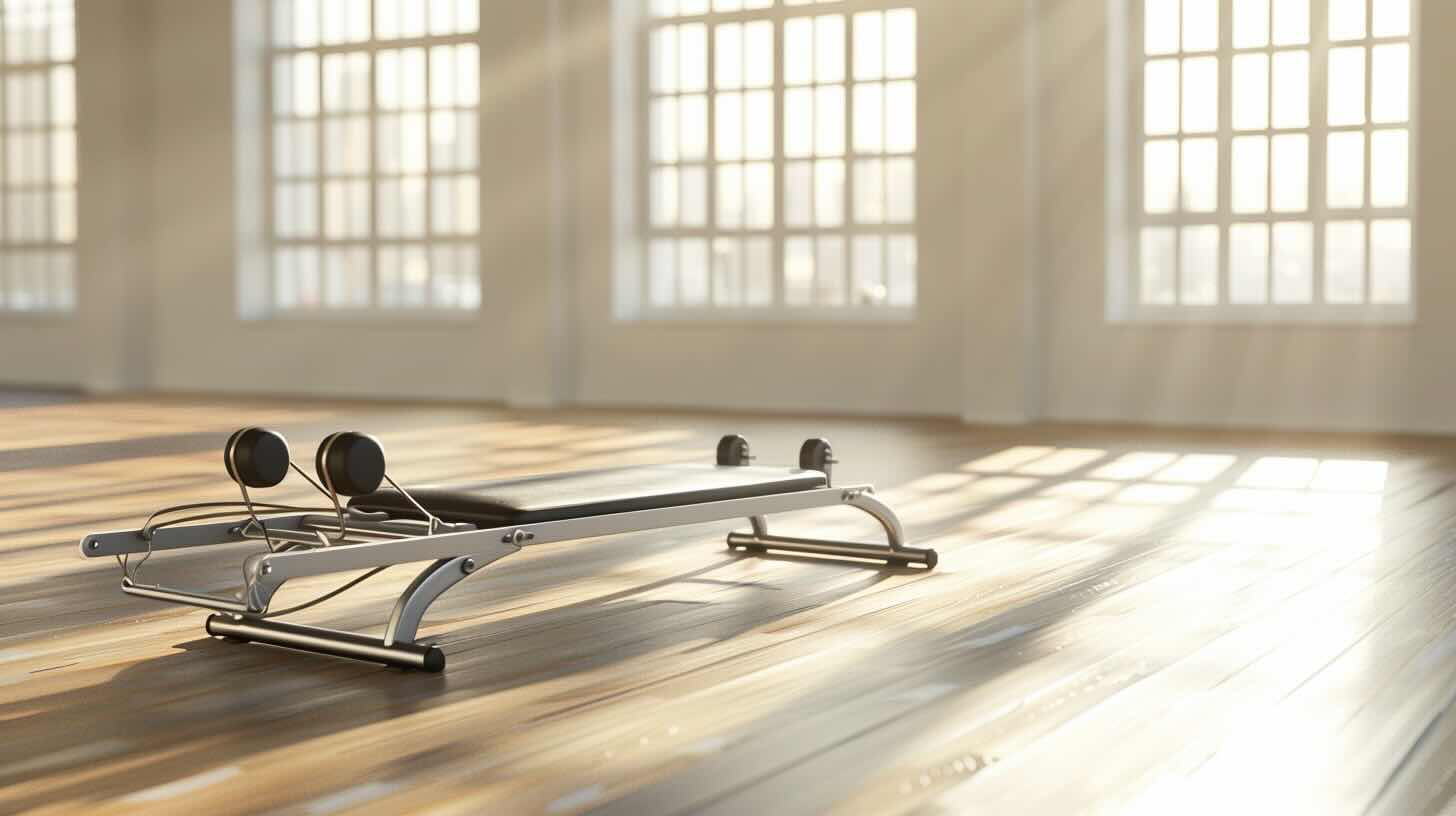
You may have seen the Reformer Pilates machine in the gym or Pilates studio - but what exactly is it?
The Reformer is a sort of secret superhero vehicle of the fitness world that has been quietly shaking up the laws of exercise, and this might interest you too.
So grab a comfortable seat, put your feet up and let's take a closer look at this mysterious super tool.
What is the Reformer?
The Reformer is a bit like a transformer toy for fitness freaks - it can be anything you want it to be, depending on how you use it!
Basically, it is a slide that can be pushed back and forth on rails with the help of springs that adjust the resistance.
Sounds fancy, right?
This unique device allows an incredible range of exercises that target different muscle groups while improving flexibility, strength and body awareness.
It's like a Swiss army knife for your fitness - regardless of whether you are just starting out or have already achieved muscle hero status.
Let's start with the classic wall roll down.
This exercise is perfect for warming up the body and focusing on breathing.
Stand with your back to the wall, heels a few inches away from it.
Take a deep breath and, as you exhale, begin to move your spine down the wall, one vertebra at a time.
It feels like you become one with the wall - heavenly!
Feel the stretch in the backs of your legs by bending forward and hanging your head once you reach the bottom (please don't forget to breathe!).
Now return to the starting position slowly and in a controlled manner by rolling yourself up, vertebra by vertebra.
This exercise is great for increasing mobility and flexibility.
8.2 The wall push-up: balm for the muscles
A great exercise for the muscles and gentle on the joints is the classic wall push-up.
The triceps play a central role here.
Stand facing the wall, about arm's length away.
Place your hands shoulder-width apart and just below shoulder height on the wall.
Take a deep breath and, as you exhale, bend your elbows to slowly lower your body against the wall.
Make sure to keep your elbows close to your body!
Throughout the movement you should maintain a close interaction between the core of the body and the pelvic floor.
In this way you not only target the chest muscles, but also achieve fantastic integration of the arms, shoulders and torso.
8.3 Inverted leg circle against the wall
But what exactly is the inverted leg circle against the wall?
Imagine lying on your back with your legs straight up against the wall.
It's like doing a reverse version of an ancient yoga pose while letting your inner child rock in a back seat.
Contracting your abdominal muscles to draw circles with your legs feels natural.
Simple and effective is the beauty of this exercise.
It not only works the lower abdominal muscles, but also the glutes and hip flexors.
If you're recovering from an injury or just starting your fitness journey, the wall will give you the extra support we all need every now and then.
9.1. The benefits of Pilates group classes
If you've ever thought about taking a Pilates class, you won't be disappointed.
There's something inevitably appealing about training with a group of like-minded people.
Whether you're a toned professional or just starting your journey to better fitness, group training offers a powerful mix of support, camaraderie and motivation that can take your training to a whole new level.
One advantage is accountability.
It's easy to hit the 'snooze' button and let the training goal expire when you're training alone.
But knowing that your friends or other class members are waiting for you at the studio gives you extra motivation to get up and go.
The stimulating effect of the group brings real plus points!
Shouts of encouragement like “You can do it!” or “Keep it up!” help you master difficult figures and struggle through the final poses.
Another nice aspect is the variety of fitness levels.
During group training, you meet people from different fitness backgrounds, which further enriches the experience.
9.2. Pilates courses at Templeshape Zurich Wiedikon
If you are looking for a refreshing workout that not only tones your muscles, but also brings balance and energy, then Templeshape's Pilates classes in the idyllic Wiedikon district of the city of Zurich have come to the right place.
The fusion of fitness with a tranquil environment is perfectly implemented in this studio.
There is something magical about entering a studio that feels welcoming, peaceful and soothing.
As soon as you set foot in the Templeshape studio, the warm, natural light that comes through the large windows welcomes you and gets you in the mood for your workout.
The entire facility is decorated in soft colors and has a minimalist touch - the perfect atmosphere to ease pre-workout nerves.
And then there are the trainers, who are just incredibly nice!
They know what they want from you, but they approach it in a friendly and supportive manner.
Whether you are a beginner or an advanced user, you will definitely feel at home at Templeshape.
A particularly dazzling aspect of the courses in this studio is the diversity of what is on offer.
From classic mat lessons to dynamic reformer courses - there is something for everyone and everyone gets their money's worth.
tags