No products in the cart.
February 7th
Micro-Rest: Why 90 seconds reduce your risk of burnout – quick stress relief
0 comments

February 7th
0 comments
Do you often feel like you're in a marathon with the finish line getting further and further away? The solution is surprisingly simple: targeted, ultra-short breaks of just 90 seconds – so-called micro-rests – can actively shut down your nervous system. They counteract exactly the chronic overload that drives you directly to emotional exhaustion and burnout.
So it's not about more to take breaks. It's about, smarter to take breaks.
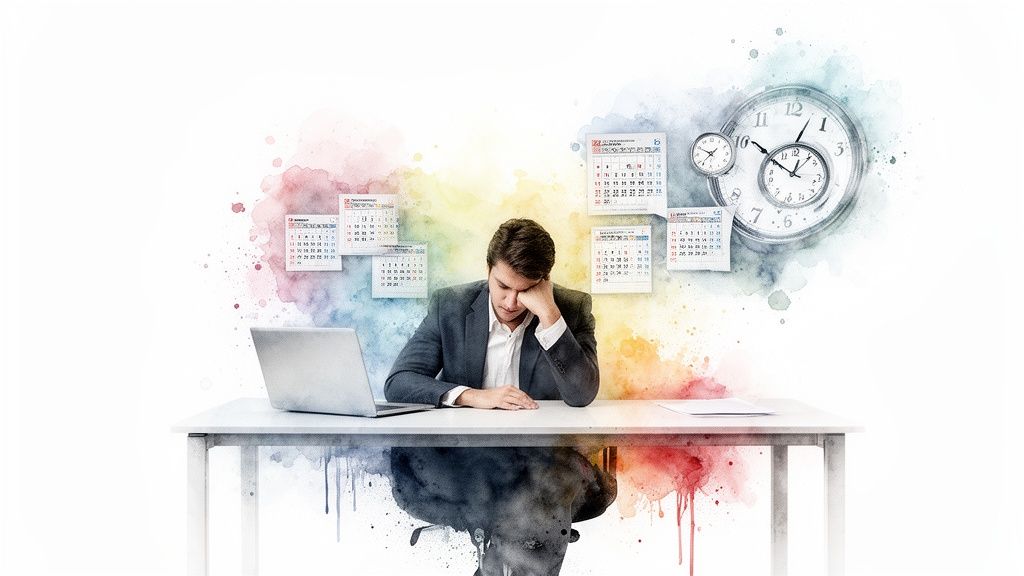
Let's be honest: your calendar is probably full to bursting, the to-do list is getting longer rather than shorter and the pressure to be constantly available and productive is omnipresent. Does that sound familiar? Then you are definitely not alone. This feeling of constant tension has become the new normal for many of us.
But this constant stress has its price. It quietly but inexorably eats away at your mental energy, your focus and ultimately your health. The emotional exhaustion that results is not a sign of personal weakness. It is the logical consequence of a way of working that simply cannot be healthy in the long term.
The numbers from Switzerland speak a shockingly clear language and show how widespread this problem has become.
This table summarizes the key statistics on emotional exhaustion and stress levels among Swiss employees to illustrate the extent of the problem.
| statistics | Percentage/Value | What that means for you |
|---|---|---|
| Emotional exhaustion | 30.3% | Almost one in three people feel emotionally burned out - an alarming high. |
| Depression risk | 6 times higher | Those who are emotionally exhausted are six times more likely to develop depressive symptoms. |
| Job Stress Index (2022) | Highest value since 2014 | Stress at work has reached record levels since measurements began. |
These numbers show: The feeling of constantly running “on reserve” is not your imagination. It is a widespread phenomenon with serious consequences.
This constant fire of stress quickly leads to a downward spiral:
Traditional breaks, such as the classic lunch break, are often no longer enough to break this cycle. Most of the time they come too late and are not designed to specifically regenerate the nervous system. Especially if you travel a lot or your everyday life is particularly demanding, this will be the case emotional and mental health on the go to an invisible but massive additional burden.
We have to get to the root of the problem: it's about the stress that is building up while of the day instead of just picking up the pieces in the evening.
This is exactly where micro-rests come into play. They are not a nice wellness option, but an absolutely necessary strategy for staying healthy and productive in the long term in the modern working world.
This article will show you how you can achieve the maximum effect for yourself and your health with minimal investment of time.

Forget the long lunch break for a moment. The real key to beating daily exhaustion often lies in tiny, targeted breaks of just one 90 seconds. This method, known as Micro rest, is much more than just a brief pause - it is a strategic reset for your brain.
Imagine your brain like the fan on your laptop, running hot after hours of intense work. If you don't give it a quick cool down, the whole system will overheat and eventually crash. A micro-rest is exactly that brief moment of shutdown that gets everything back on track before the big crash can even happen.
So what exactly happens in those 90 seconds that makes such a difference? The answer lies in pure neurobiology. When you power through without interruption, your cortisol levels - our body's best-known stress hormone - rise. A permanently elevated cortisol level inevitably leads to mental exhaustion, problems with concentration and, in the long term, burnout.
A micro-rest specifically breaks this vicious circle. It signals your autonomic nervous system to switch from sympathetic mode (the “fight-or-flight” state) to parasympathetic mode (the “rest-and-digest” state). In just 90 seconds, your body can begin to lower cortisol levels, which you often experience as an immediate feeling of relief.
A micro rest is not a luxury but a necessity. It is the art of specifically allowing your nervous system to recalibrate and recharge cognitive resources instead of using them to the limit.
These tiny breaks also help you break through mental tunnel vision. After a long period of highly concentrated work, your perception naturally narrows. A brief moment of switching off expands your field of vision again and clears the way for creative and flexible thinking. If you would like to go deeper into how you can specifically calm your nervous system, take a look at our article on the topic Stimulate vagus nerve to.
It is incredibly important to distinguish true micro-rest from mere distraction. The two have completely opposite effects on your brain.
So a micro rest is anything but laziness. It is a conscious, strategic action to ensure your performance and well-being in the long term. You could say it's the smallest unit of self-care with the biggest impact on your workday.
The theory sounds great, but how do you specifically incorporate these powerful 90-second breaks into your busy everyday life? Don't worry, this is a lot easier than it sounds. Here is your personal toolbox with techniques that you can implement immediately - whether in an open-plan office, in the home office or even on the go.
Just find out which method suits you and your situation best. It takes a bit of experimentation to discover your personal favorites.
Your breath is probably the most powerful tool to directly influence your nervous system. The huge advantage: you always have it with you and it is absolutely inconspicuous. If you would like to delve deeper into the targeted use of breathing exercises, you can find our guide on the topic Breathwork in Zurich even more valuable tips.
The 4-7-8 breathing: Breathe 4 seconds long through the nose. Hold the air for 7 seconds to. And then breathe audibly for 8 seconds out through the mouth. You repeat the whole thing two or three times.
Box breathing (box breathing): Just imagine a square. You breathe in for 4 seconds, hold your breath for 4 seconds, breathe out for 4 seconds and hold again for 4 seconds. Very simple.
Even these simple exercises signal to your body: the danger is over and you can switch from stress to rest mode.
Sitting for hours inevitably leads to tension. And it is precisely these tensions that send stress signals to your brain. A vicious circle that you can easily break with a few targeted movements.
Neck and Shoulder Reset: Sit upright. Gently tilt your head toward your right shoulder and hold the stretch for about 30 seconds. Then do the same to the left side. Then pull both shoulders firmly up towards your ears, hold the tension briefly and then consciously let it fall.
Wrist and Finger Stretch: Extend one arm forward, palm facing upwards. With your other hand, gently pull your fingers down towards the floor. Hold this for 30 seconds and then switch sides.
Sometimes your body is actually completely relaxed, but your head just doesn't want to rest. These mental micro-rests will help you turn down the inner noise for a moment.
“Palming” for eye relaxation: Rub your palms together until they are nice and warm. Close your eyes and place your warm hands gently over them, without any pressure. Just enjoy the darkness and warmth for 90 seconds.
When? A real relief for tired and strained eyes after staring at the screen for hours.
The 90 Second Daydream: Close your eyes and imagine a place where you feel completely safe and comfortable. Maybe a beach, a quiet forest or your favorite chair at home. Focus on the details: what do you see, hear and smell there?
The economic importance of such techniques is enormous. Work-related stress causes annual costs in Switzerland of 6.5 billion francs, largely due to lost productivity. Investing in simple but effective stress management like micro-rests is not only good for you, but also extremely economically sensible. More on how Find out how stress in the workplace affects the economy on 20min.ch.
You now know the theory and have a whole range of techniques at your fingertips. But what use is the best method if it gets lost in the hectic pace of everyday life? The really crucial step now is to use this knowledge to forge a rock-solid habit - an automatism that reliably protects you from burning out.
The secret? Start small and find clever anchor points in your daily routine. Instead of vaguely resolving to take a break “more often,” you need a concrete game plan.
The easiest way to establish a new routine is to attach it to an existing one. Such connections are like little memory aids for your brain, so-called Triggers or trigger.
Think about which moments shape your working day again and again. Here are a few examples of really strong triggers:
Just look for one to start with a single trigger out of. As soon as this first micro-rest becomes second nature, you add the next one. This way you don't overwhelm yourself and you can build your new habit step by step. If you want to delve deeper into the matter, our guide will help you sustainable change in habits valuable impulses.
This infographic shows you a simple three-step process that you can immediately implement in your workplace.
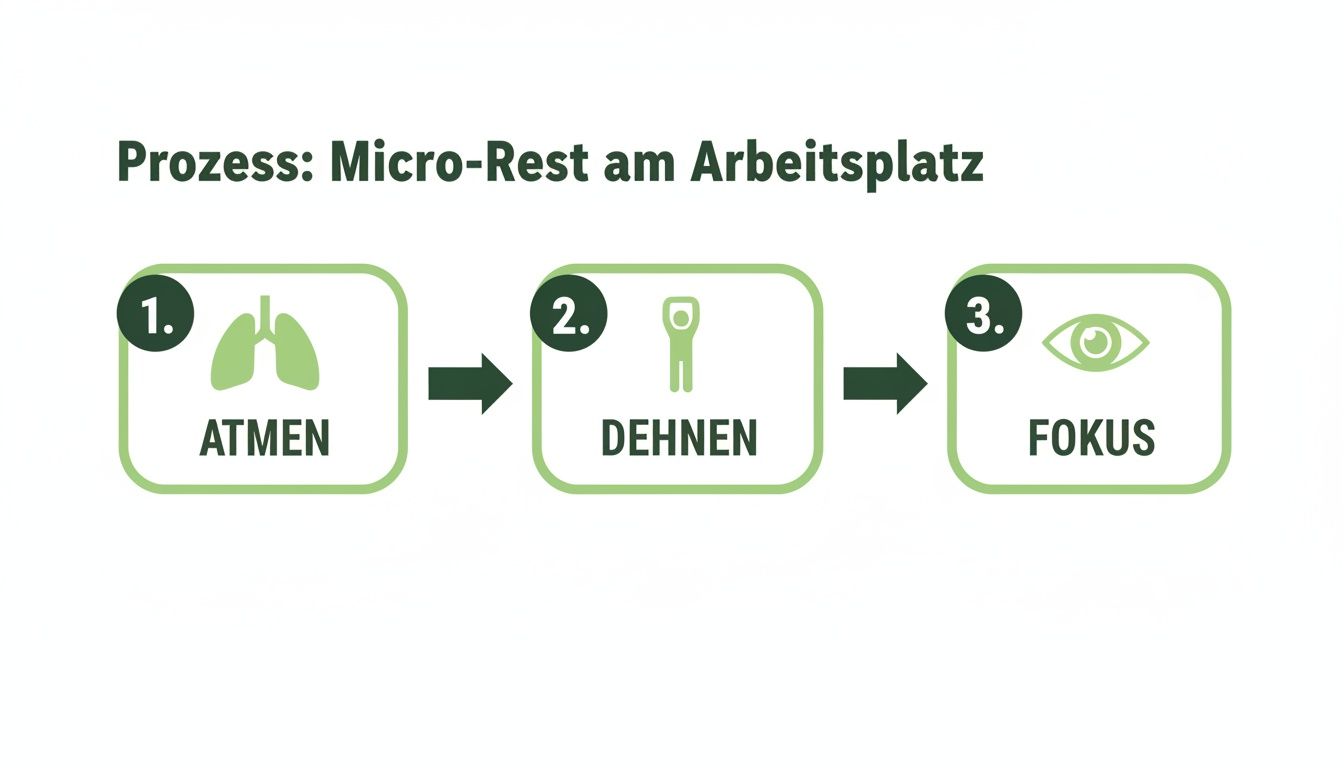
Here you can see how you can go through a complete regeneration cycle in a very short time using simple steps such as breathing, stretching and conscious focusing.
Especially at the beginning, there will definitely be a voice in your head that whispers: “I don’t have time for that now!” This idea is the biggest hurdle. Realize that this objection is based on a completely false assumption.
You take you don't have the time, you invest she. In the long run, a 90-second break will save you a lot of time that you would otherwise lose through mistakes, lapses in concentration, or exhaustion.
It's a sad reality: many of us work to the limit. A survey by Travailsuisse showed that Half of all employees in Switzerland regularly work overtime might. Almost a quarter even work more than ten hours a day. This unhealthy workload, often coupled with the pressure to come to work when sick, massively increases emotional exhaustion. The whole analysis for You can find emotional exhaustion among Swiss employees at blick.ch.
In addition to the micro-rests, there are of course many other proven strategies increase your productivity and thus give you more space for relaxation.
Measure your success not only by your checked to-do list, but above all by your well-being. Do you feel less drained in the evening? Can you concentrate better again? These are the true indicators of your success.
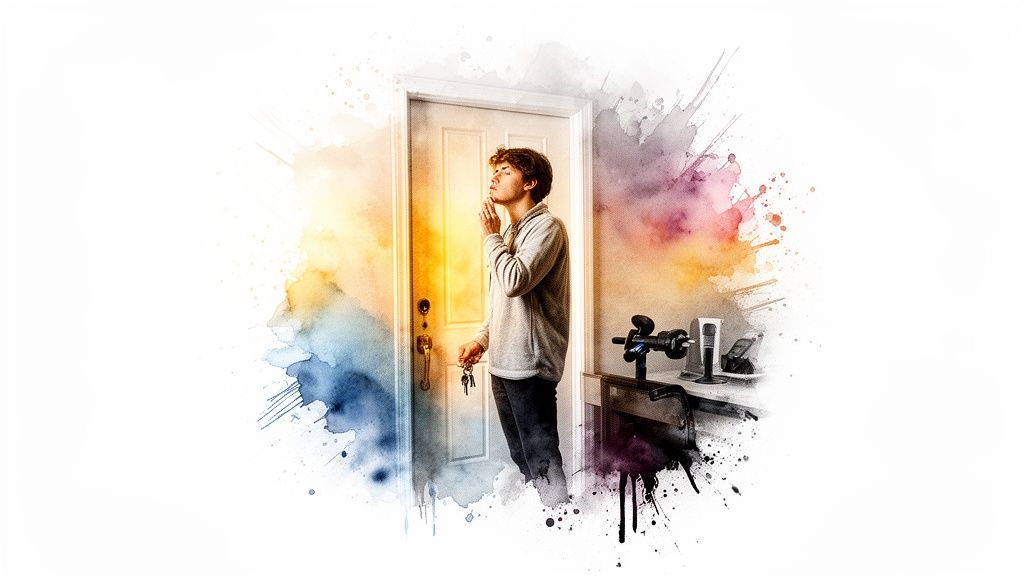
You only experience the true magic of micro-rests when you see them not just as an office hack, but as a universal tool for your entire life. Your strength doesn’t end at the office door. Quite the opposite: They are just as effective for boosting your performance in the gym or for finally bringing more harmony into your private everyday life.
Imagine your next intense workout. What do you do after a really hard set? You're probably exhausted and reaching for your cell phone. Try something different: take yourself exactly 90 seconds Time to consciously take a deep breath. Relax the muscles that were just burning and mentally focus on the next round.
This tiny, conscious break helps your nervous system shut down more quickly, pumps more oxygen into your muscles and can even reduce your risk of injury.
One of the biggest burnout risks? When the boundaries between work and private life become completely blurred. All the stress from the office seeps unnoticed into your evening and poisons the valuable time with your family or friends. This is exactly where micro-rests become your personal protective shield.
They help you create conscious transitions - small mental stop signs that leave work stress where it belongs: in the office.
These little rituals are so much more than just breaks. They are conscious decisions that allow you to take back control of your mental state and prevent your job from hijacking your personal life.
You can create such little oases of calm even in the turbulent everyday life of your family. While the tea water is boiling, look out the window for 90 seconds instead of looking at your phone. Before you pick up the children from daycare - a short breathing exercise to approach them with patience and full of energy.
This is how micro-rests turn from a simple working technique into a real philosophy of life. They give you the power to take a quick breath, draw new energy and act more consciously in every area of your life. The result is not only less stress, but a deep sense of balance and control.
The idea of micro-rests has caught your attention, but there are still a few question marks hanging over your head? Perfect! Let's get the most common confusion out of the way so that you can start your new, healthier routine with confidence and a clear plan.
Good question. Longer breaks are absolutely essential, but they are in a different league. They are intended for your lunch break, socializing with colleagues or a short workout. Micro-rests are something different: they're a quick reboot for your brain every now and then.
Your superpower lies in Frequency, not duration.
Think of it this way: Instead of waiting until your stress battery is completely empty, you recharge it briefly throughout the day. A half-hour break can often no longer save an already completely overloaded mind. But eight strategically placed 90-second breaks can prevent it from ever getting that far.
An absolutely legitimate concern, but one that can easily be put to rest. The trick is not to disguise it as “lazing around,” but to communicate it for what it is: a professional tool to improve your performance and protect your mental health.
Explain to your team that you use a scientifically based technique to sharpen your concentration and maintain the quality of your work. Most supervisors are open to proactive measures to prevent burnout - after all, the entire company benefits from a healthy break culture.
A clear, loud and clear one No. And that is perhaps the most important point of all. Social media, news apps or quickly checking emails are no relaxation. It's just another form of mental overstimulation. You're feeding your brain even more input and increasing cognitive load instead of decreasing it.
A true micro-rest reduces external input to a minimum. It's about giving your nervous system a real break. So choose specific activities such as conscious breathing, a short stretch or simply letting your gaze wander out the window.
Listen to your body, it is your best advisor. A good indication is to take a break after each concentrated period of work 60 to 90 minutes. Alternatively, you can use a micro-rest as a conscious buffer between two different tasks.
As soon as you notice that your thoughts are wandering, you are becoming restless or your shoulders are tense, that is your signal. Just start with three to four conscious breaks a day and see how it feels. You will quickly develop a sense of what you need.
Are you ready to relieve stress and recharge your batteries? At Templeshape GmbH You will find courses such as breathwork, yoga and targeted workouts that will help you find your inner balance. Discover what we have to offer in Zurich now and make health a habit https://Templeshape.com.
tags
Burnout prevention, mental health, micro-rest, increasing productivity, stress management