No products in the cart.
January 29

Reaching for your coffee cup first thing in the morning – a ritual that is sacred for many of us. But what feels like the perfect start to the day could actually do more harm than good to your body in the long run. Let's take a closer look at why this morning habit puts unnecessary stress on your hormonal system.
Without any complicated jargon, I'll explain to you what really happens in your body when the first thing you get in the morning is a dose of caffeine.

Imagine your body is slowly waking up. Your hormonal system is still gearing up for the day and ramping everything up. If you drink coffee right now, you will give your system an unnecessary electric shock. The caffeine triggers a sudden surge of stress hormones Cortisol out of.
Dieser Vorgang versetzt deinen Körper schlagartig in einen künstlichen "Kampf-oder-Flucht"-Modus, obwohl gar keine echte Gefahr droht. Statt dich also sanft zu wecken, drückst du direkt nach dem Aufstehen den Panikknopf. Stell dir vor, du sitzt entspannt auf dem Sofa und plötzlich springt jemand hinter dem Vorhang hervor und ruft "Buh!". Genau das machst du jeden Morgen mit deinem Körper.
Your morning coffee should support you, not add stress. Drinking it on an empty stomach is like a false alarm for your entire system.
Over time, this daily stress can throw your blood sugar levels out of whack and lead to those dreaded afternoon energy lows. But don't worry: even a small adjustment to your morning routine can make a huge difference to your energy and well-being.
Sometimes coffee is consciously drunk while fasting, but here too, caution is advised. If you are interested in the topic in more depth, take a look at our article Intermittent fasting diet to. There we'll show you how you can make small changes to make a big impact without having to give up your beloved coffee.
Imagine your hormonal system like a perfectly orchestrated orchestra. Every hormone is a musician who knows exactly when to play the symphony that gets you through the day energized and focused. The conductor of this morning concert is the hormone Cortisol.
Cortisol is your own personal, built-in alarm clock. Your body naturally releases it when you wake up to get you going. This level rises slowly and typically peaks between 8 and 9 a.m. This is a completely healthy and important process that is part of your biorhythm. If you want to delve deeper into this topic, check out our article about it circadian rhythm and how to optimize your health to.
And now coffee comes into play. If you drink a coffee exactly during this time window, when your cortisol levels are already at their peak, it's like you are drowning out the entire orchestra with a loud trumpet. The coffee artificially increases the cortisol peak even further and puts your system into an unnecessary state of alarm.
Caffeine on an empty stomach acts like an accelerant for your body's stress response. Instead of being gently woken up, it catapults you straight into fight-or-flight mode. The result? Inner restlessness, nervousness or even a racing heart are often the result.
The tricky thing about it: Over time, your body gets used to this artificially created stress. Your natural cortisol production blunts. This leads to you feeling even more tired and listless without your morning coffee. You create an addiction just to feel “normal” again.
Coffee on an empty stomach sabotages your body's delicate timing. It increases stress instead of gently energizing you.
But cortisol isn't the only musician out of sync. The caffeine kick also provides an extra boost adrenaline, another stress hormone. Your heart beats faster, your blood pressure rises - your whole body prepares for a danger that isn't even there.
The following table shows the hormonal effects again in direct comparison:
A direct comparison of the effects of coffee on an empty stomach versus coffee after a meal.
| hormone | Effects of coffee on an empty stomach | Effect of coffee after a meal |
|---|---|---|
| Cortisol | Strong, excessive distribution; can dull the natural reaction in the long term. | More moderate, gentler stimulation; the natural cortisol curve is not disturbed as much. |
| adrenaline | Significantly increased emissions; promotes “fight-or-flight” response (nervousness, racing heart). | Lower adrenaline release; less abrupt increase in pulse and blood pressure. |
| insulin | Higher blood sugar response after breakfast; may contribute to insulin resistance. | More stable blood sugar levels; the food buffers the effects of caffeine on the cells. |
As you can see, it makes a big difference whether your body already has a foundation to work with. A small meal can significantly cushion the sharp edges of the caffeine kick.
The impact on your blood sugar levels can be even more dramatic. This is particularly an issue in Switzerland, where we have around 1000 cups per person per year are among the world leaders in coffee drinking. A highly publicized study has shown that coffee before breakfast increases post-meal blood sugar levels by up to 50% can skyrocket.
Why is that? The caffeine impairs your cells' ability to effectively absorb sugar from the blood. This forces your pancreas to work overtime and puts a huge strain on your hormonal system in the long term. You can also find exciting insights into this here at Schweizer Illustrierte.
Coffee on an empty stomach can send your blood sugar levels on a wild rollercoaster ride. Imagine giving full throttle without the tank being full - that's exactly what happens in your body.
Caffeine can temporarily block your cells' ability to absorb sugar from the blood. Normally, your cells would absorb the sugar like a sponge to make energy from it. The caffeine essentially puts a thin protective layer over these sponges.
This effect is particularly strong when your stomach is empty. Your body reacts to the caffeine, releases stress hormones, and as a result, sugar gets into the blood - but the cells cannot use it properly.
The result? A rapid rise in blood sugar, followed by an equally rapid crash. At first you may feel alert and energized, but soon the pendulum swings in the opposite direction.
It is precisely this crash that is responsible for the dreaded afternoon low. You suddenly feel tired, unfocused and have an overwhelming craving for something sweet. Your body is literally crying out for quick energy to compensate for the deep drop in blood sugar.
Stable blood sugar levels are the key to consistent energy throughout the day. And the first meal lays the foundation for this.
The following graphic shows how much blood sugar can rise if you drink your coffee before breakfast.
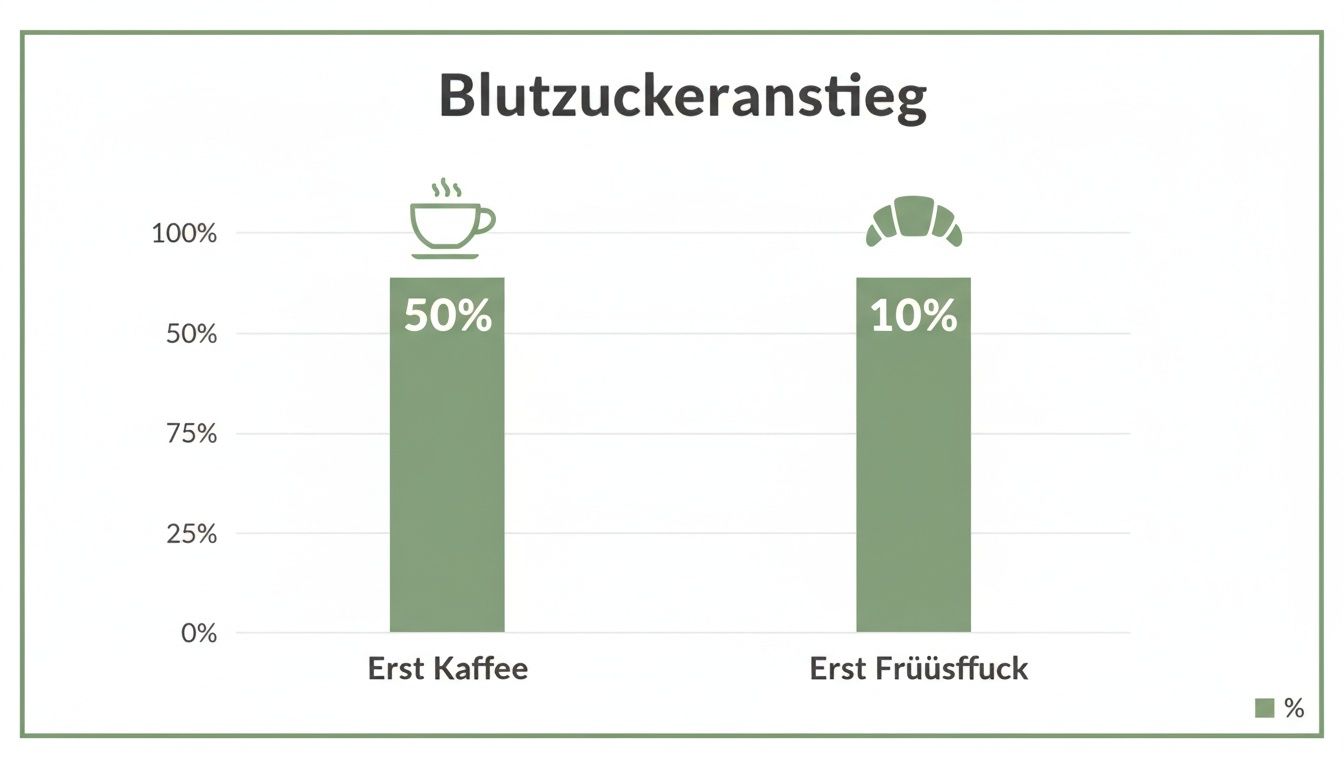
The data shows: Coffee before the first meal can increase blood sugar by up to 50% drive up. If you drink it after breakfast, the reaction will be significantly less.
Imagine a typical work day. You start with coffee on an empty stomach and feel briefly energized. But the first cravings appear at 11 a.m. After lunch, around 2 p.m., you fall into a deep hole, your concentration wanes and productivity drops.
But these fluctuations don't just affect your performance at work. They also rob you of the energy for your workout in the evening. Instead of feeling strong and vital, you struggle with the exhaustion of the day.
Here are the direct consequences of the blood sugar rollercoaster:
If you break this cycle by eating first and then enjoying your coffee, you're not only protecting your hormonal system. You also secure stable energy that allows you to be efficient and balanced from morning to evening.

In addition to the hormonal chaos that we have just highlighted, there is another very direct reason to postpone the first coffee of the day: your stomach. Coffee is naturally acidic and also contains compounds that stimulate the production of stomach acid.
When this acid kick hits an empty, defenseless stomach, it can be quite unpleasant. Your stomach lining is directly irritated - the result is often heartburn, a burning feeling in the chest or acidic belching.
Imagine pouring vinegar onto an unprotected wooden board. The acid attacks the surface immediately. Here, breakfast acts like a protective tablecloth that absorbs everything and neutralizes the aggressive effects.
If you already have a sensitive stomach or are prone to digestive problems, you are of course particularly susceptible to this problem. Morning coffee can then not only trigger symptoms such as stomach pain, bloating or nausea, but can actually make existing problems worse.
Even a little something before coffee can act as a protective shield for your stomach lining. The food dilutes the acid and ensures that it does not concentrate in one place, but rather mixes evenly with the chyme.
This buffering effect is incredibly important for healthy digestion. Even a handful of nuts, a small yogurt or a banana can make a huge difference and noticeably reduce the irritating effects of coffee.
One aspect that is often overlooked is the absorption of important nutrients. Certain compounds in coffee, especially the Tannins, can block the absorption of minerals in the intestine.
This is particularly relevant iron and calcium – two essential nutrients for your energy and bone health. If you drink your coffee on an empty stomach, this effect can be intensified and contribute to poorer nutrient supply in the long term.
Pay attention to these warning signals your body is sending you:
These symptoms are clear indications that your digestive system is overwhelmed by the acid. The correct order in the morning is not only crucial for your hormones, but also directly for your gut feeling.
Okay, now you know why coffee on an empty stomach can really mess with your hormonal system. The good news? You don't have to give up your beloved coffee. Not at all. It's just a matter of changing the order a little and giving your body what it really needs in the morning to start the day gently and stable.
With a few tiny but incredibly powerful adjustments, you can build a morning routine that keeps your hormones balanced, provides you with consistent energy, and avoids the dreaded afternoon slump. It's about creating conscious habits that empower you instead of stressing you out unnoticed.
Before you even think about the coffee maker, give your body a chance to properly wake up and rehydrate. After hours without fluids, your body becomes dehydrated. The first thing he needs is water – not caffeine.
Here are a few simple but effective alternatives for the very first move in the morning:
These little rituals only take a few minutes, but change your body's entire biochemical response to the morning. If you notice that stress is a big issue for you, it can also help to learn how to Reduce stress through emotion-focused coaching you can also strengthen yourself on an emotional level.
Now comes the game changer to prevent the blood sugar rollercoaster: Eat something before you drink your coffee. This doesn’t have to be an elaborate menu. A small but protein- and fat-rich meal is enough to create a buffer for the caffeine.
Your first breakfast is the foundation for the whole day. Give your body the right building blocks before you turn on the turbo.
Here are a few quick and hormone-friendly ideas that you can have on the table in under five minutes:
These options keep your blood sugar levels stable. The result? The caffeine enters your system more slowly and gently.
After you've replenished your body with fluids and nutrients, it's finally time for coffee. The ideal time is when your natural cortisol level slowly drops again.
This is usually the case after 9:30 a.m the case. If you only drink your coffee then, the caffeine will be most effective because it doesn't have to fight against your body's own stimulant. This way you get the energy boost you want without overloading your hormonal system. If you want to go deeper into how to make the most of your day, check out our guide Biohacking for beginners and routines for more energy to.
By following these three simple steps, you'll transform your morning routine from a source of stress into a source of real power. You will feel the difference: more energy, better concentration and no more cravings.
Here is a small overview of simple and effective morning rituals that gently wake up your body instead of stressing it out.
| alternative | Effect on the body | Practical tip for implementation |
|---|---|---|
| Large glass of water (lukewarm) | Rehydrates after the night, stimulates metabolism without shocking the system. | Prepare the glass in the evening and put it on your bedside table. So it's the first thing you see. |
| Water with lemon & salt | Provides electrolytes (sodium) and vitamin C, supports the adrenal glands and digestion. | Squeeze the juice from half a lemon, add a pinch of high-quality sea salt and top up with water. |
| Short breathing exercise (2-3 min.) | Supplies your brain with oxygen, lowers your stress level and activates the parasympathetic nervous system (resting nerve). | Sit by the open window. Inhale for 4 seconds, hold your breath for 4 seconds and exhale for 6 seconds. Repeat 5-10 times. |
| Light snack (protein/fat) | Stabilizes your blood sugar levels and prevents a spike in cortisol and insulin caused by coffee. | A handful of almonds, a spoonful of nut butter or a boiled egg. Fast, easy and effective. |
These small habits take little time, but make a huge difference to your energy and well-being throughout the day.
Now that we have dug deep into the matter, there are often still a few very specific questions left. Absolutely understandable! Here I have collected the most common ones for you and answered them clearly so that you can clear up any remaining uncertainties.
Yes, a small one, but it doesn't get to the root of the problem. A shot of milk at least provides some fat and protein. This can slightly delay caffeine absorption and buffer stomach acid a little.
The immediate effect on the stomach may feel a little gentler. But the real issue – the massive increase in cortisol and the chaos in the blood sugar balance – remains. A latte on an empty stomach is kinder to your stomach than a black espresso, but a real breakfast is and remains an unbeatably better basis for your hormone balance.
A super important question that many people ask themselves. Technically speaking, black coffee with its few calories does not break the metabolic fast. But from a hormonal perspective, coffee right after getting up is still not a good idea because it triggers exactly the stress reaction we were talking about - even without any calories.
My tip: push your coffee as close to your first eating window as possible. Instead, start the day with a large glass of water or an unsweetened herbal tea. This rehydrates your body much more gently.
If you really need a caffeine kick while fasting, listen extremely carefully to your body's signals. Do you feel shaky, restless or nervous? This is an unmistakable sign that your system cannot handle this kick well without a solid nutritional base.
In this case, you should consider perhaps adjusting your fasting window a little to avoid these negative effects.
Here is a simple rule of thumb that you can remember: 15 to 30 minutes after meals are ideal. This short break gives your body enough time to start digestion and stabilize blood sugar levels.
But the most important thing is that you have something in your stomach. Even a small thing like a banana, a yogurt or a handful of nuts is enough to significantly cushion the peak hormonal reactions. The goal is simple: to give the caffeine a basis so that it doesn't hit your sober system unchecked.
For those who simply love the ritual and the taste, this question is crucial. The answer is: partially. Decaffeinated coffee does not solve the big problems, i.e. the strong cortisol surge and the blood sugar roller coaster, to the same extent.
That's why it's one for the very early morning much better option. Aber Achtung: Auch "Decaf" enthält von Natur aus Säuren, die die Produktion von Magensäure anregen.
So if you have a very sensitive stomach, the decaffeinated version can also cause discomfort. But it is definitely the safer choice for your hormone balance if you simply don't want to miss out on your morning ritual.
Would you like to firmly anchor healthy habits such as a hormone-friendly morning routine in your everyday life? At Templeshape GmbH We support you with courses from HIIT to breathwork and a community that motivates you. Find your flow and make health a habit https://Templeshape.com.
tags
Lowering cortisol, healthy lifestyle, hormone balance, coffee on an empty stomach, morning routine tips