March 20
Learning & Training Handstand
0 comments

Are you ready to practice your handstand and improve your handstand training?
To reach new heights?
In this post, you will find practical tips to master the art of handstands like a pro!
Whether you are an experienced yogi wanting to perfect your inversion or a newcomer to the world of handstands - we have everything you need from alignment to building strength and balance.
With these tips and tricks, you will defy gravity in no time.
To practice the handstand, it is important to understand the basic principles of balance.
Without this, one cannot maintain a stable handstand.
You surely know that you can always join us in the HIIT Bootcamp or in Pilates to work on your balance, right?
Just a side note.
Back to the topic.
The ability to master where to shift your weight and how to control the trunk muscles is of great importance for the understanding and ability to perform a handstand.
It's not just about throwing your legs up and hoping for the best - it's a matter of concentration, practice, and sometimes a good sense of humor, as you will undoubtedly tip over more often at the beginning.
So if you want to learn handstands, you should adhere to the basic principles.
With some practice and the necessary dedication, you will soon be able to stand upside down on your hands like a pro.
Another principle of balance in the handstand is the control of the core muscles.
By activating the rectus abdominis and the lower back muscles, one can give the back a more stable shape, making it easier to draw a straight line from the toes to the fingers while turning.
The core muscles are the "core competency" in the handstand and core stability is the most important thing to prevent tipping over when attempting to do a handstand.
Without strengthening the core muscles, you will almost inevitably stumble against the wall in the handstand (ouch).
So if you want to learn handstands, focus your attention on activating the abdominal andback muscles.
You might also consider setting up a carpet area for safety, in case the handstand attempts fail.
If you practice diligently, you will sooner or later be able to master the handstand without embarrassing slips!
Anyone wanting to learn a handstand must not only activate their core muscles but also master the correct handling of weight distribution.
After all, you don’t want to fall forward like a seesaw or tip backward.
The goal is to find the optimal point where your body weight is evenly distributed across your fingers and palms.
If you put too much weight on the palms, you will roll backward!
On the other hand, if you lean too far back, you will roll forward.
So pay attention to the perfectbalance pointand land standing!
Anyway, if you want to master a handstand, you must be patient and practice persistently, because all in all, good body tension is one thing, a correct hand position is the other.
You need to combine both while the two basic principles work hand in hand (pun intended) to steer you in the right direction so you can eventually achieve your handstand goals.
Remember: Rome wasn't built in a day and neither was your handstand.
So stick with it, be patient, and most importantly: Have fun.
With dedication and patience in handstand training, you can soon align yourself horizontally like a pro.

To master the handstand in no time, you should first focus on the strength of your core muscles, which is essential for providing enough stability in this challenging body position.
Without a well-trained core musculature, you will have no solid ground under your feet but will be as wobbly as a newborn giraffe trying to find balance.
But no matter how you turn it: A giraffe that needs to find its balance to stand securely is just like you if you want to achieve the handstand.
You need to not only strengthen your core but also have good handstand grips.
For example, if you cling to the ground "like a starving buffalo grabbing the last slice of cheese," it is important to perform the handstand using your core and with firm grips.
Work on your core, practice correct handstand grips, and soon you will be standing on your hands like a pro!
Moreover, it is crucial to work on tension in the core to better maintain balance and relieve your lower back so you don’t fall over when you finally master the handstand.
So respect your core, and it will not only keep you securely and confidently over the table but will also spare you unpleasant situations where your handstand might backfire.
Speaking of core - you'll find that after a week of training with us, you can also improve yourretreats. 😉
Get the deep core muscles somewhat under control and learn the art of pushing yourself up from the ground.
Not only will balance and stability improve through such exercises, but the entire core musculature will also be strengthened, which is essential for performing handstand push-ups.
If you regularly perform such fundamental movements, you will gain the necessary strength and control to hold a perfect handstand.
So don’t neglect the core muscles, because they are the key to the secrets of the perfect handstand.
If you incorporate these exercises into your daily training, you can not only improve your form and balance but also strengthen and stabilize your core musculature, yourarmsand shoulders.
Once the handstand is mastered, you can not only impress those around you but also benefit from improved strength and stability throughout your entire body.
So next time you burst into a handstand, you can stand confidently with your back straight and showcase your radiant abilities from every angle!
Handstand Workshops
Learn in a workshop how to properly execute a handstand.
Before you get into the handstand, you should be clear about the correct hand position.
With your hands placed shoulder-width apart, you have a more stable base to support your body weight.
This step is important to help you master this impressive human ability.
Remember: Rome wasn't built in a day, so practice and take the time you need to achieve the perfect handstand.
If you bring a strong hand position, a focused mind, and unwavering determination to this challenging journey towards handstands, then I believe you are on the right path.
Proper alignment is key to maintaining balance in your posture during handstand training.
Aligning your hands directly under your shoulders and spreading your fingers is crucial for even weight distribution and avoiding pain in the wrists.
Imagine you are about to set the foundation for your masterpiece of an inverted handstand.
A well-built house requires a strong foundation, and for handstands, solid alignment is necessary to stay upright and have a stable stance.
So, remember these little details next time you attempt a handstand.
If you keep a close eye on the accuracy of your hand placement and alignment, you can improve all your handstand exercises as a whole.
Consistency in the specific elements leads to greater control and stability in the posture and ultimately to more confidence and progress in handstands.
But remember, a good handstand can only come from a solid foundation; so focus on the details and watch your skills start to grow.
So keep practicing to perfect the fundamentals of handstand learning, because soon enough you'll be able to jump into the handstand like a pro!
The go-to place for anything related to learning handstands is the handstand learning section.
Whether you have already mastered the art of balanced handstands or wish to practice form drills in handstands: here you have everything you need to learn handstands.
Because whether you are a beginner who wants to achieve their first handstand, or a pro looking to take their performance to a whole new level:
With step-by-step guides, expert tips, and a community of handstand enthusiasts, you’ll be in handstands in no time and might even love it.
So what are you waiting for? Dive into the world of handstands and join today!
The category 'Strengthening Core Muscles for Better Balance' tackles a particularly essential point in handstand training.
Those who focus on exercises that address the core, such as Planks Leg Raises, or Russian Twists, will be able to polish their general stability and control when attempting to achieve a handstand.
Because a strong core not only improves balance but also helps prevent handstand training injuries.
That’s why: Don't eliminate core-strengthening exercises from the handstand trainer repertoire, as without a stable core counterpart, you’ll get poor results and won’t achieve your handstand.
Anyone looking to perfect the handstand down to the last detail needs strong core muscles.
When you engage your abdominal muscles during the handstand, you not only show your muscles but also your stability and sense of balance, like a master builder.
What more can be said about handstand push-ups - it elevates your handstand game to a new level!
So don't forget to engage your core and confidently showcase your impressive handstand technique.
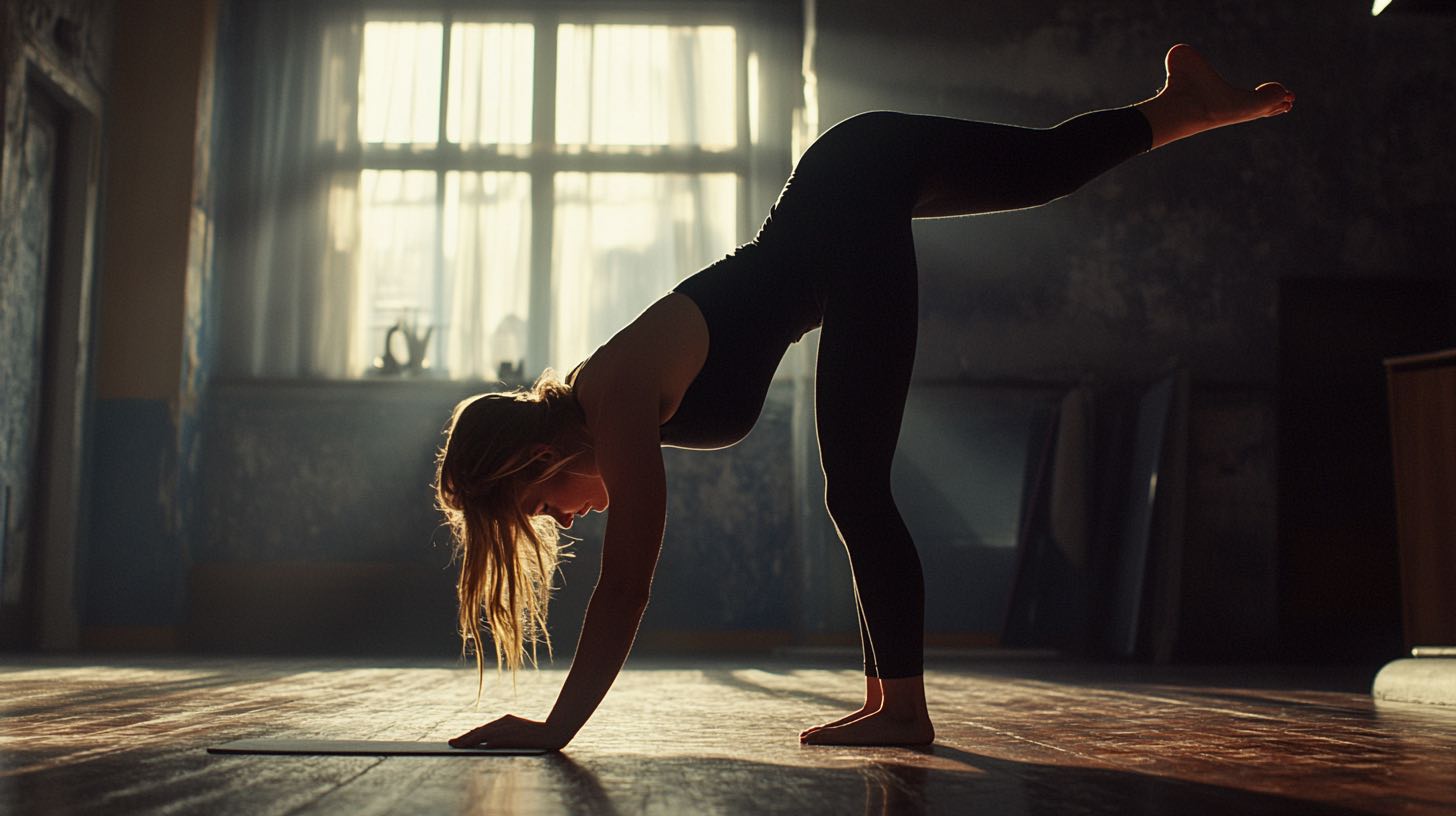
To safely attempt getting up into a handstand, body alignment and weight shifting are crucial.
By placing your arms correctly and pulling in your core as if you were in a planking competition, you can create a stable base for your balance act on your head.
Remember that a stable core is the most important thing for conquering gravity like a boss.
So, when you next work on your handstand, keep in mind: to hold these two things in your mind and you will soon be standing confidently on your hands.
Practice controlled kicks against the wall to increase confidence and strength in your shoulders and core before you should attempt freestanding forms.
With this step-by-step approach, you can gain control while minimizing the Risk of falling.
Remember: Rome wasn't built in a day, and the perfect handstand won't be conjured in one either.
If you focus on the small things of handstands, you too can build the alignment for them.
So, if you want to be dancing upside down against the wall, take a step back, push away from the wall, and build strength and control gradually through individual kicks.
It should also be noted that mastering the handstand is a question of time and practice.
By focusing on maintaining a body line from the wrists to the hips and utilizing the muscles of the hands and legs, control over the momentum in which the handstand is held can be achieved.
Consistency and patience are advantageous for being able to roll back safely and confidently.
Therefore, you should not give up or feel discouraged if it doesn’t work right away.
In any case, a strong will and diligence can help you gradually descend like a pro!
Patience and consistency play a crucial role in learning the handstand.
Despite slow progress, you should not shy away.
A slow approach to a big goal strengthens control and thus balance, which is essential in a handstand.
So let's start again and again from the beginning, for what is most convincing is that in the long run you achieve a result - piece by piece.

Let’s turn to these walls for support and to make progress:
When we learn to do a handstand, walls can be used as supportive points that give us stability and orientation.
First, for example, turn your back to the wall and focus on handstand training.
The feet of the back wall only lightly touch the wall to stabilize their standing position.
This way, you can focus on keeping your balance without being mentally or physically intimidated by the impending sway.
Even if you sometimes get the impression that you are falling during handstand training despite all care and effort, make sure you have the wall behind you, quite literally!
So don’t hesitate to consider the wall as close as possible to find out what works on the way to perfecting the handstand.
It’s the same: practice makes perfect, and if you bump into the wall a few times in the process - it doesn’t matter!
If you decide to do handstand training, you are in the right place with us!
Doing handstand training is not unproblematic, but incredibly rewarding.
The required skills are strength, balance, and determination.
Fear? For heaven's sake! With the right instruction and many repetitions, it will soon be a thing of the past.
As already mentioned, Rome was not built in a day, and handstand skills do not become useful and aesthetically pleasing in the blink of an eye.
So stay on the ball, don’t be discouraged by a few falls, and soon you will be proudly demonstrating your handstand skills to your friends with confidence.
Don’t forget to breathe carefully, tighten your abdominal muscles, and have an excessive amount of fun while practicing.
After you’ve done your handstand, you can then try the ice bathing at Templeshape to relax your muscles.
As long as you are familiar with the wall, where you can always support your hands during the handstand and have completed the basic course, feel encouraged to give your handstand practice a different direction and slowly move the boundaries.
Engage in gradually expanding your own standing meaning at the widest possible distance from the wall to acquire more body tension and balance will both physically and mentally.
This progression not only targets the core muscles but also hones your ability to maintain true balance without relying on an external support.
It's as if you are extending the handstand into the realm of sublimity - your self-confidence and resilience grow with every inch you move away from the wall.
So really dare to give in to the reservations that take you to another world, far away from the safety net and into the realm of true balance masters.
When attempting handstands with the help of the wall in the future, you should actively tension your whole body and push against the ground with your shoulders and arms again to form a straight line from your torso to your hands.
Ultimately, the wall will act like an additional safety net when it comes to incorporating a new, demanding movement into your capabilities.
With this, it can improve some of the essential elements of a 'real' handstand and prevent mistakes.
Here is the wall to believe in you, as long as you give up on the handstand or get angry, or to assert the new 'height'.
If you stick with it, you will soon find that you can feel comfortable doing the handstand like a pro.
Learning the handstand can be a quirky adventure.
From jumping against the wall to almost tipping over on the ground, a series of amusements are possible.
With a good dose of determination and some effort, it is worth aspiring to the art of handstanding.
The persistent start with factors like shoulder girdle strength and core stability, along with the slow introduction to the movement of hand balancing, proves to be just as anxiety-inducing as it is rewarding.
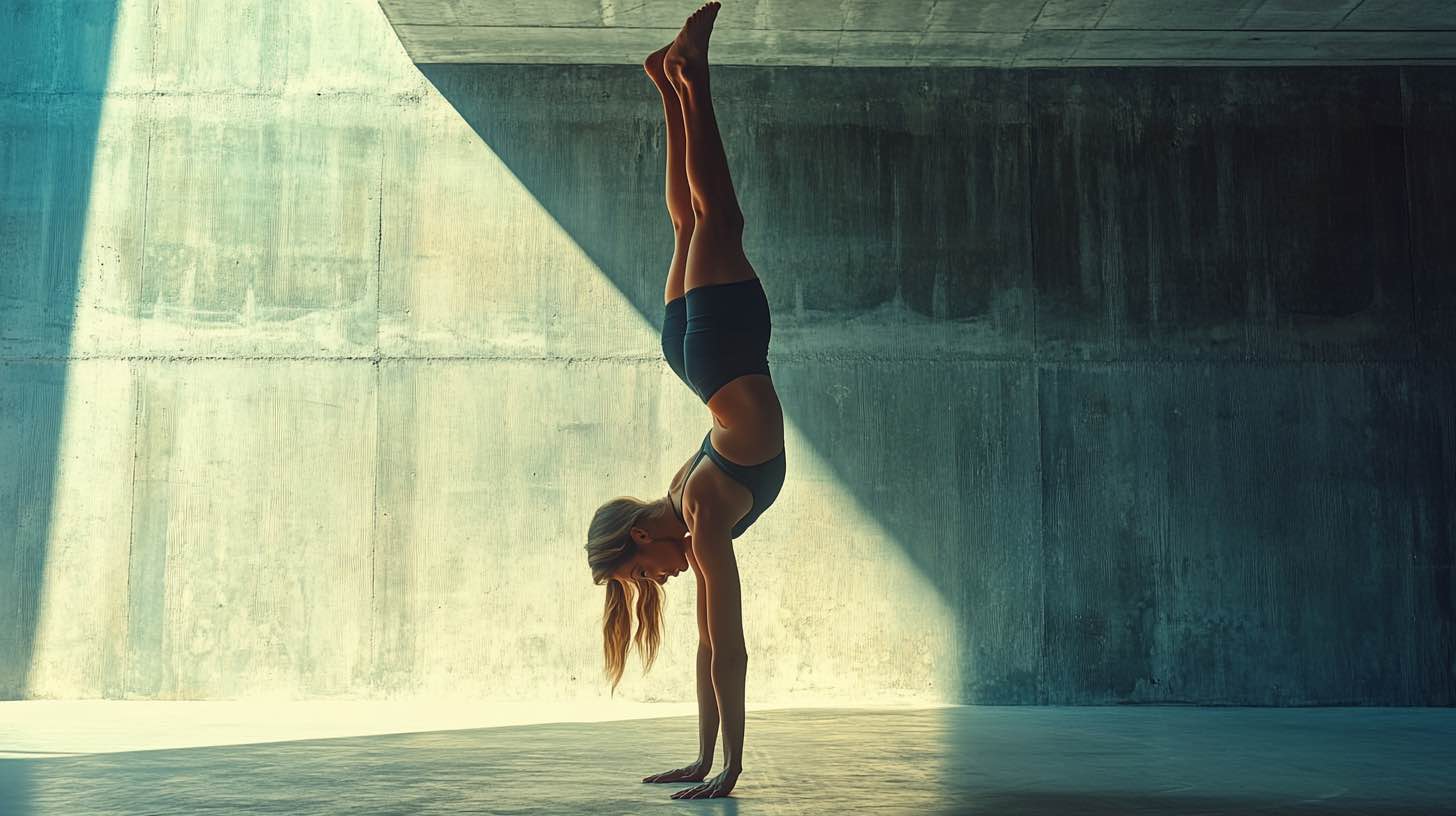
Consistency is key when learning the handstand.
Regardless of whether you invest five or fifty minutes daily: gradually you will build the necessary strength and muscle memory to actually hold the position.
So see the daily handstand workout as a small, charming project that brings you a lot of fun and within which you intend to learn the art of the upside-down body position.
So, take your yoga mat under your arm, find a solid wall to lean against, and prepare yourself to one day essentially turn your gaze upside down.
Rome wasn't built in a day, and you can say the same about your handstand practice.
Stay committed, pull yourself together, and take a little care of yourself, and before you know it, you'll be able to present yourself like an artist at the circus.
Regular practice improves not only your physical strength but also your balance and proprioception, meaning: your body awareness.
And with proper training, it will become easier for you to maintain the handstand position over a certain period of time.
If you diligently work on your handstand holds with unwavering dedication, you will gradually build both the associated muscle memory and the endurance needed to successfully execute your headstand accurately and quite effortlessly every time.
Rome wasn't built in a day, so loosen up a bit when it comes to teaching your body and head a new, challenging yet equally fun skill.
Keep focusing on it, and make sure that you'll soon be able to build on your handstand together with your hands like a real maneuvering expert.
If you continue to invest time and effort into mastering the handstand, you will soon notice differences in your technique and balance.
You will gradually no longer need to rely on the wall for support to practice the handstand, as you will develop the necessary strength and skill to do it without the wall, thus achieving a freestanding handstand.
With each additional training session, you will become more confident and stronger in this challenging pose, leading to a feeling of fulfillment and the experience of mastery.
So keep up your effort and patience and start planning now to soon amaze everyone around you with your fantastic handstand practice!
Patience is essential if you want to elevate your handstand practice to a new level.
Every training session, whether short or long, contributes to refining your body awareness in the air, speeding up your nervous system's reactions, and improving your balance function.
Regular practice means challenging yourself a little bit more every day, trying out new variations, and celebrating even the smallest progress as a success.
Do not be discouraged if you experience a setback - they are part of the learning process.
With consistency and a clear goal in mind, you will have the experience of mastering this highly admired handstand technique.
Every bit of progress, whether it's holding the handstand for one second longer or docking into the right balance without assistance, is a step toward success and strengthening your self-esteem.
These expressed partial successes motivate you to continue and not veer off your goal.
Recognize how far you've already come, and use this progress as the necessary incentive to want to achieve even more.
Every day you practice handstands brings you closer to your dream, and that is the true meaning of effort and sacrifice.
So don't let up, stay persistent, and remember that the perfect handstand position is just a few moments away.
Tags