March 20
What is Yogalates Fusion Workout?
0 comments

What is Yogalates?
Yogalates is a fusion workout of yoga and Pilates.
If you're tired of constantly switching between the relaxing stretches of Yoga on one hand and the strengthening movements of Pilates on the other, you're in the right place.
In this blog post, I explore the best of two alternative worlds and show you how bending, stretching, and becoming supple can help you make your body more resilient, powerful, and flexible.
Goodbye to clear training routines - hello to effective and entertaining disciplines.
Whether you are already experienced in yoga or Pilates or are new to the area, I will help you master the fusion of both and create for you the fulfilling experience of a regular workout that gives you the strength, calmness, and fitness feeling you’ve always wanted.
So, Miss or Mister Impatient, push the carpet aside, take a deep breath, and let the hit feelings arise that can bring you to training happiness.
Feeling a bit annoyed by the same old routine?
Then Air Yogalates might be just right for you – an optimal blend of body work and yoga for a strong, flexible, and relaxed existence.
As an innovative fitness concept that builds on the essential skills of both training methods, Air Yogalates not only makes you fit but also calmer.
The whole-body approach of Air Yogalates as a combining sports method in terms of stability, mobility, and mindfulness is the ultimate stress test in balance and harmony for anyone who holds on to the subject.
No more complacent fitness appearances, it's time for a balanced mix of calm and strength with Air Yogalates.
One principle of Yogalates Fusion, also known as Air Yogalates, is the adjustment of breath and the use of the Core area.
You can improve your body-mind relationship while creating a stable base for all poses (asanas) by coordinating breath and movement, especially regarding core stability.
Combining breath and core stability is important for stable balance and an aligned pose.
So, for your next pose or Pilates move, remember to breathe deeply and synchronize your core as if your life depended on it!
Where music and Pilates kiss, where we fall in love with the thoughtfully trained stretching of body parts, everything sharpens to controlled movement and the subtle transitions between individual poses.
This is a good argument to focus on the little details in workout routines as well.
A conscious approach allows you to tune into your body and improve your body awareness.
At the same time, you consciously and precisely avoid injuries through well-directed movements.
When you incorporate Yogalates into your home training program, you can deepen your exercises and completely focus on each training session, both mentally and physically.
This will provide you with a more fulfilling and rewarding training outcome.
So, grab the mat, find your center, and enjoy the experience of the symbiosis between yoga and Pilates with Yogalates Fusion at home.
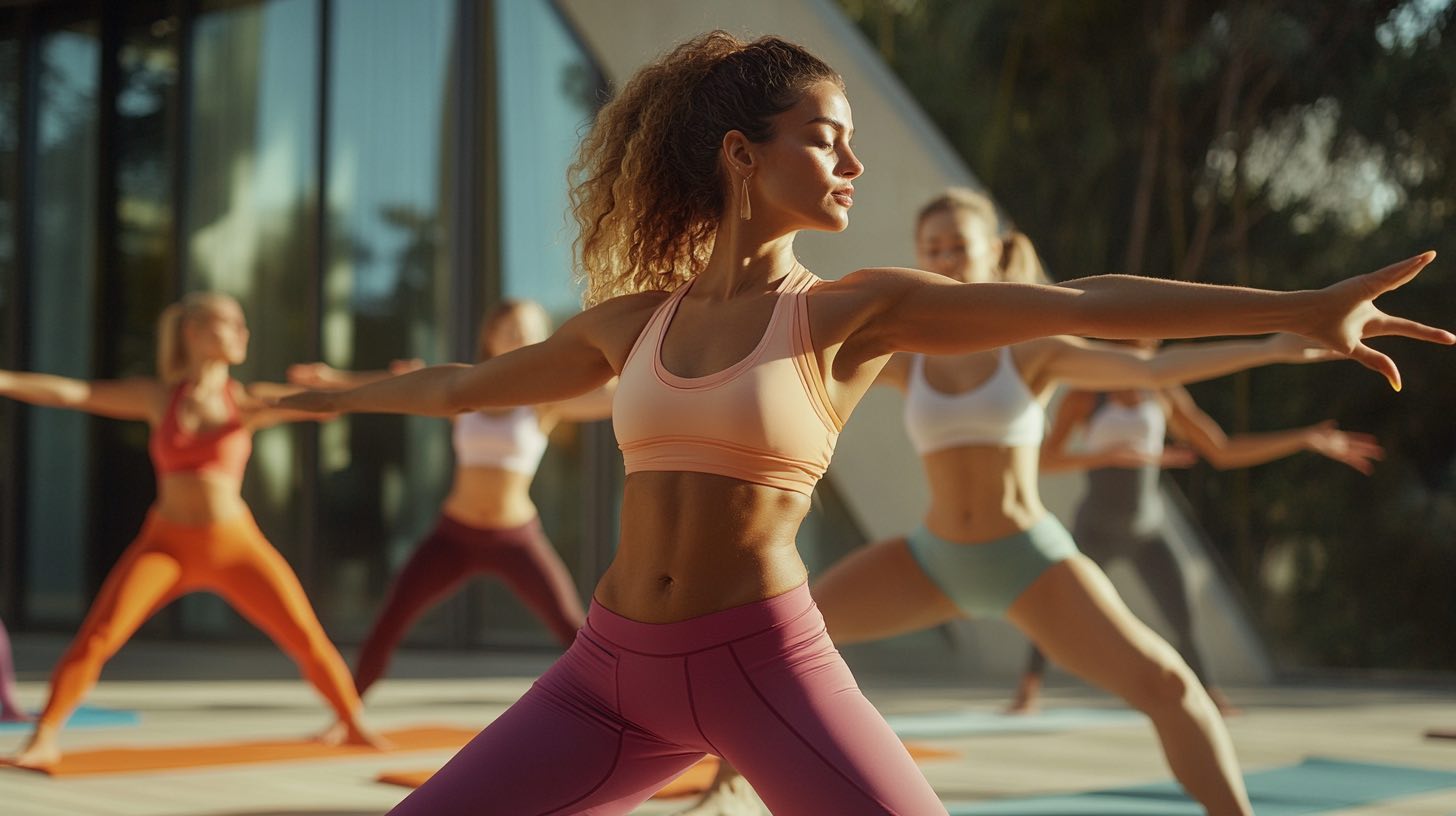
If you prefer a versatile fitness program for home, the Plank Pose, which combines elements from yoga and Pilates, is an excellent choice.
This key position not only trains your core muscles but also helps improve your posture and strengthens your arms and legs through its full-body engagement.
The Plank Pose forms the basis for the balance between all elements of your Yogalates practice and opens up the opportunity for you to enjoy the best of both disciplines without leaving the house.
Roll out your mat, take the Plank Pose, and get ready to feel the burn as you master your own Yogalates studio at home!
In conclusion, the Pilates-inspired variation of the Plank Pose with leg raises will add an extra dynamic to your pure Yogalates program.
With this trick, you test your stability and advance your body's strength development. At the same time, you benefit from improved coordination and increased muscle endurance in a way that no one-sided training can achieve.
The integration of aspects from both sports shapes the character of a workout where both the spiritual and physical aspects come fully to the fore.
The result is a feeling of outstanding fitness, flawless alignment, and an unprecedented surplus of energy.
So be ready to incorporate the Plank Leg Lifts into your resistance repertoire during your next visit to the mat – your body will be grateful for the release!
Yogalates courses
Join one of our Yogalates courses. Simply book through the Templeshape App.
The importance of suitable breathing to connect movement and breath flow, for a deeper immersion in movement and a stronger anchoring of the moved in consciousness, is emphasized repeatedly in both yoga and Pilates.
This is especially evident in Yogalates training, where the fusion of both disciplines highlights the role of conscious breathing for peak performance.
By consciously focusing on your breath, you can intensify the overall experience in the studio and better set the pace within your training sessions.
So: Next time you go to the Yogalates studio, make a point of consciously inhaling and letting yourself be carried through each pose by this flow of oxygen with grace and ease.
The breathing exercises within the concept of Pranayama in yoga emphasize the effects of various breathing techniques on the nervous system, the potential gain in concentration, and the possibly increased energy, thus fostering a deeper connection between mind and body.
In athletic yoga, which includes Yogalates, it is therefore important to keep going.
By directing your attention to the rhythm of your breath, you can seamlessly transition through various movements that promote your strength and endurance while developing a lightness that seems effortless.
This breath-guided Pranayama, that is, the conscious direction of breath, can not only globally strengthen your physical vitality but also promote the nervous system and last but not least, inner peace.
So, whether you're an experienced yogi or a Pilates fan: never underestimate the power of your breath to create a better experience during your Yogalates practice.
Air Yogalates excels at this, especially in the context of a conscious use of breathing techniques.
By concentrating on deep and controlled breaths, you can make the engagement of your core muscles more effective, maintain stability during transitions between poses, and establish a consciousness that extends beyond the mat.
The goal is not only a solid relationship between you and your body but also a commitment to your fulfillment that allows you to fully engage in the exercise session while elegantly combining both the strengths of yoga and those of Pilates.
If you really want to elevate your fitness exercises to a professional level, Air Yogalates is the way to go, where you can almost physically feel the connection between breath and movement.
Through the conscious use of your breath, you can establish a deeper connection between mind and body that helps you get the most out of your Yogalates training.
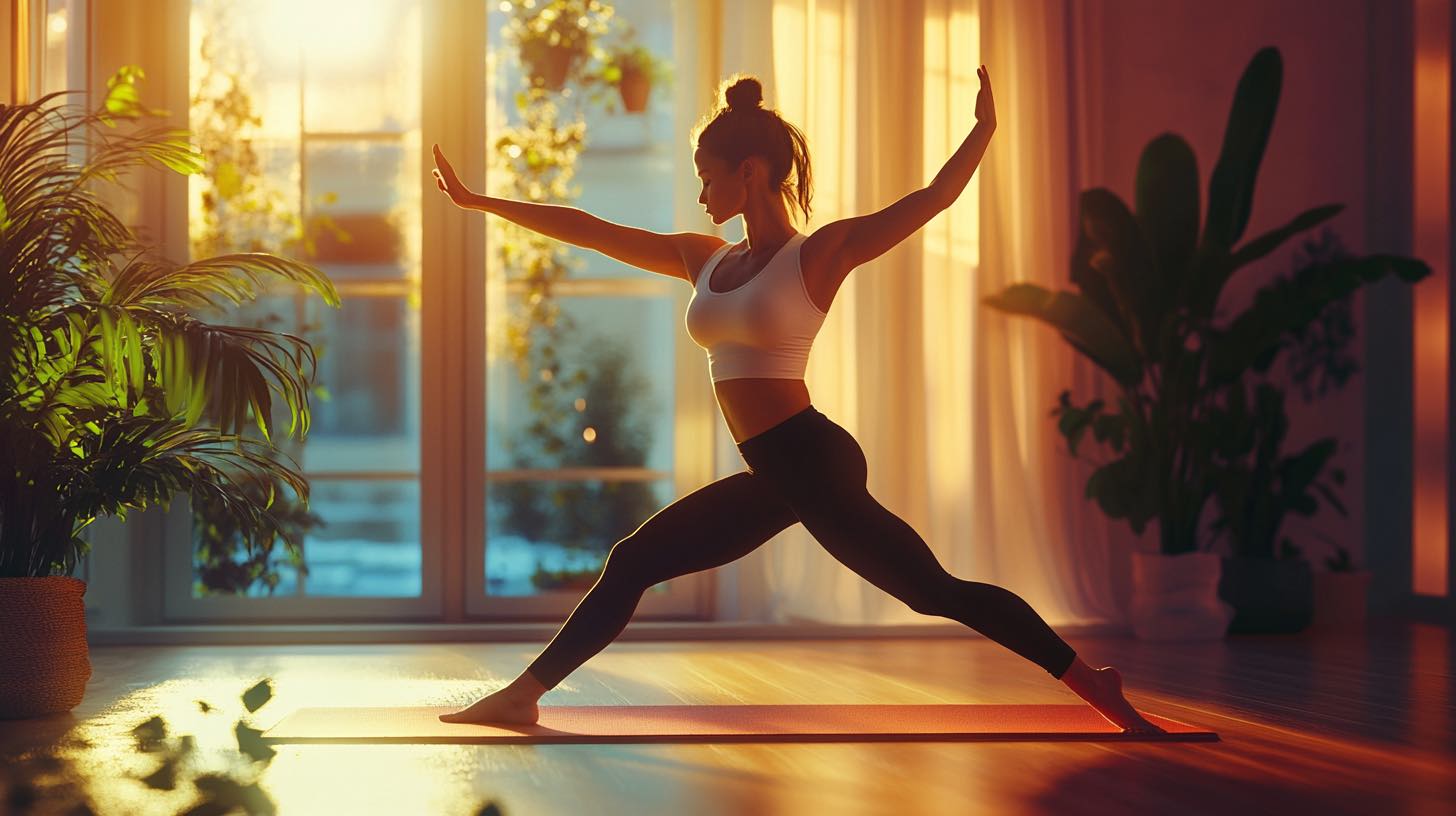
Important during the Yogalates Fusion Workout is the correct alignment of the joints to avoid injury risks and maximize the desired benefits of each pose.
Make sure to place your feet hip-width apart and that your back is straight before a yoga or Pilates position.
Because you want to feel the burn in the right place, not just strike a pose for the photo album and end up on the chiropractor's couch.
So, shoulders back, engage your lower abdomen and don't forget the most important thing: B-R-E-A-T-H-I-N-G.
It's not about who can bend the furthest, but about feeling when strength and form must come together to create a harmonious flow of movement.
Focus on engaging your abdominal muscles throughout the workout to protect your back from unnecessary strain and to have enough stability to seamlessly transition from a yoga to a Pilates exercise.
A strong core is not only important when you start your everyday Yogalates routine at home, but it is essential for evenly aligning your body and maintaining balance.
The core is the foundation for enhancing the capabilities of all muscles and improving posture.
It also has a preventive effect against injuries and supports a healthy posture.
So, during the next Yogalates exercises, don't forget to keep your lower belly engaged.
You will feel the difference.
What would a professional Yogalates practice be without the comfort of being able to exercise at home?
Don’t forget to breathe and always pay attention to your body positioning during the exercises.
If you keep an eye on your form during the yoga-pilates hybrid, it can lead to a profound mental, physical, and breathtaking experience for you.
Whether you are working out in the studio or at home: pay attention to your body awareness and your breathing so that you can benefit from the advantages of this dynamic discipline.
It will be worth it!
When designing your own Yogalates routine for home, consider your fitness level and your goals.
A cool start is to begin with a few Pilates and yoga exercises that aren’t too hard but still present a challenge.
Here and there, strategically positioning body parts, such as in the Cat Pose, could increase effective tension in the abdominal muscles.
Remember: it's about finding the right balance for you.
So don't be afraid of change.
Keep moving and don't forget to enjoy your time!
In the end, you should feel in every muscle after the workout that you are strong enough to tackle everyday challenges.
To master this discipline at home, you need to be able to analyze and control your success, fitness level, and the specific constitution of your body.
By monitoring your personal progress, you can work on your daily demands and energy provision.
Feel free to experiment a little, as the variety of exercises offers plenty of diversity for this type of discipline.
Don't forget that it's not so much about the duration or intensity of an exercise, but rather about the quality of movement and concentrating on each individual movement.
This mindful approach not only protects against potential injuries but also ensures that your flexibility and strength can increase healthily over time.
So, unpack your mat, turn on the music, and enjoy the journey of discovering yourself through Yogalates at home.
Tags