March 19
Breathwork Zurich: #1 Studio Comparison + Guide for Home
0 comments

In the incessant hum of modern life in Zurich – amidst deadlines, notifications, and the constant pressure to achieve more – we often forget the most fundamental tool we have to navigate our inner world: our breath.
What if you could consciously use this simple, automatic process to reduce stress, improve your focus, and unlock profound states of well-being?
Welcome to the world of Breathwork.
This isn't just about taking deep breaths when you're stressed. It is the conscious and systematic practice of changing your breathing patterns to enhance your mental, physical, and emotional health. From ancient yogis to modern neuroscientists, the power of breath has been revered and explored for thousands of years. This comprehensive guide from Templeshape, your studio in Zurich-Wiedikon, takes you on a journey through history, explains the science, and provides you with a practical toolbox of techniques
Although "Breathwork" is currently a wellness buzzword, its roots are ancient and deep. It is a practice that bridges the gap between ancient wisdom and modern science.
For thousands of years, cultures have recognized that breath is life (Prana/Qi).
Pranayama: In ancient India, Pranayama – translated as "expansion of life force" or "breath control" – was a pillar of yoga. Techniques like Nadi Shodhana (alternate nostril breathing) were intended to harmonize energy channels (Nadis) and prepare the mind for meditation.
Qi Gong: In ancient China, Taoist practices such as Qi Gong and Tai Chi utilized specific breathing patterns to cultivate and balance Qi (vital energy).
The term "Breathwork," as we know it, gained traction in the West during the 1960s and 70s, mainly through pioneers like Stanislav Grof (Holotropic Breathing) and Leonard Orr (Rebirthing). These methods employ rapid, connected breathing, to induce altered states of consciousness for deep psychological healing.
Today, Breathwork is an umbrella term for a wide range of techniques:
Category | Goal | Examples |
|---|---|---|
Relaxing & Calming | Activates the body's relaxation response, reduces anxiety and improves sleep. | Box Breathing, 4-7-8 Breathing, abdominal breathing. |
Activating & Energizing | Stimulates the nervous system, increases alertness and builds resilience. | Wim Hof Method, Connected Breathing. |
Deep Transformational | Goal: Deep emotional and psychological healing as well as altered states of consciousness. | Holotropic Breathing, Conscious Connected Breathwork (CCB) |
Breathwork is the art and science of conscious breathing. It is rooted in ancient traditions such as yogic pranayama and has evolved with modern science for healing.
The profound effects of Breathwork are not merely anecdotal; they are based on robust physiological mechanisms.
Your Autonomous Nervous System (ANS) controls heart rate, digestion, and breathing. It has two opposing branches:
Chronic stress often keeps us in sympathetic overdrive. Breathwork, especially techniques with slow, extended exhales, is one of the most effective ways to manually activate the parasympathetic system. This mainly occurs through the stimulation of the vagus nerve, which acts as the main highway of the PNS.
There are countless techniques. Here are the best that you can easily integrate into your Zurich-daily life.
Technique | Application | Benefits |
|---|---|---|
Box Breathing | Even breathing in four phases (4 in, 4 hold, 4 out, 4 hold). | Immediate stress reduction, focus and mental calmness (popularized by Navy SEALs). |
4-7-8 Breathing | 4 in, 7 hold, 8 out. Often referred to as a "natural relaxant". | Helps quickly with falling asleep and with acute Angstbewältigung. |
Physiological Sigh | Tief einatmen (Nase), dann ohne Ausatmen kurz zweites Mal nachatmen (Nase), dann lange und vollständig ausatmen (Mund). | Schnellste Methode zur Beruhigung in Echtzeit, verbessert die Stimmung. |
Da diese Techniken intensive emotionale Reaktionen auslösen können, empfehlen wir dringend, sie im sicheren Rahmen von Templeshape, deinem Studio in Zürich-Wiedikon, durchzuführen.
Conscious Connected Breathwork (CCB): Das Kernprinzip ist ein kontinuierlicher Atemrhythmus ohne Pausen zwischen Ein- und Ausatmung . Ideal zur Freisetzung gespeicherter emotionaler Energie und zur Verarbeitung von Trauma.
Holotropes Atmen: Verwendet schnelles, tiefes Atmen mit evokativer Musik, um nicht-gewöhnliche Bewusstseinszustände für tiefe psychologische Heilung zu erreichen.
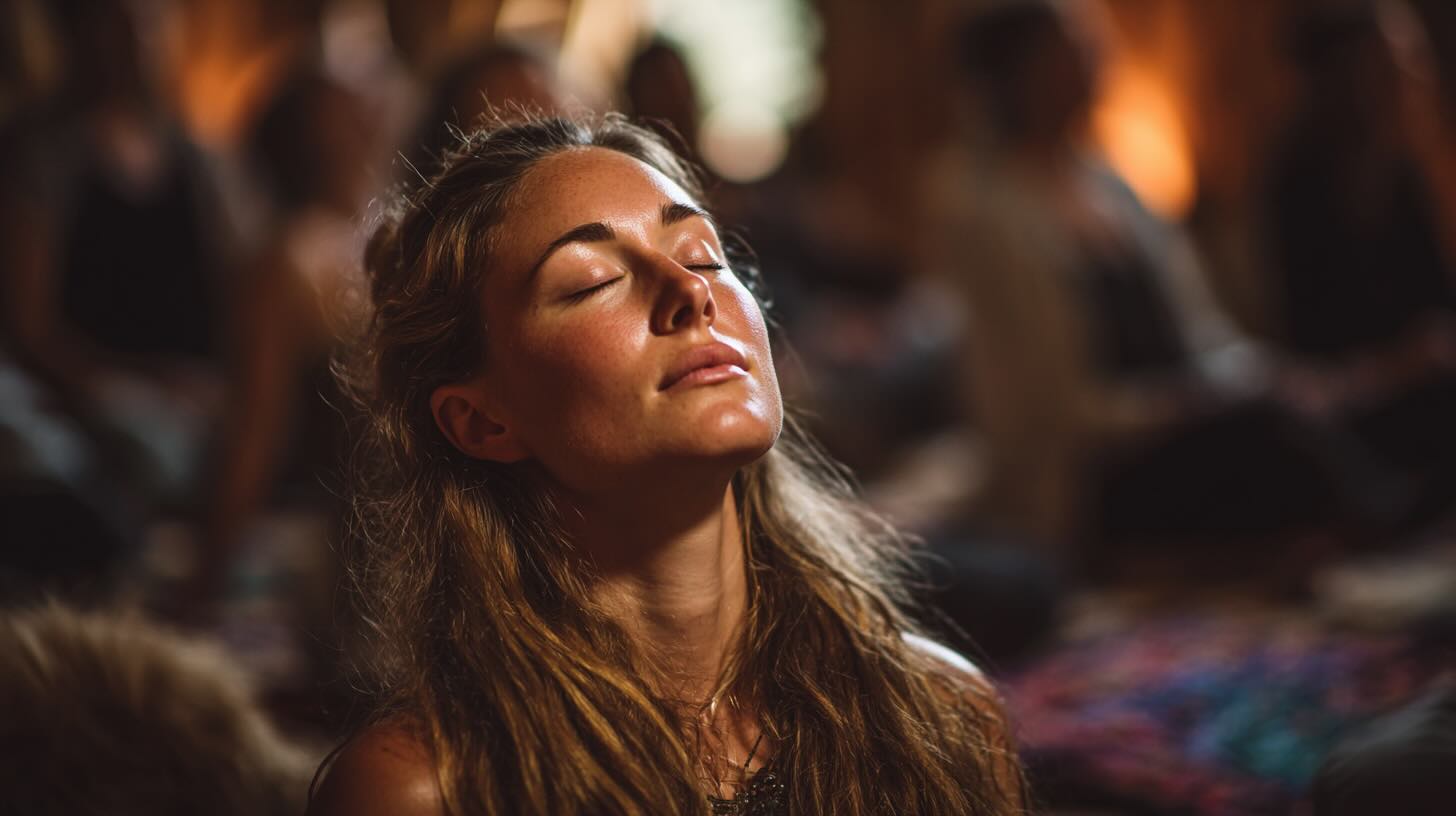
Jetzt an einer Breathwork Session in Zürich teilnehmen!
Während sanfte Atemübungen für fast jeden sicher sind, bergen intensivere Formen Risiken. Konsultiere einen Arzt, bevor du mit intensivem Breathwork beginnst, wenn du unter folgenden Bedingungen leidest:
Herz-Kreislauf-Erkrankungen (z. B. Herzinfarkt, Schlaganfall, starker Bluthochdruck)
Schweres Asthma (Inhalator immer bereithalten)
Epilepsie oder Anfallsleiden
Glaukom oder Netzhautablösung
Schwangerschaft
Wichtig: Führe niemals intensive Atemübungen, insbesondere mit Atemanhalten, im oder in der Nähe von Wasser oder beim Autofahren durch.
Zürich ist bekannt dafür, alten Charme mit Innovation zu verbinden. Diese Mischung macht es perfekt für die Rückkehr von Breathwork. Da die Menschen die Vorteile einer besseren Atmung erkennen, wird sie zum Schlüssel für die persönliche Gesundheit und das Arbeitsleben.
In einer schnellen Welt, in der Burnout normal ist, fördert Breathwork die geistige Klarheit und Produktivität. Es ist ein einfacher und erschwinglicher Weg, um mit dem Stress des modernen Lebens umzugehen, besonders im hektischen Stadtleben von Zürich.
Eine coole alternative zum Entkommen des Alltags sind natürlich auch unsere Retreats, bei denen es stark um Stressabbau geht.
Bei der Atemarbeit geht es nicht nur um Stressabbau. Es hilft bei der persönlichen Entwicklung und dabei, Frieden im Chaos zu finden. Es verbindet die Menschen mit sich selbst und schafft eine Gemeinschaft, die zu Glück und Wohlbefinden führt.
Die Wahl der richtigen Breathwork Session in Zurich depends on your goals (relaxation vs. transformation) and your budget. In the following sections, we will guide you through the specific methods and the unique expertise at Templeshape and show you why our value for money is unbeatable.
At Templeshape City, we not only provide you with technique but also the expertise and the safe space for your deepest breathwork journey..
Our sessions, led by experts like Valentina and Sabrina, often integrate singing bowls. Valentina uses their frequencies specifically to deepen relaxation and guide brainwaves into the theta state (4-8 Hz). This state is associated with deep meditation, emotional healing and access to your subconscious. This is our E-E-A-T promise to you: Expert-led, safe, and scientifically grounded practice.
At places like Templeshape City, you can attend sessions that help you release emotions and encourage self-discovery. Templeshape offers personal sessions for a more personal experience, led by experts.
In Zurich, you will find various styles, from Holotropic Breathwork® to 4-7-8 breathing to Conscious Connected Breathwork (CCB). Studios may use music, touch, essential oils, or acupressure to enhance your experience. Whether you want to go alone or with a friend, there is something for everyone.
Zurich is known for quality but often also for high prices.
Even if you find other studios in the city that offer breathwork sessions, it’s worth taking a close look at the costs.
We at Templeshape in Zurich-Wiedikon believe: Deep transformation should be accessible. While you will hardly find a comparable breath session for under CHF 40-50 elsewhere in the city, we make a clear statement.
There are no breathwork classes available for CHF 8.69 in Zurich - except at Templeshape.
Through our special subscriptions and package prices, we ensure that you receive the best breathwork training in the city without breaking your budget.
Tags
 DE
DE FR
FR EN
EN