March 20
What is Yogalates Fusion Workout?
0 comments

What is Yogalates?
Yogalates is a fusion workout of yoga and Pilates.
If you are tired of constantly switching between the relaxing stretches of yoga on one hand and the strengthening movements of Pilates on the other hand, you've come to the right place.
In this blog post, I explore the best of two alternative worlds and show you how bending, stretching, and becoming flexible can help make your body more resilient, powerful, and flexible.
Gone are the clear training routines - on to effective and entertaining disciplines.
Whether you are already experienced in yoga or Pilates or new to this area, I will help you master the fusion of both and create for yourself the fulfilling experience of a regular workout that provides you with strength, tranquility, and the fitness feeling you have always wished for.
So, Miss or Mr. Impatient, move the rug aside, take a deep breath, and let the hit feelings arise that can bring you to workout bliss.
Feeling slightly annoyed by always the same routine?
Then Air Yogalates might be just right for you – an optimal mix of bodywork and yoga for a strong, flexible, and relaxed existence.
As an innovative fitness concept that builds on the fundamental skills of both training methods, Air Yogalates not only makes you fit but also calmer.
The full-body approach of Air Yogalates as a combined sports method in terms of stability, mobility, and mindfulness is the ultimate test of balance and harmony for anyone who holds on to the subject.
No more refined fitness looks, but a balanced mix of relaxation and strength with Air Yogalates.
One principle of Yogalates Fusion, also known as Air Yogalates, is the adjustment of breathing and the use of the core area.
You can improve your body-mind relationship while creating a stable foundation for all poses (asanas) by coordinating breathing and movement, especially regarding core stability.
Combining breath and core stability is important for stable balance and an aligned pose.
So, during your next pose or Pilates move, remember to breathe deeply and synchronize your core as if your life depended on it!
Where music and Pilates kiss, where we fall in love with the carefully trained stretching of body parts, it all sharpens into controlled movement and the subtle transitions between individual poses.
That's a good argument to also focus on the little details in workout routines.
A conscious approach allows you to attune to your body and improve your body awareness.
At the same time, you consciously and precisely avoid injuries through well-guided movements.
Wenn du Yogalates in dein Heimtrainingsprogramm aufnimmst, kannst du deine Übungen vertiefen und dich voll auf jede Trainingsstunde einstellen, sowohl geistig als auch physisch.
Dies wird dir ein erfüllenderes und lohnenderes Trainingsergebnis bescheren.
Also, zücke die Matte, finde deine Mitte und genieße das Erlebnis der Symbiose zwischen Yoga und Pilates mit Yogalates Fusion zu Hause.
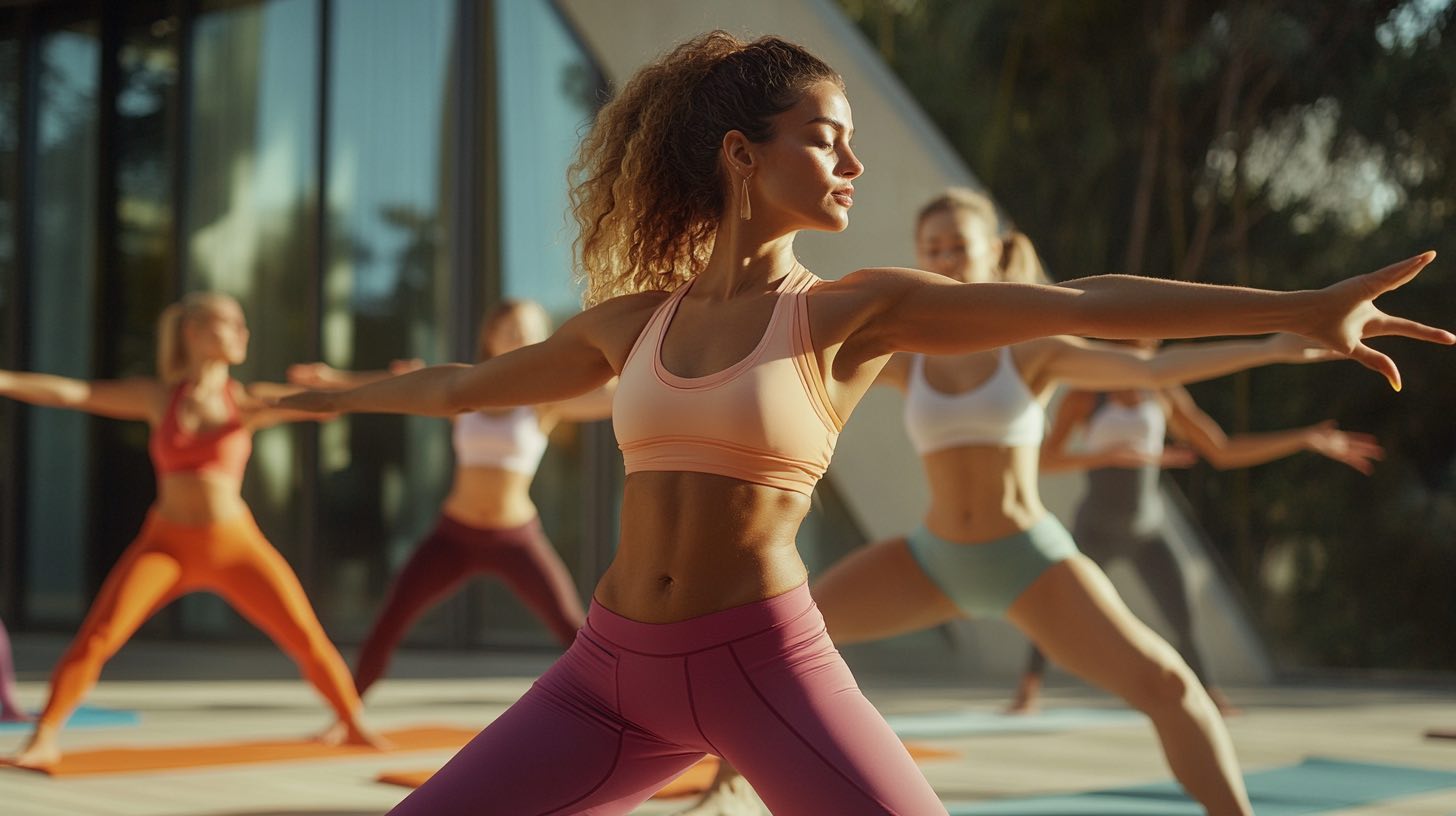
Wenn du ein vielseitiges Fitnessprogramm für zu Hause bevorzugst, ist die Plank Pose, die Elemente aus Yoga und Pilates vereint, eine ausgezeichnete Wahl.
Diese Schlüsselposition trainiert nicht nur deine Rumpfmuskulatur, sondern hilft auch, deine Haltung zu verbessern und durch den Ganzkörperanspruch die Arme und Beine zu stärken.
Die Plank Pose bildet die Basis für das Gleichgewicht zwischen allen Elementen deiner Yogalates-Praxis und eröffnet dir die Möglichkeit, das Beste aus beiden Disziplinen zu genießen, ohne das Haus zu verlassen.
Rolle deine Matte aus, nimm die Plank Pose ein und mach dich darauf gefasst, das Feuer zu spüren, während du in deinem eigenen Yogalates-Studio zu Hause meisterst!
Abschließend lässt sich sagen, dass die Pilates-inspirierte Variation der Plank Pose mit Beinhebungen für ein zusätzliches Plus an Dynamik in deinem reinen Yogalates-Programm sorgen wird.
Mit diesem Kniff stellst du deine Stabilität auf die Probe und treibst die Kraftentwicklung deines Körpers voran. Gleichzeitig profitierst du von der Verbesserung der Koordination und der Steigerung der Muskelausdauer auf eine Weise, die kein einseitiges Training vermag.
Die Integration von Aspekten beider Sportarten formt den Charakter eines Workouts, bei dem sowohl der spirituelle als auch der physische Aspekt voll zur Geltung kommen.
Das Ergebnis ist ein Gefühl herausragender Fitness, einer tadellosen Abstimmung und eines ungeahnten Energieüberschusses.
Sei also bereit, beim nächsten Besuch auf deiner Matte die Plank Leg Lifts in dein Widerstands-Repertoire aufzunehmen – dein Körper wird die Auflockerung dankbarst vergelten!
Yogalates Kurse
Besuche einen unserer Yogalates Kurse. Einfach über die Templeshape App einbuchen.
Die Bedeutung einer geeigneten Atmung zur Verbindung von Bewegung und Atemfluss, für eine tiefere Versenkung in die Bewegung und eine stärkere Verankerung des Bewegten im Bewusstsein, wird sowohl im Yoga als auch im Pilates immer wieder betont.
Dies zeigt sich besonders im Yogalates-Training, wo die Verschmelzung beider Disziplinen die Rolle einer bewussten Atmung für Spitzenleistungen ins grelle Licht rückt.
Indem du dich ganz bewusst auf deinen Atem fokussierst, kannst du das Gesamterlebnis im Studio intensivieren und innerhalb deiner Trainingseinheiten den Takt noch besser vorgeben.
Also: Nimm dir beim nächsten Mal, wenn du ins Yogalates-Studio gehst, vor, bewusst einzuatmen und dich von diesem Sauerstofffluss mit Anmut und Leichtigkeit durch jede Pose tragen zu lassen.
Die Atemübungen im Rahmen des Konzepts Pranayama im Yoga betonen die Wirkungen verschiedener Atemtechniken auf das Nervensystem, den möglichen Gewinn an Konzentration sowie die potenziell gesteigerte Energie, wodurch eine tiefere Verbindung zwischen Geist und Körper entstehen kann.
Im sportlichen Yoga, zu dem auch Yogalates zählt, ist es daher wichtig, stets dran zu bleiben.
Durch das Lenken deiner Aufmerksamkeit auf den Rhythmus deines Atems kannst du dich nahtlos durch die unterschiedlichsten, deine Kraft und Ausdauer fördernden Bewegungen bewegen und dabei eine Leichtigkeit entwickeln, die quasi mühelos wirkt.
Dieses atemgeführte Pranayama, also die bewusste Atemlenkung, kann nicht nur deine körperliche Lebenskraft global stärken, sondern fördert auch das Nervensystem und last but not least die innere Ruhe.
So gilt für dich, ob erfahrener Yogi oder Pilates-Fan: Unterschätze niemals die Kraft deiner Atmung, um ein besseres Erleben während deiner Yogalates-Praxis zu bewirken.
Beim Air Yogalates gelingt das vorzüglich, besonders im Kontext eines bewussten Einsatzes der Atmungstechniken.
Indem du dich auf tiefe und kontrollierte Atemzüge konzentrierst, kannst du das Anspannen deiner Kernmuskulatur effektiver gestalten, die Stabilität während der Posenwechsel aufrechterhalten und ein Bewusstsein herstellen, das über die Matte hinausgeht.
Das Ziel ist nicht nur eine feste Beziehung zwischen dir und deinem Körper, sondern auch eine Verpflichtung zu deiner Erfüllung, die es dir erlaubt, dich ganz in die Übungsstunde einzulassen und gleichzeitig sowohl die Stärken des Yogas als auch die des Pilates elegant miteinander zu verbinden.
Wenn du wirklich deine Fitnessübungen auf ein Profi-Niveau heben möchtest, bietet sich Air Yogalates an, wo du die Verbindung von Atem und Bewegung fast körperlich spüren kannst.
Durch den bewussten Einsatz deiner Atmung kannst du eine tiefere Verbindung zwischen Geist und Körper herstellen, die dir dabei hilft, das Beste aus deinem Yogalates-Training herauszuholen.
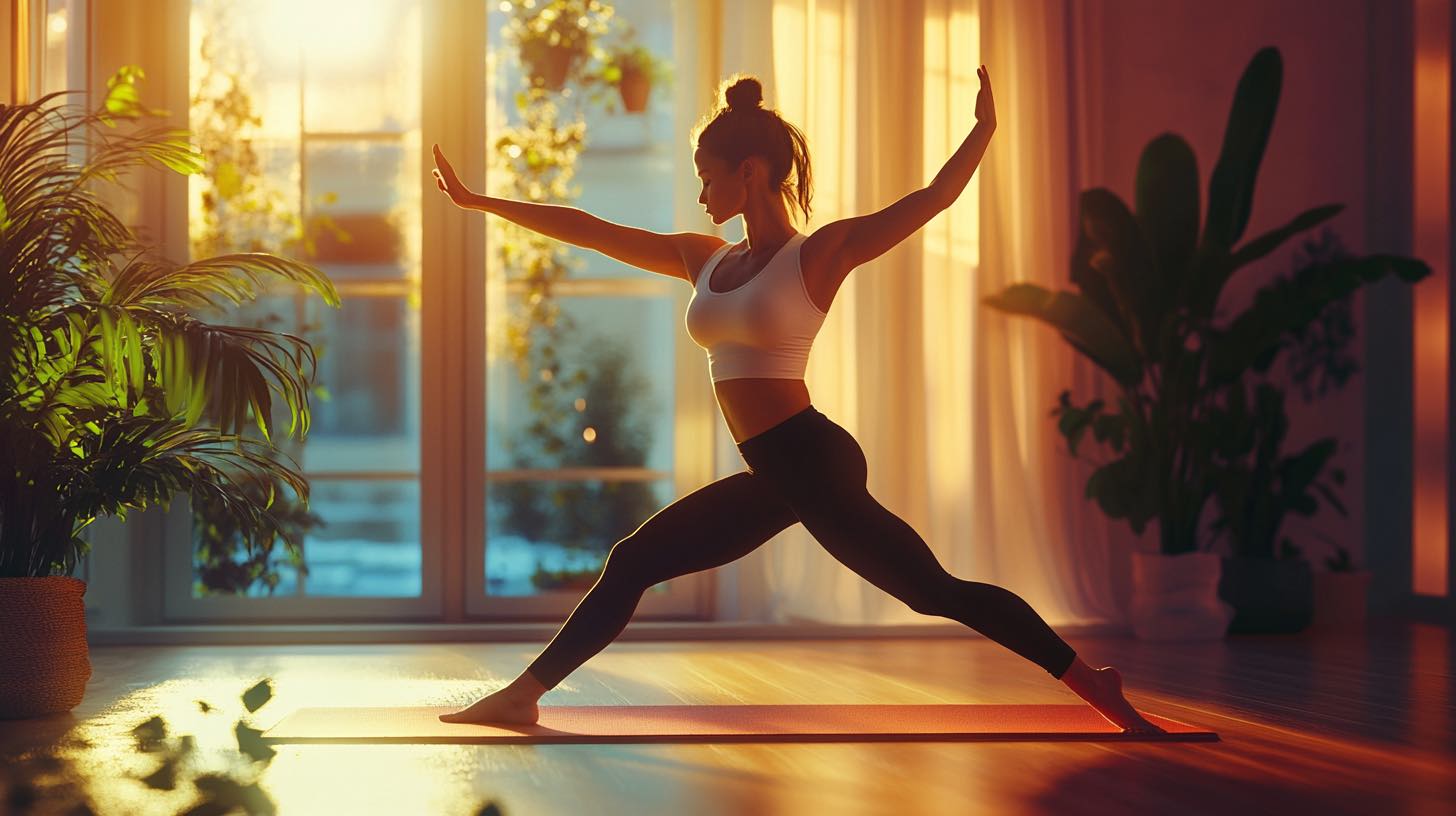
Wichtig beim Yogalates Fusion Workout ist die richtige Ausrichtung der Gelenke, um Verletzungsgefahren zu vermeiden und die gewünschten Vorteile der einzelnen Posen zu maximieren.
Achte darauf, dass du deine Füße hüftbreit auseinanderstellst und dass dein Rücken vor einer Yoga- oder Pilatesposition gerade ist.
Because you want to not just pose for the photo album, but feel the burn in the right place and not end up on the chiropractor's couch.
So, shoulders back, tighten your lower abdomen and don’t forget the most important thing: B-R-E-A-T-H-I-N-G.
It’s not about who can bend the farthest, but about feeling when strength and form come together to create a harmonious flow of movement.
Focus on engaging your abdominal muscles throughout the entire workout, so you protect your back from unnecessary strain and have sufficient stability to transition seamlessly from a yoga to a Pilates exercise.
A strong core is not only important when you start your everyday Yogalates program at home, but it’s essential to align your body evenly and maintain your center.
The abdominal muscles are the foundation for enhancing the capabilities of the entire musculature and improving posture.
They also have a preventive effect against injuries and support a healthy posture.
So, don’t forget during the next Yogalates exercises: keep your lower abdominalengaged.
You will feel the difference.
What would a professional Yogalates workout be without the convenience of being able to practice at home?
Don’t forget to breathe and always pay attention to your body position during the exercises.
If you keep an eye on your form during the yoga-pilates hybrid, it can lead to a profound mental, physical, and breathtaking experience for you.
Whether you’re working out at the studio or at home: pay attention to your body awareness and your breathing so you can benefit from the advantages of this dynamic discipline.
It will be worth it!
When you put together your own Yogalates routine at home, consider your fitness level and your goals.
A cool start is to begin with a few Pilates and yoga exercises that aren’t too difficult, yet still present a challenge.
Here and there, strategically positioning your body parts, for example in the cat position, can enhance the effective tension in the abdominal muscles.
Remember: it’s about finding the right balance for you.
So, don’t be afraid of change.
Keep moving and don’t forget to enjoy your time!
In the end, you should feel after the workout in every muscle that you are strong enough to tackle everyday challenges.
To master this discipline at home, you need to be able to analyze and manage your success, fitness level, and the specific constitution of your body.
By monitoring your personal progress, you can work on your daily demands and energy supply.
Feel free to experiment a bit, as the variety of exercises offers plenty of diversity for this type of discipline.
Don’t forget that it’s not so much about the duration or intensity of an exercise, but more about the quality of movement and the concentration on each individual movement.
This mindful approach not only protects against potential injuries but also ensures that your flexibility and strength can increase in a healthy way over time.
So, unpack your mat, turn on the music, and enjoy the journey of self-discovery through Yogalates at home.
Tags
 DE
DE FR
FR EN
EN